Cabinet Clears Rs 10,998 Cr Varanasi Elevated Corridor
Synopsis
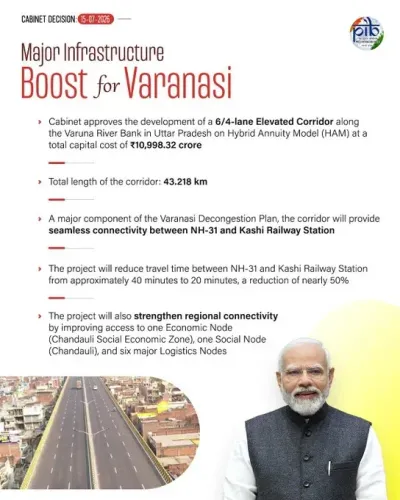
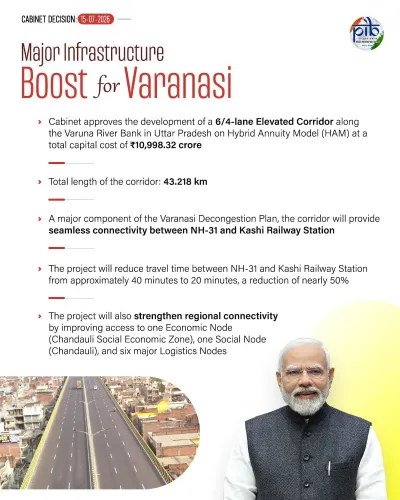
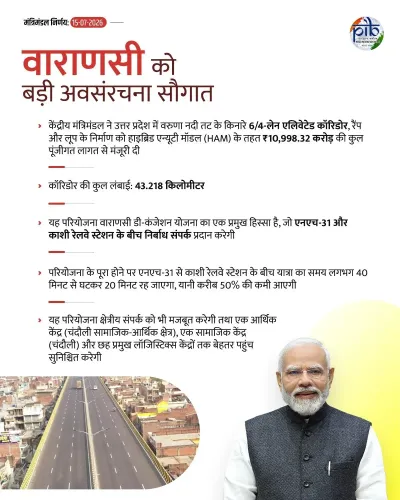
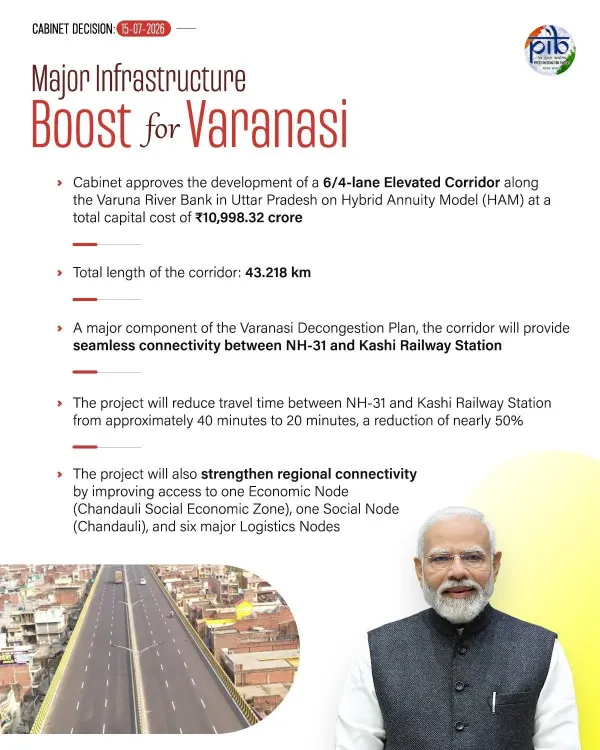
The Union Cabinet has approved a Rs 10,998.32 crore, 43.218-km elevated corridor along the Varuna River in Varanasi, connecting NH-31 to the city's Ring Road and halving travel time to Kashi Railway Station from 40 to 20 minutes.
Key Takeaways
The Union Cabinet approved a Rs 10,998.32 crore elevated corridor in Varanasi on 15 July 2026 .
The corridor is 43.218 km long with a 6/4-lane configuration, running along the Varuna River .
It will connect NH-31 to the Varanasi Ring Road and improve access to Kashi Railway Station .
Travel time on the route will be cut from 40 minutes to 20 minutes .
The project is expected to boost road safety, logistics, tourism, and trade in eastern Uttar Pradesh .
The elevated alignment along the river was chosen to minimise land acquisition in the densely populated city.
Union Agriculture Minister Shivraj Singh Chouhan on Wednesday, 15 July 2026, announced that the Union Cabinet, under the leadership of Prime Minister Narendra Modi, has approved the construction of a 43.218-km, 6/4-lane elevated corridor along the Varuna River in Varanasi, Uttar Pradesh, at a total cost of Rs 10,998.32 crore. The project will connect NH-31 to the Varanasi Ring Road and is designed to dramatically ease traffic movement across the city.
Context
Chouhan shared the cabinet decision on X, writing that the corridor will improve connectivity between NH-31 and Kashi Railway Station and cut travel time 'from approximately 40 minutes to 20 minutes' — a reduction of half. The post highlighted that the project will also benefit road safety, logistics, tourism, trade, and the samgra vikas (overall development) of eastern Uttar Pradesh.
The alignment along the Varuna River — a tributary of the Ganga flowing through the heart of Varanasi — was selected to limit land acquisition in one of India's most densely populated urban cores. The elevated design allows traffic to move above existing settlements and religious sites without requiring large-scale displacement.
Policy Backdrop
The approval fits squarely within the Bharatmala Pariyojana, the central government's flagship national highway programme launched in 2015 to develop 34,800 km of corridors with an emphasis on elevated sections and ring roads around major cities. The Varanasi Ring Road project itself was approved in phases from 2018 onward, with successive tranches aimed at decongesting the city and improving its links to NH-19 and NH-31.
Varanasi holds a dual significance for the current government: it is Prime Minister Modi's own Lok Sabha constituency, and it is one of India's most visited pilgrimage and tourism destinations. Since 2014, the central government has approved multiple large-scale road, waterway, and urban-renewal projects in and around the city, making it a visible showcase for infrastructure-led growth in eastern Uttar Pradesh.
Stakeholders and Impact
The most immediate beneficiaries are daily commuters who currently navigate severe congestion between NH-31 and Kashi Railway Station — one of the busiest rail nodes in the region. A 20-minute end-to-end journey, down from 40 minutes, would meaningfully reduce fuel costs, vehicle emissions, and productivity losses for thousands of travellers each day.
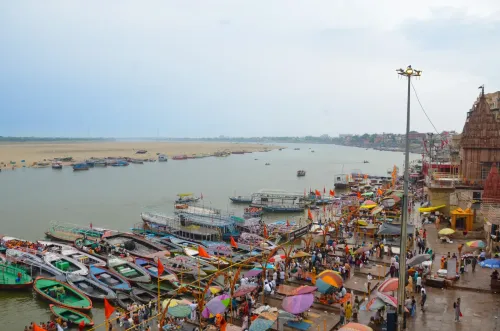
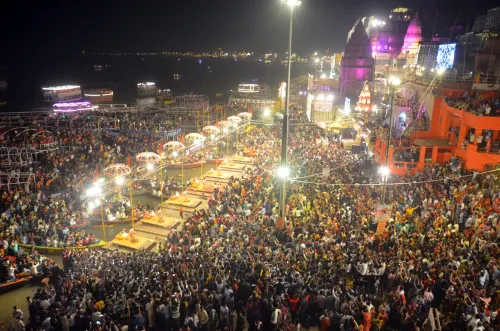
Eastern Uttar Pradesh traders and logistics operators stand to gain from faster freight movement along the corridor, which links the national highway network to the city's rail infrastructure. Tourism and hospitality businesses — particularly those catering to the millions of pilgrims who visit Kashi Vishwanath and the Ghats annually — could see higher footfall as access to the city becomes smoother. Road-safety outcomes along the currently at-grade NH-31 stretch are also expected to improve once heavy traffic is shifted to the elevated structure.
What's Next
Following cabinet clearance, the project moves to the National Highways Authority of India (NHAI) for detailed project reports, tendering, and contractor selection. Land acquisition along the Varuna alignment — though limited by the elevated design — will be a key variable in determining the construction timeline. Analysts watching Varanasi's infrastructure pipeline will also track whether this corridor is eventually integrated with proposed rail or inland-waterway projects in the region, including expansions at Kashi Railway Station and the Varanasi inland waterway terminal on the Ganga. The scale of the investment signals continued federal prioritisation of eastern Uttar Pradesh as a logistics and pilgrimage hub ahead of future electoral cycles.
Point of View
000 crore corridor in Prime Minister Modi's own constituency is consistent with a decade-long pattern of concentrated federal infrastructure spending in Varanasi, using the city as a model for what connectivity-led urban renewal can look like. The choice of a river-aligned elevated design reflects a maturing approach within Bharatmala — one that tries to balance capacity expansion with the political and logistical difficulty of land acquisition in heritage-dense cities. For Shivraj Singh Chouhan, amplifying cabinet decisions on road and rural infrastructure keeps him visible on a policy brief — connectivity and farmer-linked logistics — that cuts across his agriculture and rural development portfolios. The real test will come at the NHAI tendering stage, where timelines on projects of this scale have historically slipped.
NationPress
15 Jul 2026
Frequently Asked Questions
What is the Varanasi elevated corridor project approved by the Cabinet?
The Union Cabinet approved a 43.218-km, 6/4-lane elevated corridor along the Varuna River in Varanasi at a cost of Rs 10,998.32 crore . It will connect NH-31 to the Varanasi Ring Road and improve access to Kashi Railway Station .
How much will the Varanasi Ring Road elevated corridor cost?
The project has been approved at a total cost of Rs 10,998.32 crore , to be implemented by the National Highways Authority of India (NHAI) following the cabinet's clearance on 15 July 2026 .
How will the Varanasi elevated corridor reduce travel time?
The corridor will cut travel time between NH-31 and Kashi Railway Station from approximately 40 minutes to 20 minutes by shifting traffic onto a continuous elevated structure above the congested city road network.
Why is the Varanasi corridor built along the Varuna River?
The Varuna River alignment was chosen to minimise land acquisition in Varanasi's densely populated urban core. An elevated structure above the river corridor avoids large-scale displacement of residents and religious sites.
What is Bharatmala Pariyojana and how does this project relate to it?
Bharatmala Pariyojana , launched in 2015 , is the central government's programme to develop 34,800 km of national highways with a focus on elevated corridors and ring roads around major cities. The Varanasi corridor is consistent with that programme's design priorities and eastern Uttar Pradesh connectivity goals.