Varanasi gets ₹10,998 crore elevated corridor to cut city travel time by 50%
Synopsis
The Centre has cleared a ₹10,998 crore, 43 km elevated corridor along the River Varuna that will halve travel time between NH-31 and Kashi Railway Station. For a city that gridlocks daily under the weight of pilgrims, freight, and commuters, this is the most consequential infrastructure bet in Varanasi in years — and it doubles as a Gati Shakti showcase in PM Modi's own constituency.
Key Takeaways
The CCEA approved a ₹10,998.32 crore elevated link corridor in Varanasi on 15 July 2025 .
The corridor spans 43.218 km , connecting NH-31 to the Varanasi Ring Road along the River Varuna .
Travel time between NH-31 and Kashi Railway Station will drop from 40 minutes to 20 minutes — a 50% reduction.
Civil construction cost is ₹4,565.33 crore ; land acquisition cost is ₹934.91 crore .
Project will be implemented by NHAI under the Hybrid Annuity Model (HAM) .
The corridor improves access to six logistics nodes , the Chandauli Social Economic Zone , and key transport hubs including Varanasi Airport and Ramnagar Port .
The Cabinet Committee on Economic Affairs (CCEA), chaired by Prime Minister Narendra Modi, on 15 July 2025 approved a ₹10,998.32 crore infrastructure project to build a 43.218 km link corridor along the River Varuna in Varanasi, Uttar Pradesh. The elevated corridor will connect NH-31 to the Varanasi Ring Road and is designed to dramatically ease the chronic congestion that plagues one of India's most visited pilgrimage cities.
Project Scope and Structure
The corridor will be a 6/4-lane predominantly elevated structure, incorporating main carriageways, flyovers, loops, ramps, and service roads. It will be executed by the National Highways Authority of India (NHAI) under the Hybrid Annuity Model (HAM), a public-private partnership format that spreads fiscal risk between the government and the concessionaire.
The total investment breaks down into a civil construction cost of ₹4,565.33 crore and a land acquisition cost of ₹934.91 crore, according to the Cabinet communiqué.
Key Connectivity Gains
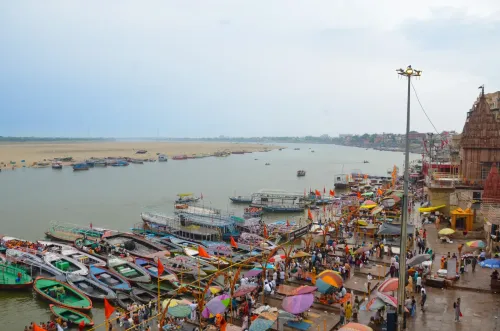
The corridor is a central pillar of the broader Varanasi Decongestion Plan. Once operational, it will provide direct, seamless access to Kashi Railway Station, Varanasi City Railway Station, Varanasi Junction, Deen Dayal Upadhyaya Junction, Varanasi Airport, Ramnagar Port, Sampurnanand Sanskrit University, the iconic ghats of Varanasi, and the adjoining Chandauli region.
Designed for an operating speed of 80–100 km/h, the project will cut travel time between NH-31 and Kashi Railway Station from approximately 40 minutes to 20 minutes — a reduction of nearly 50 per cent.
Regional Economic Impact
Beyond urban decongestion, the corridor is positioned as a logistics and economic enabler for eastern Uttar Pradesh. It will improve access to one economic node — the Chandauli Social Economic Zone — one social node, and six major logistics nodes, facilitating the movement of agricultural produce, industrial goods, construction materials, and minerals.
The project aligns with the PM Gati Shakti National Master Plan, which aims to integrate road, rail, port, and air infrastructure into a unified multimodal network. Notably, Varanasi's role as both a pilgrimage hub and a growing logistics corridor makes it one of the more strategically significant nodes in the Gati Shakti framework.
Broader Significance for Varanasi
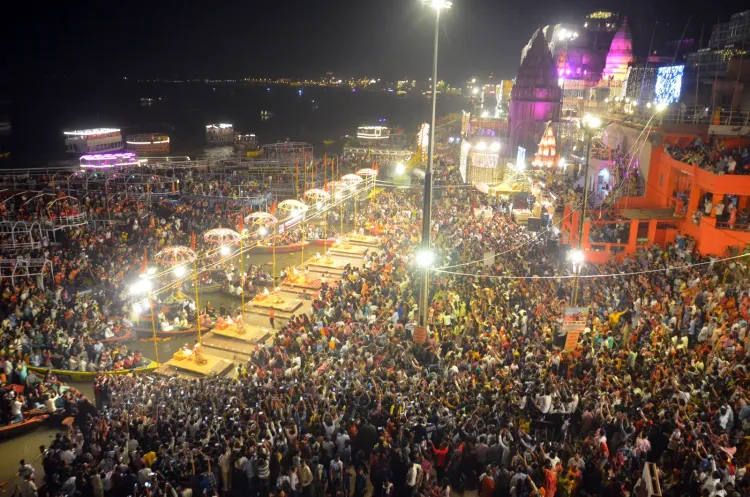
Varanasi, which draws millions of domestic and international visitors annually to its ghats and temples, has long struggled with traffic bottlenecks that hamper both tourism and daily commutes. This is among the largest single infrastructure investments in the city's recent history, and comes as the Centre continues to prioritise Varanasi — the parliamentary constituency of Prime Minister Modi — for flagship urban and transport upgrades.
With construction timelines yet to be publicly detailed, the project's completion date will be closely watched by residents, traders, and logistics operators across the region. The NHAI is expected to initiate the tendering process in the coming weeks.
Point of View
998 crore approval is significant, but the real measure of success will be execution speed — HAM projects have historically faced delays in land acquisition, which at ₹934.91 crore is a non-trivial component here. Varanasi's congestion is structural: it is simultaneously a pilgrimage city, a freight node, and a rapidly urbanising district, and no single corridor fully resolves that. The Gati Shakti framing is politically useful, but the project's credibility will rest on whether NHAI can deliver on timeline in a city where ground realities are notoriously complex. The Centre's sustained infrastructure focus on Varanasi — Modi's own seat — also invites scrutiny over whether comparable investments are flowing to equally congested but less politically prominent UP cities.
NationPress
15 Jul 2026
Frequently Asked Questions
What is the Varanasi link corridor project approved by the Cabinet?
It is a 43.218 km, predominantly elevated road corridor connecting NH-31 to the Varanasi Ring Road along the River Varuna, approved on 15 July 2025 at a total cost of ₹10,998.32 crore. The project is designed to decongest Varanasi city and improve access to key transport hubs including Kashi Railway Station and Varanasi Airport.
How much will travel time reduce after the corridor is built?
Travel time between NH-31 and Kashi Railway Station will fall from approximately 40 minutes to 20 minutes — a reduction of nearly 50 per cent. The corridor is designed for an operating speed of 80–100 km/h.
Who will build the Varanasi corridor and under what model?
The National Highways Authority of India (NHAI) will implement the project under the Hybrid Annuity Model (HAM), a public-private partnership format. Civil construction is budgeted at ₹4,565.33 crore, with land acquisition at ₹934.91 crore.
Which areas will benefit from the new Varanasi corridor?
The corridor will improve connectivity to Kashi Railway Station, Varanasi City Railway Station, Varanasi Junction, Deen Dayal Upadhyaya Junction, Varanasi Airport, Ramnagar Port, Sampurnanand Sanskrit University, the ghats of Varanasi, and the Chandauli region, including its Social Economic Zone and six major logistics nodes.
How does this project fit into the PM Gati Shakti plan?
The corridor is aligned with the PM Gati Shakti National Master Plan, which seeks to integrate road, rail, port, and air infrastructure into a unified multimodal network. By linking logistics nodes, a special economic zone, and multiple transport terminals, the project is intended to enhance freight efficiency across eastern Uttar Pradesh.