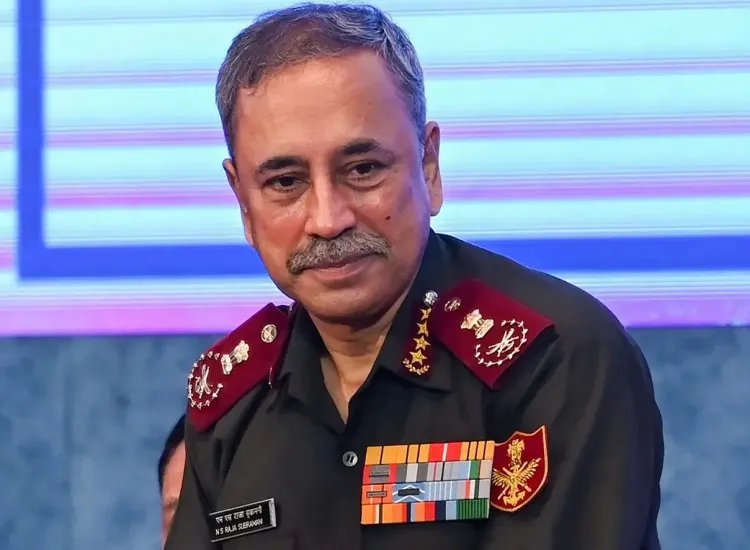
Long-range strikes, space to drive future wars: CDS Subramani
Synopsis
India's top military commander is calling for a shift in how the country fights. CDS General NS Raja Subramani wants a networked, space-enabled force built around long-range strikes, drone platoons and unmanned naval systems. He also warns that ammunition reserves and industrial depth now matter as much as firepower, drawing on lessons from Ukraine.
Key Takeaways
CDS General NS Raja Subramani said networks, space assets and long-range precision strikes will anchor India's future military operations.
He urged the Air Force to induct longer-range air-to-air and air-to-ground missiles, integrated with sensors and air defence systems.
The Army is creating drone platoons and adopting combined-arms tactics for joint operations.
Citing the Russia-Ukraine war, he said layered air defences constrain air operations between near-peer rivals.
He called for a shift from a platform-centric approach to a “system-of-systems” model.
Ammunition reserves, manufacturing capacity and indigenous production were flagged as being as vital as battlefield capability.
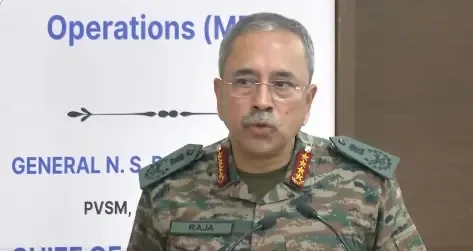
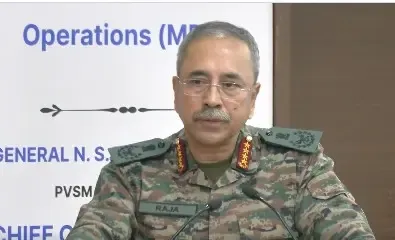
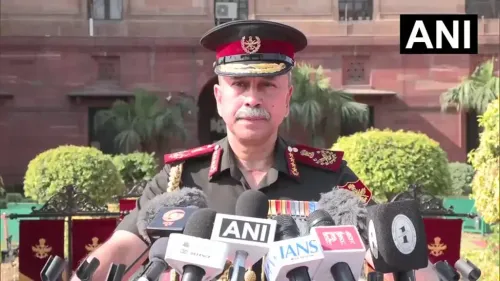
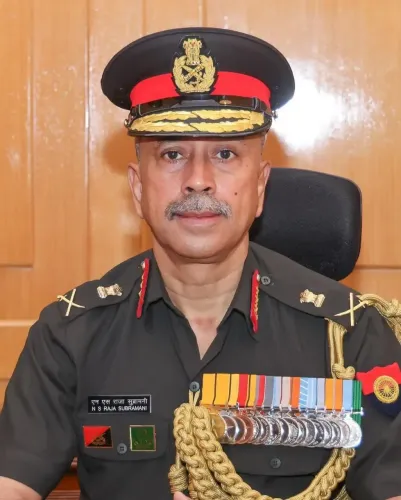
Long-range precision strikes, space-based assets and networked systems will form the backbone of India's future military operations, Chief of Defence Staff General NS Raja Subramani said in New Delhi on 27 November 2026. He set out a roadmap for turning the armed forces into an integrated, technology-driven fighting force, and called for faster modernisation through advanced missiles, rocket systems and next-generation weapons.
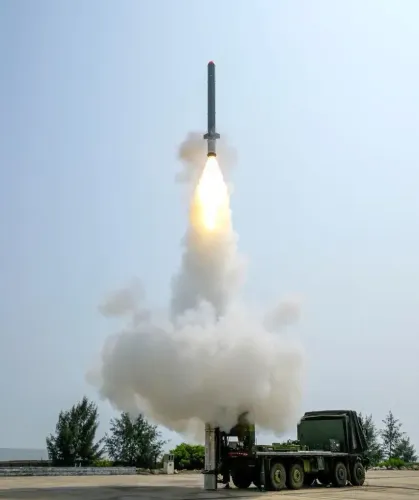
The CDS said future conflicts will be shaped increasingly by connectivity, situational awareness and the ability to strike targets at extended ranges. He noted that India has already demonstrated significant long-range strike capabilities.
Space and Networks as Force Multipliers
According to General Subramani, space will become a critical enabler of military operations. It will provide the networks and real-time information needed for effective decision-making and battlefield dominance.
He said long-range precision engagement capabilities across the Army, Navy and Air Force would be central to India's defence strategy in the coming decades.
Roadmap for the Air Force, Navy and Army
For the Indian Air Force, the CDS advocated inducting longer-range air-to-air and air-to-ground missiles. He also called for closer integration of fighter aircraft with sensors, air defence systems and precision-guided weapons. The future effectiveness of air power, he said, will depend less on individual aircraft and more on how well they are connected within a larger operational network.
On the maritime front, he pointed to the growing relevance of unmanned technologies, including unmanned surface vessels and underwater platforms.
The Indian Army, he said, is also undergoing a major transformation. It is creating drone platoons, inducting longer-range weapons and adopting combined-arms tactics designed for joint operations with the Navy and Air Force.
Lessons from the Russia-Ukraine War
Drawing on the Russia-Ukraine conflict, General Subramani said sophisticated layered air defence systems have significantly constrained air operations between near-peer adversaries. He added that air power remains highly effective against weaker opponents, particularly for long-range precision strikes.
He also cited Ukraine's use of unmanned maritime systems, which inflicted significant damage on the Russian fleet, as evidence of how disruptive such technologies can be.
These developments, the CDS said, show that the military must move away from a platform-centric approach towards a “system-of-systems” model, in which every capability is networked and works as part of a larger integrated structure.
Force Protection and Industrial Resilience
The CDS stressed the importance of force protection in an era of persistent surveillance. He said modern battlefields need active measures such as deception and electronic countermeasures. They also need passive measures, including camouflage, concealment, decoys and underground infrastructure.
Citing recent conflicts, he said strategic depth and industrial resilience are now as important as battlefield capability. Nations must hold enough ammunition reserves, manufacturing capacity and industrial infrastructure to sustain prolonged military operations.
Reaffirming India's push for self-reliance, he said the armed forces are working closely with the domestic defence industry to develop indigenous weapons systems and critical technologies.
The Larger Goal
The office of the Chief of Defence Staff was created to drive jointness among the three services. General Subramani's remarks set out what that integration should look like in practice.
The ultimate objective, he said, is a military that is fully integrated, technologically advanced and self-reliant, and that can fight seamlessly across multiple domains of warfare. The pace of procurement, unmanned inductions and domestic production will show how quickly this roadmap turns into capability.
Point of View
Despite years of self-reliance rhetoric, still struggles with delivery timelines and import dependence for critical components. A “system-of-systems” military will be only as strong as its weakest supply chain, and that is where accountability must now be demanded.
NationPress
28 Nov 2026
Frequently Asked Questions
What did CDS General NS Raja Subramani say about India's future wars?
He said networks, space-based assets and long-range precision strike capabilities will form the backbone of India's future military operations. He outlined a roadmap for an integrated, technology-driven armed force.
What is the system-of-systems model the CDS referred to?
It is an approach in which every military capability is networked and operates as part of a larger integrated structure, rather than relying on individual platforms. The CDS said India must move from a platform-centric model to this one.
What lessons did the CDS draw from the Russia-Ukraine war?
He said layered air defences have constrained air operations between near-peer adversaries, and that Ukraine's unmanned maritime systems inflicted significant damage on the Russian fleet. He also stressed that ammunition reserves and industrial capacity are vital for prolonged conflicts.
What changes are under way in the Indian Army?
The Army is creating drone platoons, inducting longer-range weapons and adopting combined-arms tactics for joint operations with the Navy and Air Force.
What role will indigenous industry play in military modernisation?
The CDS said the armed forces are working closely with the domestic defence industry to develop indigenous weapons systems and critical technologies. Self-reliance is central to his goal of a fully integrated military.