CDS Subramani flags Pakistan-China-Turkey space axis threat
Synopsis
India's top military officer has openly named a Pakistan-China-Turkey space axis as a security threat. CDS Subramani warned that Pakistan could use Chinese satellite surveillance and navigation systems. His answer is a ₹26,968-crore push to put 52 military satellites in orbit within three years.
Key Takeaways
CDS General NS Raja Subramani said on 27 November 2026 that Pakistan's space capability is improving with Chinese help, with likely support from Turkey .
He warned that Pakistan could use Chinese ISR and positioning, navigation and timing systems.
He said the three countries drew closer during and after Operation Sindoor .
SBS Phase-III plans 52 military satellites in three years at a cost of ₹26,968 crore .
ISRO will build 21 satellites and private firms 31 ; the programme was cleared by the CCS in October 2024 .
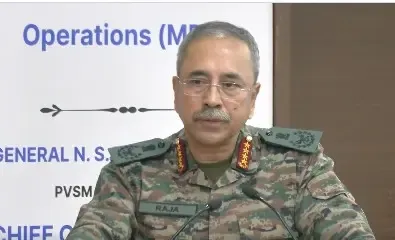
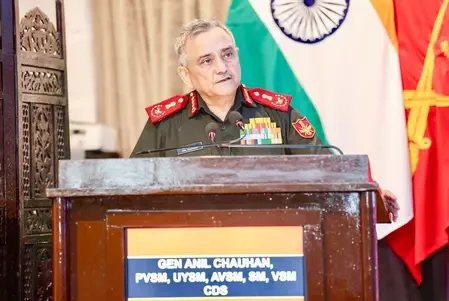
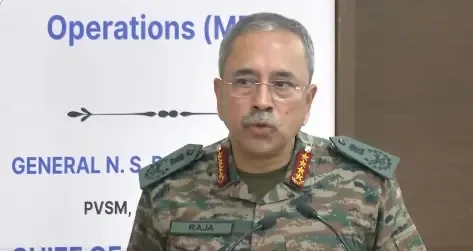
Chief of Defence Staff (CDS) General NS Raja Subramani on Friday, 27 November 2026, warned that Pakistan's expanding space capabilities, backed by China and potentially Turkey, pose a growing security challenge for India. Speaking in New Delhi, he said India must speed up the development of its own space-based military assets to keep its strategic edge.
He made the remarks at a session on the Future of Warfare and India's Preparedness to Conduct Multi-Domain Operations, held at the Vivekananda International Foundation. His comments place space at the centre of India's threat assessment on its western and northern fronts.
CDS Flags Beijing's Role in Pakistan's Space Programme
General Subramani said Islamabad's space programme has been advancing steadily with help from Beijing. At the same time, Pakistan's national space agency, Suparco, is working to build its own indigenous capabilities.
“Pakistan's space capability is improving with Chinese assistance. Suparco is also pursuing the development of its own capabilities, and it is reasonable to expect support from Turkey as well,” the CDS said.
He noted that closer military cooperation among Pakistan, China and Turkey has become an important factor in India's security calculations. He said the three countries drew closer during and after Operation Sindoor.
ISR and Navigation Access Raise the Stakes
The CDS said Pakistan could gain access to advanced Chinese capabilities in intelligence, surveillance and reconnaissance (ISR). He said it could also draw on Chinese positioning, navigation and timing systems. According to him, such access would significantly improve Pakistan's operational awareness and battlefield capabilities.
“Any capabilities available to China in areas such as ISR, positioning, navigation and timing could potentially be leveraged by Pakistan. This is something India must take into account in its strategic planning,” he said. He added that New Delhi would need to respond by strengthening its own surveillance and space-based assets.
This means India may have to plan for a scenario in which a Chinese satellite network effectively serves Pakistan as well. That would extend Beijing's reach into any future India-Pakistan contingency.
SBS Phase-III: 52 Military Satellites in Three Years
To meet these challenges, the CDS stressed the importance of the Space Based Surveillance (SBS) Phase-III programme. He described it as a major step towards strengthening India's military space architecture.
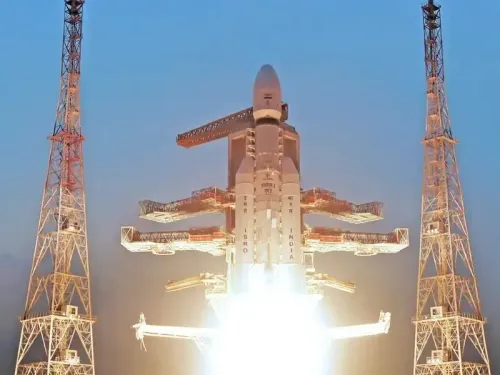
Under the initiative, India plans to deploy 52 dedicated military satellites over the next three years. The Cabinet Committee on Security approved the project in October 2024. It will be implemented under the Defence Space Agency and Headquarters Integrated Defence Staff.
The ₹26,968-crore programme has the Indian Space Research Organisation (ISRO) building and launching 21 satellites. Private-sector firms will deliver the remaining 31. This split reflects industry's growing role in national security projects.
China's Counter-Space Capabilities in Focus
The CDS also pointed to the rapid growth of China's space capabilities. He noted that Beijing has developed advanced technologies that can disrupt or target satellites.
China is widely believed to have anti-satellite systems and electronic warfare tools. These can interfere with satellite communications and navigation networks, which modern militaries rely on for targeting, coordination and early warning.
Against this backdrop, General Subramani said India must keep investing in advanced space, surveillance and defence technologies to stay prepared for the changing nature of warfare. He said dominance in space is becoming as critical as superiority on land, at sea and in the air.
The pace at which the 52 SBS Phase-III satellites are launched over the next three years will be a key test of whether India's space-based military capability can keep up with the threat the CDS has described.
Point of View
Chinese satellites may effectively be working for Pakistan. That turns a two-front land problem into a single, linked threat in space. SBS Phase-III's 52 satellites are a meaningful answer, but only if they actually launch within three years. With 31 satellites assigned to private firms that are still building capacity, execution matters more than ambition. India also needs to think beyond surveillance to resilience. If China can jam or destroy satellites, adding more satellites without the ability to protect or replace them may not be enough.
NationPress
28 Nov 2026
Frequently Asked Questions
What did CDS General NS Raja Subramani say about Pakistan's space capabilities?
He said Pakistan's space capability is improving with Chinese assistance and that Turkey may also offer support. He warned that Pakistan could draw on Chinese ISR and navigation systems, which India must factor into its strategic planning.
What is the SBS Phase-III programme?
Space Based Surveillance Phase-III is a ₹26,968-crore programme to deploy 52 dedicated military satellites over three years. It was approved by the Cabinet Committee on Security in October 2024 and will be run by the Defence Space Agency and Headquarters Integrated Defence Staff.
Who will build the 52 military satellites under SBS Phase-III?
ISRO will build and launch 21 satellites, and private-sector firms will build the remaining 31. The split reflects industry's growing role in national security projects.
Why is the Pakistan-China-Turkey partnership a concern for India?
According to the CDS, military cooperation among the three countries has grown, especially during and after Operation Sindoor. Pakistan's possible access to Chinese surveillance and navigation capabilities could strengthen its battlefield awareness against India.
What counter-space capabilities does China have?
China is widely believed to have anti-satellite systems and electronic warfare tools that can disrupt satellite communications and navigation. The CDS said Beijing has developed advanced technologies capable of disrupting or targeting satellites.