Demographic panel ends 3-day Jammu visit, receives 500-page Panun Kashmir study
Synopsis
A high-level central panel probing demographic shifts across India wrapped its first major field visit — three days in Jammu — with a 500-page Panun Kashmir study, inspections of Rohingya settlements, and community memoranda on illegal immigration. The submissions will shape recommendations that could influence policy on migration, displacement, and security in Jammu and Kashmir.
Key Takeaways
The Parliamentary Committee on Demographic Changes concluded its three-day Jammu visit on 13 August .
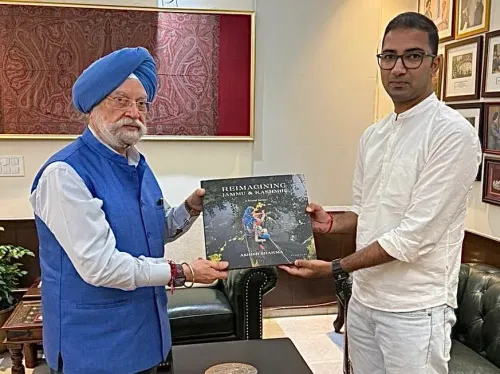
Panun Kashmir submitted a 500-page study covering population patterns, migration, displacement, and property ownership in J&K .
The committee inspected a Rohingya immigrant settlement in Narwal and visited Jagti township , a displaced Kashmiri Pandit colony.
The Public Opinion Forum called for deportation of illegal immigrants from Myanmar and Bangladesh , citing security concerns.
The panel, headed by Justice (Retd) Prakash Prabhakar Navlekar , was constituted by the Centre in May to examine demographic shifts from illegal immigration nationwide.
All submissions will feed into the committee's broader national assessment; further field visits to other regions are expected.
The Parliamentary Committee on Demographic Changes concluded its three-day visit to Jammu on Thursday, 13 August, after holding wide-ranging consultations with government and police officials, community groups, and civil society organisations on demographic shifts in Jammu and Kashmir. The visit marks the committee's first major field exercise since its constitution by the Centre in May.
Key Consultations and Submissions
Among the most significant submissions was a 500-page study presented by Panun Kashmir, covering demographic developments over an extended historical period. The delegation comprised Panun Kashmir convener Agnishekhar, chairman Tito Ganju, and representatives of the Jonaraja Institute of Genocide and Atrocities Studies (JIGAS). The study examines population patterns, migration, displacement, settlement, political representation, and property ownership, with a particular focus on the long-term consequences of displacement in the Kashmir Valley.
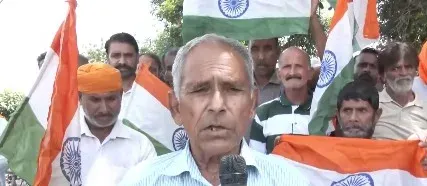
The Public Opinion Forum, represented by president Parveen Kumar Sharma and general secretary Dr Gopal Parthasarthi Sharma, submitted a memorandum raising concerns about the region's changing demographic profile. The Forum called for strict action against illegal immigrants from Myanmar and Bangladesh, including deportation, citing what it described as potential security challenges arising from their presence in the Jammu region.
Field Visits and Community Interactions
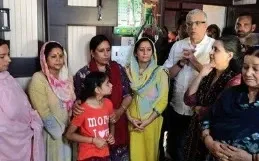
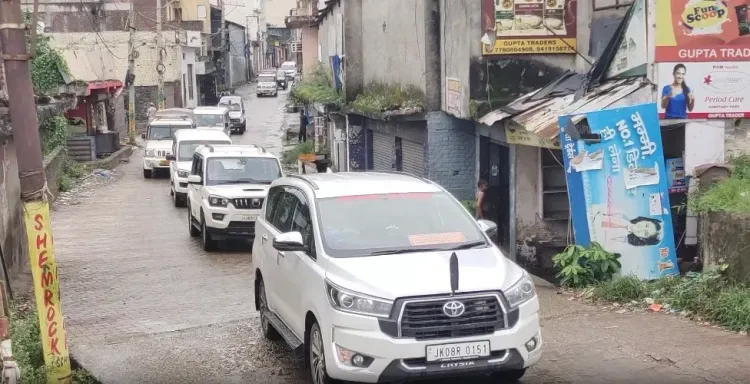
During the three-day programme, the committee visited Jagti township, a major resettlement colony for displaced Kashmiri Pandits, and inspected a slum area in Narwal where Rohingya immigrants are reportedly residing. The panel also interacted with representatives of several communities, including refugees from Pakistan-occupied Jammu and Kashmir (PoJK), West Pakistani refugees, Team Jammu, Gorkha Samaj, and Valmiki Samaj.
Committee Composition and Mandate
The high-level committee is headed by Justice (Retd) Prakash Prabhakar Navlekar and includes Census Commissioner Mritunjay Kumar, former IAS officer Durga Shankar Mishra, former IPS officer Balaji Srivastava, and economist Shamika Ravi. Constituted in May, the panel's mandate is to examine demographic changes across different parts of the country arising from illegal immigration and other abnormal causes, and to recommend corrective measures.
Justice Navlekar separately paid obeisance at the Mata Vaishno Devi shrine in Reasi at the conclusion of the visit, while the remaining members returned to New Delhi.
What Comes Next
The submissions gathered in Jammu — including studies, memoranda, and community representations — are expected to feed into the committee's broader national assessment of demographic changes and their associated social, political, and security implications. Further field visits to other regions are anticipated as the panel continues its countrywide exercise.
Point of View
Given the region's fraught history of displacement, cross-border migration, and identity politics. The 500-page Panun Kashmir submission and the Narwal inspection of Rohingya settlements suggest the panel is engaging with the most contested narratives first. The committee's recommendations will carry significant weight, but their credibility will hinge on whether the panel balances the grievances of displaced communities with verifiable data — rather than reproducing the advocacy of the loudest stakeholders it met.
NationPress
13 Aug 2026
Frequently Asked Questions
What is the Parliamentary Committee on Demographic Changes?
It is a high-level central panel constituted in May to examine demographic changes across India arising from illegal immigration and other abnormal causes, and to recommend policy measures. The committee is headed by Justice (Retd) Prakash Prabhakar Navlekar and includes a census commissioner, former IAS and IPS officers, and an economist.
What did the committee do during its Jammu visit?
Over three days ending 13 August, the committee held consultations with government and police officials, community groups, and civil society organisations. It also conducted field visits to Jagti township — a Kashmiri Pandit resettlement colony — and a Rohingya immigrant settlement in Narwal.
What did Panun Kashmir submit to the committee?
Panun Kashmir submitted a 500-page study examining demographic developments in J&K over an extended historical period, covering population patterns, migration, displacement, political representation, and property ownership, with particular focus on displacement consequences in the Kashmir Valley.
What concerns did community groups raise before the panel?
The Public Opinion Forum called for strict action, including deportation, against illegal immigrants from Myanmar and Bangladesh, citing potential security challenges. Refugees from Pakistan-occupied Jammu and Kashmir and West Pakistani refugees also presented their concerns to the committee.
What happens to the submissions made to the committee?
All studies, memoranda, and community representations gathered during the Jammu visit are expected to form part of the committee's broader national assessment of demographic changes and related social, political, and security issues. Further field visits to other regions are anticipated.