Delhi HC gets new additional judge: Centre clears Gurvinder Pal Singh's appointment
Synopsis
Nearly a month after the Supreme Court Collegium recommended eight judicial officers for the Delhi High Court, the Centre has finally cleared the last pending name — Gurvinder Pal Singh. The same day, three high court chief justices were elevated to the Supreme Court, making it a significant day for judicial appointments.
Key Takeaways
The Centre notified Gurvinder Pal Singh as an Additional Judge of the Delhi High Court on 5 October 2026 .
Singh was the only name among eight recommended by the Supreme Court Collegium on 10 September whose appointment had not been included in the initial 19 September notification.
The other seven — including Nivedita Anil Sharma , Nisha Sahay Saxena , and five others — were notified on 19 September .
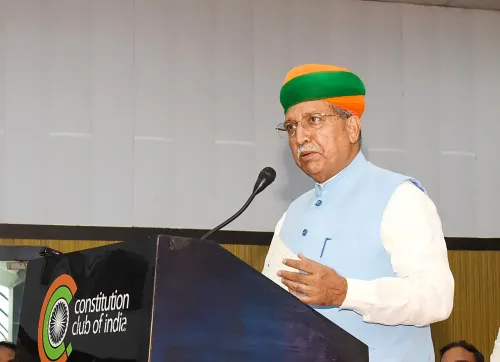
Union Minister Arjun Ram Meghwal announced Singh's appointment via a post on X.
Gujarat HC Chief Justice Sunita Agarwal , Delhi HC Chief Justice Devendra Kumar Upadhyaya , and Telangana HC Chief Justice Aparesh Kumar Singh were also elevated to the Supreme Court on the same day.
The Centre on 5 October 2026 notified the appointment of judicial officer Gurvinder Pal Singh as an Additional Judge of the Delhi High Court, completing a set of eight elevations recommended by the Supreme Court Collegium nearly a month ago. Singh was the sole name from the Collegium's 10 September recommendation whose appointment had remained pending after the initial government notification.
Background: The Eight Recommendations
The Supreme Court Collegium, at its meeting on 10 September, had recommended eight judicial officers for appointment as judges of the Delhi High Court. The full list comprised Gurvinder Pal Singh, Nivedita Anil Sharma, Nisha Sahay Saxena, Sanjay Sharma-I, Bharat Parashar, Dr Aditi Choudhary, Dinesh Bhatt, and Arun Bhardwaj.
What the Earlier Notification Covered
The Centre had moved swiftly on seven of the eight names, issuing a notification on 19 September. That order elevated Nivedita Sharma and Saxena as judges and appointed Sanjay Sharma, Parashar, Choudhary, Bhatt, and Bhardwaj as additional judges of the court. Singh was conspicuously absent from that notification, with no official reason stated at the time.
What the Government Said
Union Minister of State (Independent Charge) for Law and Justice Arjun Ram Meghwal announced the development in a post on X, stating that the President of India, exercising powers conferred by the Constitution of India and after consultation with the Chief Justice of India (CJI), was pleased to appoint Singh as an Additional Judge of the Delhi High Court.
Broader Judicial Appointments Cleared
The same day, the Union Ministry of Law and Justice also notified the elevation of three high court chief justices to the Supreme Court: Gujarat High Court Chief Justice Sunita Agarwal, Delhi High Court Chief Justice Devendra Kumar Upadhyaya, and Telangana High Court Chief Justice Aparesh Kumar Singh. Their elevations followed the Collegium's recommendation of 28 September for their appointment to the apex court.
Significance for the Judiciary
The completion of Singh's appointment closes what had been an unexplained gap in the government's response to the Collegium's recommendation. Notably, the Centre's practice of clearing Collegium recommendations in batches — and occasionally leaving individual names pending — has drawn scrutiny in the past over the pace and selectivity of judicial appointments. With all eight names now notified, the Delhi High Court gains fresh capacity at a time when pendency levels at high courts across India remain elevated.
All eyes will now be on whether the Centre clears the remaining Collegium recommendations for other high courts within similar timeframes.
Point of View
The episode fits a pattern of selective or staggered implementation of Collegium recommendations that has long strained the executive-judiciary relationship over appointments. With judicial vacancies at high courts stubbornly high, any delay in acting on Collegium lists — however briefly — adds to the pendency burden. The simultaneous elevation of three chief justices to the Supreme Court signals the Centre is willing to move on high-profile appointments; the test is whether the same urgency applies equally to all names on the list.
NationPress
5 Oct 2026
Frequently Asked Questions
Who is Gurvinder Pal Singh and what is his new appointment?
Gurvinder Pal Singh is a judicial officer who has been appointed as an Additional Judge of the Delhi High Court by the Centre on 5 October 2026. His appointment completes the set of eight elevations recommended by the Supreme Court Collegium on 10 September.
Why was Gurvinder Pal Singh's appointment delayed compared to the other seven?
The Centre notified seven of the eight Collegium-recommended judicial officers on 19 September, but Singh's name was not included in that notification. No official reason was given for the omission at the time; his appointment was cleared separately on 5 October.
Which three judges were elevated to the Supreme Court on 5 October 2026?
Gujarat High Court Chief Justice Sunita Agarwal, Delhi High Court Chief Justice Devendra Kumar Upadhyaya, and Telangana High Court Chief Justice Aparesh Kumar Singh were all elevated to the Supreme Court. Their elevations followed the Collegium's recommendation of 28 September.
What role does the Supreme Court Collegium play in judicial appointments?
The Supreme Court Collegium recommends the appointment and elevation of judges to high courts and the Supreme Court. The Centre then notifies these appointments after the President exercises powers under the Constitution in consultation with the Chief Justice of India.
Who announced Gurvinder Pal Singh's appointment?
Union Minister of State (Independent Charge) for Law and Justice Arjun Ram Meghwal announced the appointment in a post on X, confirming that the President had approved the elevation after consultation with the Chief Justice of India.