Centre to launch lithium, nickel incentive scheme to power battery ecosystem
Synopsis
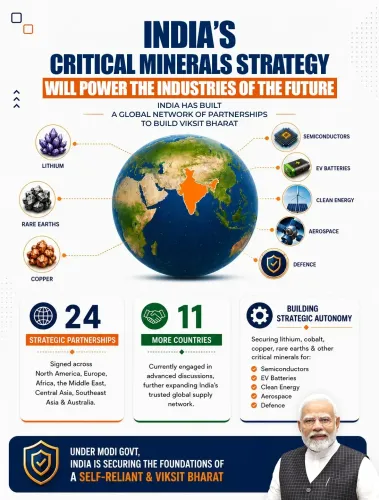
India is set to launch a targeted incentive scheme for domestic lithium and nickel processing — two minerals critical to EV batteries — with four states already designated as mineral ecosystem hubs. Mines Secretary Keshav Chandra confirmed the move at the FIMI AGM, signalling India's sharpest policy push yet to localise its battery supply chain.
Key Takeaways
The Centre will soon launch an incentive scheme for domestic lithium and nickel processing, announced Mines Secretary Keshav Chandra on 22 September 2026 .
Andhra Pradesh and Gujarat will focus on rare earth processing ; Odisha on nickel ; Maharashtra on lithium .
Odisha's eastern location makes it strategically suited to process imported nickel from Indonesia and other countries.
Gujarat already has heavy rare earth availability and beneficiation technology in place.
Full scheme details will be released only after regulatory approvals are received.
The Centre is set to roll out a dedicated incentive scheme for the domestic processing of lithium and nickel — two critical minerals at the heart of India's battery manufacturing ambitions — Mines Secretary Keshav Chandra announced on Tuesday, 22 September. The disclosure came at the 60th Annual General Meeting of the Federation of Indian Mineral Industries (FIMI) in New Delhi, signalling that the government is moving past the policy-drafting stage into active implementation.
What the Scheme Covers
"Very soon, we will be launching our scheme for lithium and nickel," Keshav Chandra said at the FIMI event. Further details, he added, will be made public only after the required regulatory approvals are in place. The scheme is designed to stimulate domestic processing capacity for both minerals, reducing India's dependence on imports across the battery supply chain.
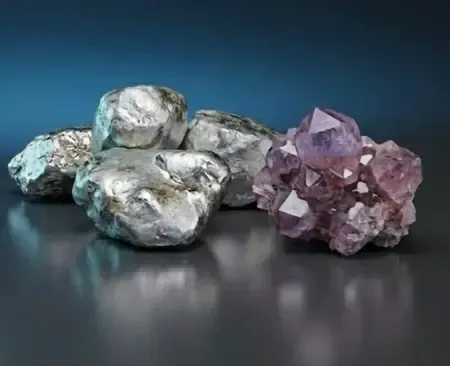
Lithium is a core input for lithium-ion batteries powering electric vehicles (EVs), consumer electronics, and battery energy storage systems (BESS). Nickel, meanwhile, is widely used in stainless steel manufacturing and in high-energy-density lithium-ion battery chemistries — making both minerals strategically indispensable as India accelerates its EV transition.
Four States, Four Mineral Ecosystems
The government has already designated Andhra Pradesh, Odisha, Gujarat, and Maharashtra as the four states where critical mineral processing parks will be established. Each park is being conceived as a self-contained ecosystem tailored to a specific mineral rather than a generic industrial zone.
According to Keshav Chandra, Gujarat and Andhra Pradesh are focused on rare earth processing, while Odisha and Maharashtra are earmarked for nickel and lithium processing, respectively. "All of them are doing a fantastic job. Within a short period, they have identified the sources of minerals, the manner in which they will be processed and the downstream industries that can be developed," he remarked.
State-Level Strengths and Strategic Logic
Gujarat already has access to heavy rare earth elements and has developed beneficiation and processing technology in-house, making it a natural hub for rare earth refining. Andhra Pradesh is being positioned to host a dedicated rare earth corridor. Odisha, which holds its own nickel reserves, is also geographically well-placed to process imported nickel from Indonesia and other mineral-rich nations, given its location in eastern India and proximity to major port infrastructure.
This comes amid a broader global race to secure critical mineral supply chains, with countries from the United States to the European Union rolling out billion-dollar incentive frameworks of their own. India's move mirrors that global momentum while attempting to leverage domestic reserves and strategic geography.
What Comes Next
Exact timelines for the scheme's launch remain contingent on regulatory approvals, with the Mines Secretary declining to specify a formal date. Industry observers note that the speed of inter-ministerial clearances — involving the Ministries of Mines, Heavy Industries, and New and Renewable Energy — will be the key variable. Once launched, the scheme is expected to attract both domestic and foreign investment into India's nascent critical mineral processing sector.
Point of View
But the devil is in the approvals. The four-state specialisation model is conceptually sound: matching mineral parks to natural resource endowments reduces duplication and builds genuine industrial depth. What remains untested is execution speed. India has been talking about battery supply chain localisation since the 2020 PLI rollout; the global window is narrowing as Indonesia deepens its own downstream processing lock-in and the US IRA redirects Western investment flows. The unnamed scheme's incentive structure — grants, viability-gap funding, tax relief, or production-linked payouts — will determine whether it attracts serious capital or stays a policy placeholder.
NationPress
22 Sept 2026
Frequently Asked Questions
What is the Centre's new lithium and nickel incentive scheme?
It is a government incentive programme aimed at boosting domestic processing of lithium and nickel — two minerals critical to EV batteries and stainless steel manufacturing. Mines Secretary Keshav Chandra confirmed its imminent launch at the FIMI AGM on 22 September 2026, with full details to follow after regulatory approvals.
Which states have been selected for critical mineral processing parks?
The four designated states are Andhra Pradesh, Odisha, Gujarat, and Maharashtra. Gujarat and Andhra Pradesh will focus on rare earth processing, while Odisha will handle nickel and Maharashtra will focus on lithium.
Why are lithium and nickel considered critical minerals for India?
Lithium is essential for lithium-ion batteries used in electric vehicles, consumer electronics, and battery energy storage systems. Nickel is a key input in stainless steel manufacturing and in high-energy-density battery chemistries, making both minerals vital to India's EV and clean energy transition.
When will the lithium and nickel scheme be officially launched?
No specific date has been given. Mines Secretary Keshav Chandra said the scheme will be launched 'very soon' but indicated that full details will only be announced after the required approvals are in place.
Why is Odisha particularly suited for nickel processing?
Odisha has its own domestic nickel reserves and is located in eastern India, which gives it logistical advantages for processing imported nickel from Indonesia and other mineral-rich countries. Its proximity to port infrastructure further strengthens its case as a nickel processing hub.