Queer partner can be medical representative if nominated: Centre to Delhi HC

Synopsis
In a significant legal development, the Centre and the National Medical Commission told the Delhi High Court that excluding a queer partner from acting as a patient's medical representative — where the patient has duly nominated them — has no medical or ethical justification. The government stopped short of altering the legal definition of 'spouse', but acknowledged that existing frameworks on advance directives and medical powers of attorney already accommodate the relief sought.
Key Takeaways
The Union Ministry of Health and the NMC told the Delhi High Court on 16 September 2026 that a queer partner duly nominated by a patient may act as their medical representative.
The government said there is no medical or ethical rationale to exclude a partner solely on grounds of sex, gender, or sexual orientation.
The term 'spouse' under Indian matrimonial law remains unchanged; the affidavit relies on advance medical directives and medical powers of attorney as the operative mechanism.
The Supreme Court's Common Cause judgment and the Mental Healthcare Act, 2017 already recognise a 'trusted person' — not necessarily a blood relative — as a valid nominated representative.
An August 2024 advisory already allows queer partners to be treated as the same household for ration-card purposes; the Department of Financial Services permits joint accounts and nominations.
The petition was filed by Arshiya Takkar and is being heard by the Delhi High Court following an order dated 20 August 2026 .
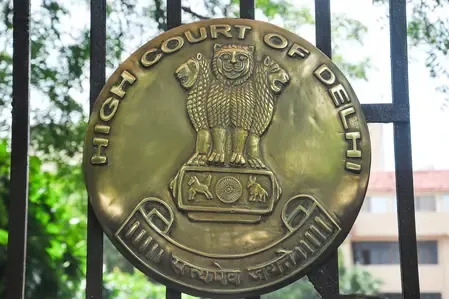
The Union Ministry of Health and Family Welfare and the National Medical Commission (NMC) told the Delhi High Court on 16 September 2026 that a non-heterosexual partner may be permitted to act as the medical representative of a patient in case of incapacity, asserting that there is no medical or ethical rationale to exclude such a person solely on account of their sex, gender, or sexual orientation. The position was set out in a short affidavit filed in response to a writ petition by Arshiya Takkar, pursuant to a 20 August 2026 order of the court.
What the Government's Affidavit Said
The affidavit stated: 'Where a competent adult has nominated or otherwise authorised his/her partner to act on his/her behalf in the event of incapacity, there appears to be no medical or ethical rationale for excluding such person merely on account of the sex, gender or sexual orientation of the partners or because their union does not fall within the conventional understanding of marriage.'
The document was filed by Abhijit Chakraborty, Director, National Medical Commission, as the authorised representative of the Union of India through the Ministry of Health and Family Welfare and the NMC. It acknowledged the constitutional guarantees of dignity, privacy, autonomy, equality, and individual choice available to all persons, including those belonging to the LGBTQIA+ community, while clarifying that nothing in the affidavit was intended to question constitutional protections available to persons in queer relationships.
The Legal Framework and Its Limits
The Centre and the NMC simultaneously maintained that the term 'spouse' under the existing Indian matrimonial framework — including the Hindu Marriage Act, 1955 and the Special Marriage Act, 1954 — refers specifically to the status of husband or wife arising from a legally recognised marriage, and that its meaning cannot be altered through the present proceedings.
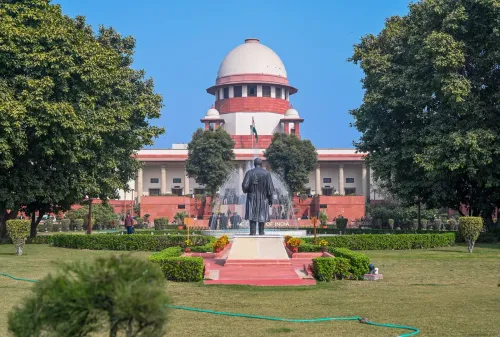
They relied on the Supreme Court's Constitution Bench judgment in Supriyo @ Supriya Chakraborty v. Union of India, which held that persons in a same-sex relationship do not acquire the statutory status of 'spouse' under the existing statutory framework merely by virtue of being in such a relationship. This creates a legal floor beneath which the government says it cannot go without legislative intervention.
How Existing Rules Already Allow It
The affidavit argued that the petitioner's reliefs were 'substantially capable of being accommodated within the existing legal and ethical framework.' It pointed to several provisions in support:
The Supreme Court's judgment in Common Cause v. Union of India recognised the right to die with dignity and the concept of Advance Medical Directives, including a medical power of attorney through which any person — described as a 'trusted person', not necessarily a blood relative — could be nominated to make medical decisions. The Mental Healthcare Act, 2017 similarly provides for an 'Advance Directive' and a 'Nominated Representative', and a 2021 Delhi High Court judgment observed that such a representative 'can be any person who may have been chosen by an advance directive.'
On emergency situations, the affidavit cited Section 30 of the Bharatiya Nyaya Sanhita, 2023, submitting that the absence of a relative or attendant should not by itself prevent urgently necessary or life-saving treatment. It added that where a patient is temporarily unconscious and there is no medical emergency, the preferred course would be to wait until the patient regains capacity.
Steps Already Taken Beyond Healthcare
The affidavit pointed to a broader administrative shift following the Supriyo ruling. An August 2024 advisory by the Department of Food and Public Distribution enables partners in a queer relationship to be treated as members of the same household for ration-card purposes. The Department of Financial Services separately clarified that there is no restriction on queer persons opening joint bank accounts or nominating a queer partner as nominee.
Notably, the Union Health Ministry's own provisions concerning terminally ill patients already allow a close acquaintance to take decisions regarding care when a parent, relative, next of kin or family member is unavailable — a formulation the affidavit cited as consistent with the petitioner's position.
What the Petition Seeks
The petition by Arshiya Takkar seeks guidelines directing hospitals, physicians, and registered medical practitioners to recognise non-heterosexual partners as medical representatives, allow them to give consent in medical situations, and grant them access to their partners during treatment or emergencies. In the alternative, it seeks a declaration that a medical power of attorney executed in advance by a patient in favour of a non-heterosexual partner would be sufficient to authorise that partner to act as medical representative. The matter is now before the Delhi High Court for further hearing.
Point of View
Instruments that require foresight and legal literacy that are unevenly accessible. The bigger question the affidavit does not answer is why Clause 7.16 of the 2002 Medical Council Regulations, which still lists 'husband or wife' as the default consent-giver, has not been amended — a legislative fix well within the Health Ministry's administrative reach. Incrementalism by advisory, as this affidavit reflects, advances rights without securing them.
NationPress
16 Sept 2026
Frequently Asked Questions
Can a queer partner act as a medical representative in India?
Yes, if the patient has duly nominated them through an advance medical directive or medical power of attorney. The Centre and the NMC told the Delhi High Court on 16 September 2026 that there is no medical or ethical rationale to exclude a non-heterosexual partner solely on grounds of sex, gender, or sexual orientation, provided the patient has made that nomination while competent.
What is the case before the Delhi High Court about?
The petition, filed by Arshiya Takkar, seeks guidelines directing hospitals and doctors to recognise non-heterosexual partners as medical representatives, allow them to give consent, and permit access during treatment or emergencies. It also seeks a declaration that a medical power of attorney in favour of a queer partner should be sufficient for these purposes.
Does the government's position mean queer partners are legally treated as spouses?
No. The affidavit explicitly states that the term 'spouse' under Indian matrimonial law — including the Hindu Marriage Act, 1955 and the Special Marriage Act, 1954 — cannot be altered through these proceedings. The government's position is that existing advance directive and power-of-attorney frameworks can accommodate the relief without changing the definition of 'spouse'.
Which Supreme Court judgments did the Centre rely on?
The affidavit cited three Supreme Court rulings: Supriyo @ Supriya Chakraborty v. Union of India (holding that same-sex partners do not acquire 'spouse' status under existing law), Common Cause v. Union of India (recognising advance medical directives and the right to nominate a 'trusted person'), and Samira Kohli v. Dr Prabha Manchanda (on the requirement of real, voluntary, and informed consent).
What other steps has the government taken to recognise queer relationships?
Beyond healthcare, an August 2024 advisory by the Department of Food and Public Distribution allows queer partners to be treated as the same household for ration-card purposes. The Department of Financial Services has clarified that queer persons face no restriction in opening joint bank accounts or nominating a queer partner as a financial nominee.