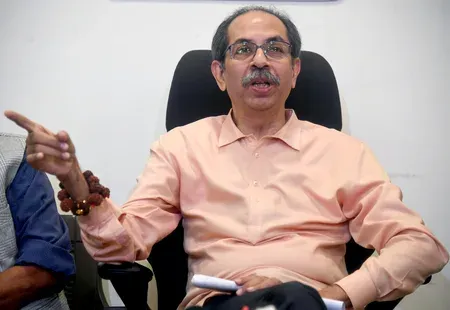
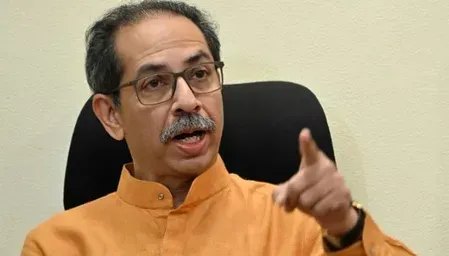
Shiv Sena(UBT) slams Centre for shielding ministers amid youth revolt
Synopsis
Shiv Sena(UBT)'s Saamana didn't just criticise the government — it declared a revolution underway. With youth marching on Parliament through tear gas, Sonam Wangchuk on a 20-day hunger strike, and five senior ministers named for accountability, the editorial signals that the Opposition is framing 2024's street anger as a structural rupture, not a passing protest cycle.
Key Takeaways
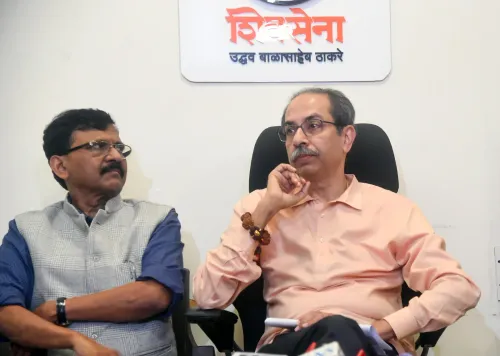
Shiv Sena (UBT) accused the Centre of shielding incompetent ministers in a Saamana editorial published on Tuesday, 21 July .
The party characterised nationwide youth protests — including a march towards Parliament — as the beginning of a 'revolution'.
Environmentalist Sonam Wangchuk 's 20-day hunger strike at Jantar Mantar was cited as a key rallying point for the movement.
Five ministers were named: Dharmendra Pradhan (NEET), Amit Shah (Manipur), Rajnath Singh (Ladakh), Nirmala Sitharaman , and S.
Protests have spread to Mumbai's Shivaji Park , Pune , and Nagpur , beyond the national capital.
The editorial warned that youth, having shed fear and blind devotion, will 'make life impossible for the ruling class'.
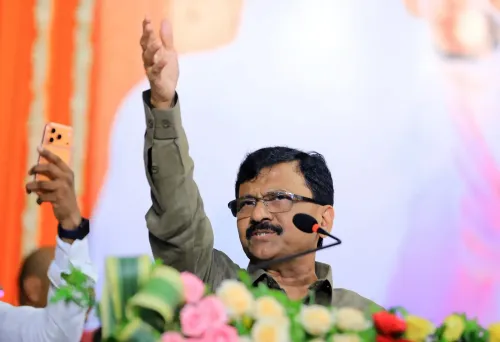
Shiv Sena (UBT) on Tuesday accused the Central government of protecting incompetent ministers while a nationwide youth agitation gains momentum, characterising the street protests as the early stirrings of a 'revolution'. The charge came through a sharp editorial in the party's mouthpiece, Saamana, as demonstrations spread from New Delhi to Mumbai, Pune, and Nagpur.
What the Saamana Editorial Said
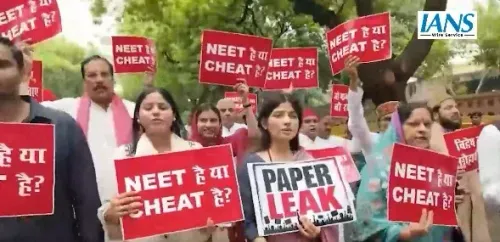
The editorial pulled no punches, declaring that slogans of 'Modi, quit power' and rejection of what it called 'dictatorship' are now reverberating in the streets. It noted that thousands of young people marched towards Parliament, refusing to disperse even after tear gas and lathi-charges by police — a show of resolve, the party argued, that has rattled the administration.
The piece drew on remarks attributed to Chief Justice of India Surya Kant, who reportedly referred to unemployed youth as 'cockroaches' — a comment the editorial used as a galvanising metaphor. 'The youth were living in Modi's India believing that this is our destiny and Modi is our God, while in reality, their lives — devoid of jobs, work, home, and dignity — had become like that of cockroaches. However, cockroaches are known to survive even in the harshest conditions. Scientists believe that when the world comes to an end, the cockroach will be among the few living beings left alive. Now, Prime Minister Modi and his government have begun to fear these very cockroaches,' the editorial stated.
Sonam Wangchuk's Hunger Strike as a Rallying Point
The editorial highlighted environmentalist Sonam Wangchuk's 20-day hunger strike at Jantar Mantar as a focal point for the broader movement. It alleged that the ruling party's arrogance gave way only after Wangchuk's health deteriorated and he required hospitalisation — framing the government's response as reactive rather than empathetic.
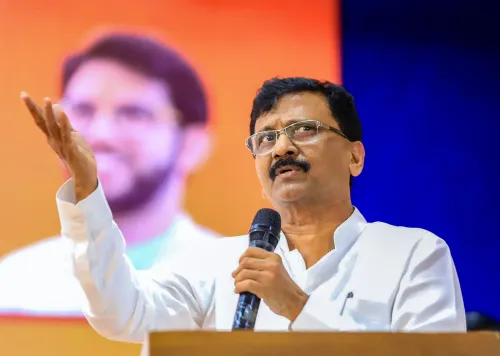
The Uddhav Thackeray-led party said the agitation has spread well beyond the national capital, with large-scale demonstrations reported at Mumbai's Shivaji Park under the leadership of Aaditya Thackeray.
Ministers Named in the Critique
The editorial specifically called out several senior cabinet members whom it accused Prime Minister Narendra Modi of refusing to hold accountable. The list included Education Minister Dharmendra Pradhan, targeted over the NEET exam paper-leak controversy; Home Minister Amit Shah, criticised over the law-and-order situation in Manipur and alleged systemic corruption; Defence Minister Rajnath Singh, questioned over border issues with China in Ladakh; and Finance Minister Nirmala Sitharaman and External Affairs Minister S. Jaishankar, cited over economic instability and foreign policy concerns respectively.
The Warning to the Government
The editorial concluded with a pointed warning, arguing that youth have shed both fear and blind loyalty. 'While children of Union Ministers study in foreign universities and secure high-paying jobs, they will hold leaders accountable and enter their homes, the Prime Minister's Office, the Home Ministry, the Education Ministry, the Supreme Court, and the Raj Bhavan. They will make life impossible for the ruling class,' it stated.
With the agitation showing no signs of abating and Wangchuk's movement drawing cross-sectional support, the political pressure on the Centre is likely to intensify in the days ahead.
Point of View
Manipur, Ladakh, unemployment, Wangchuk) into a single anti-incumbency narrative ahead of a politically charged season. By invoking the 'cockroach' metaphor attributed to the Chief Justice, the party is also attempting to expand its coalition beyond traditional Shiv Sena voters to disaffected youth with no prior party affiliation. The five ministers named are not randomly chosen; each represents a pressure point where the government's credibility is already under strain. What mainstream coverage may miss is that this editorial signals a deliberate Opposition strategy: frame street anger as systemic, not episodic, and force the Bharatiya Janata Party (BJP) to defend its entire ministerial record simultaneously.
NationPress
21 Jul 2026
Frequently Asked Questions
What did Shiv Sena(UBT)'s Saamana editorial say about the youth protests?
The Saamana editorial, published on 21 July, described the nationwide youth protests as the start of a 'revolution', noting that thousands marched towards Parliament and refused to disperse even after tear gas and lathi-charges. The party accused the Centre of shielding incompetent ministers rather than addressing the underlying grievances driving the agitation.
Why is Sonam Wangchuk's hunger strike significant to this protest movement?
Environmentalist Sonam Wangchuk undertook a 20-day hunger strike at Jantar Mantar, which the Saamana editorial cited as a rallying point for the broader agitation. The editorial alleged that the ruling establishment only took notice after Wangchuk's health deteriorated and he was hospitalised, framing the government's response as indifferent.
Which ministers did Shiv Sena(UBT) demand accountability from?
The editorial named five ministers: Education Minister Dharmendra Pradhan over the NEET paper-leak controversy, Home Minister Amit Shah over the law-and-order situation in Manipur, Defence Minister Rajnath Singh over border issues with China in Ladakh, and Finance Minister Nirmala Sitharaman and External Affairs Minister S. Jaishankar over economic and foreign policy concerns respectively.
Where have the youth protests spread beyond New Delhi?
According to the Saamana editorial, large-scale demonstrations have been reported at Mumbai's Shivaji Park, led by Aaditya Thackeray, as well as in Pune and Nagpur, indicating the agitation has moved well beyond the national capital.
What was the 'cockroach' reference in the Saamana editorial about?
The editorial attributed the spark of the mass agitation to remarks reportedly made by Chief Justice of India Surya Kant, who allegedly referred to unemployed youth as 'cockroaches'. Shiv Sena(UBT) reclaimed the metaphor, arguing that — like cockroaches known for surviving extreme conditions — India's youth would outlast and ultimately challenge the ruling establishment.