Raghav Chadha Addresses Common Concerns of Indians in Rajya Sabha and Proposes Meaningful Reforms
Synopsis
In a compelling address, Raghav Chadha of AAP brings attention to three pressing concerns affecting everyday Indians, advocating for reforms that would enhance fairness in the taxation system and alleviate the financial burdens imposed by banks.
Key Takeaways
Optional joint income tax filing could benefit couples with unequal incomes.
Full tax exemption on disability pensions for soldiers is essential.
Banks should eliminate minimum balance penalties to foster financial inclusion.
Reforms are necessary for a more equitable financial system.
Chadha's proposals aim to relieve financial stress on ordinary citizens.
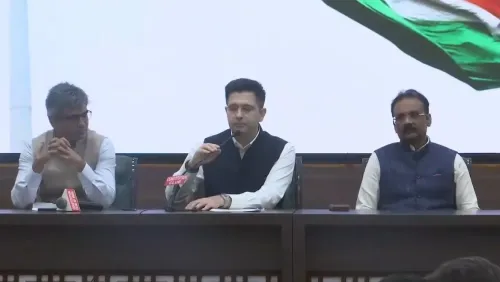
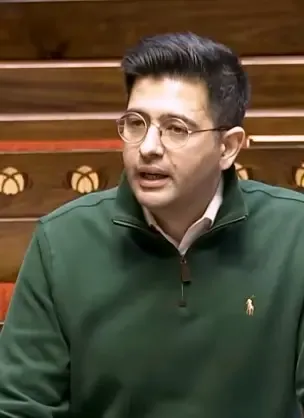
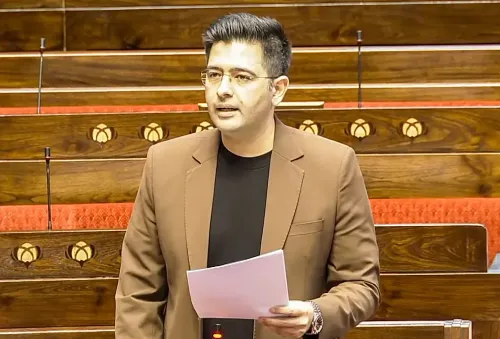
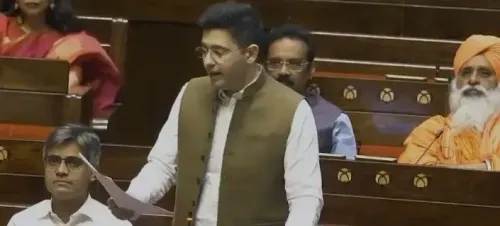
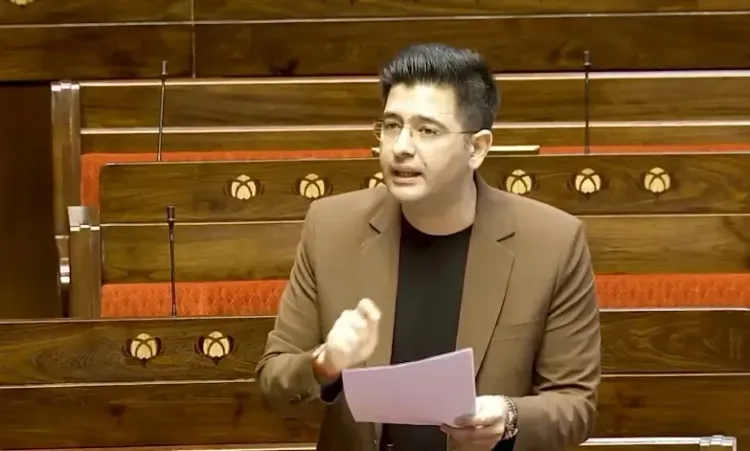
New Delhi, March 16 (NationPress) Raghav Chadha, a member of the Aam Aadmi Party (AAP) in the Rajya Sabha, highlighted three significant "everyday worries" impacting the lives of common Indians on Monday, urging the government to implement thoughtful reforms.
Chadha's proposals included enabling optional joint income tax filing for married couples, ensuring complete tax exemption on disability pensions for all injured soldiers, and eliminating penalties imposed by banks for not maintaining a minimum balance.
During the Budget Session discussion in the Upper House, he emphasized that these three concerns directly influence millions of citizens and necessitate policy modifications to create a more equitable and humane system.
He articulated the first concern as the necessity to "allow optional joint filing of income tax returns so that married couples with unequal incomes are not penalized."
Chadha noted that India's current tax system only permits individual filing for spouses, which often puts families with uneven income distributions at a disadvantage.
In many households, one partner may earn significantly more while the other earns little or nothing. In such cases, the higher-earning spouse ends up shouldering a more substantial tax burden because their incomes cannot be combined for tax calculations.
He referenced other nations, such as the United States and Germany, where couples are allowed to file taxes jointly. This system enables spouses to pool their incomes, taking advantage of available tax brackets, often resulting in a reduced total tax obligation for the household.
Chadha advocated that implementing optional joint filing in India could aid families in managing their financial situations without leading to considerable revenue loss for the government. He asserted that this reform would render the taxation framework fairer for households with unequal earnings.
The second issue he raised pertained to disability pensions for military personnel. Historically, disability pensions awarded to soldiers injured in the line of duty were fully exempt from income tax.
However, he pointed out that a recent policy shift limited this complete tax exemption to soldiers who are "invalided out" or medically discharged from service due to their injuries.
"Those who continue to serve despite their disabilities or retire normally after incurring injuries are now subject to taxation on a portion or all of their disability pensions," he remarked.
Chadha described this situation as unjust and potentially demoralizing for soldiers who have sustained injuries while serving the nation.
"These are injuries sustained in service to the country," he stated, stressing that such benefits should not be contingent upon the type of discharge from the armed forces.
He called upon the government to restore full income tax exemption on disability pensions related to service-related injuries, irrespective of whether the soldier remains in service or is invalided out.
The third issue he addressed was the penalties levied by banks when account holders fail to maintain the requisite minimum balance in their savings or current accounts.
He indicated that banks often impose charges ranging from hundreds to over a thousand rupees monthly when account balances fall below the required threshold.
Chadha argued that these penalties disproportionately impact low-income individuals, rural residents, and marginal account holders who struggle to maintain such balances.
He highlighted that banks have accumulated thousands of crores of rupees over the years from these penalties.
"The bank should not view this as a crime. Bank accounts are intended to provide financial security. Instead of security, they impose financial stress. We have turned a banking system into one that punishes poverty," he asserted during his speech.
He pointed out that the minimum balance requirements vary based on the location of bank branches.
In urban areas, branches typically require customers to maintain balances between Rs 5,000 and Rs 10,000, while semi-urban branches necessitate Rs 3,000 to Rs 4,000, and rural branches demand between Rs 1,000 and Rs 3,000.
Failure to meet these requirements often leads to penalties ranging from Rs 50 to Rs 600 per month.
"Even on these charges, we incur 18 percent GST," he noted, adding that the overall financial burden becomes heavier for those who can least afford it.
Chadha contended that such penalties contradict the aim of financial inclusion and deter individuals from engaging with the formal banking system.
"If we want more individuals to participate in the banking system for financial inclusion, we must safeguard small savings and not penalize them," he emphasized.
In conclusion, the AAP leader urged the government to abolish minimum balance penalties entirely, especially for basic savings accounts, asserting that this would foster financial inclusion nationwide.
"Ultimately, I want to emphasize that banks are penalizing the underprivileged and reaping profits at the expense of their financial well-being, causing the poor to become poorer," he stated.
He further urged the government to consider waiving such charges, likening it to measures like farm loan waivers.
"In conclusion, I urge the government to abolish the penalty for minimum account balances. Just as we forgive farmers' loans, the charges for Minimum Average Balance (MAB) should be eliminated, ensuring financial inclusion for the poor," Chadha said.
Point of View
They also highlight the need for a more humane approach to governance.
NationPress
11 Oct 2026
Frequently Asked Questions
What reforms did Raghav Chadha propose?
Raghav Chadha proposed optional joint income tax filing for couples, complete tax exemption on disability pensions for injured soldiers, and the abolition of minimum balance penalties by banks.
Why is optional joint filing important?
Optional joint filing allows married couples with uneven incomes to combine their earnings for tax purposes, potentially lowering their overall tax burden.
What is the issue with disability pensions?
Recent policy changes have limited tax exemptions on disability pensions, penalizing soldiers who continue to serve despite injuries.
How do minimum balance penalties affect individuals?
Minimum balance penalties disproportionately impact low-income individuals, imposing financial stress and discouraging participation in the formal banking system.
What is the call to action from Chadha?
Chadha urges the government to implement these reforms to promote financial inclusion and alleviate the burdens on ordinary citizens.