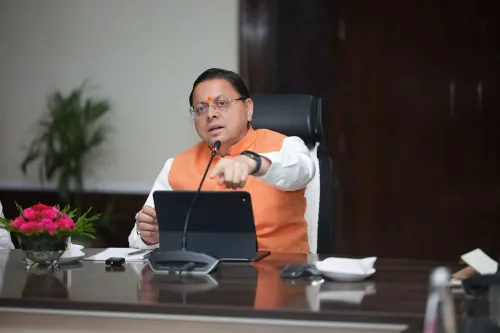
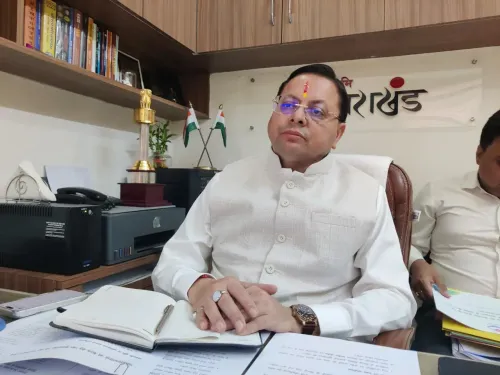
Chamoli Admin Prioritises Monsoon Disaster Response, Food Supply
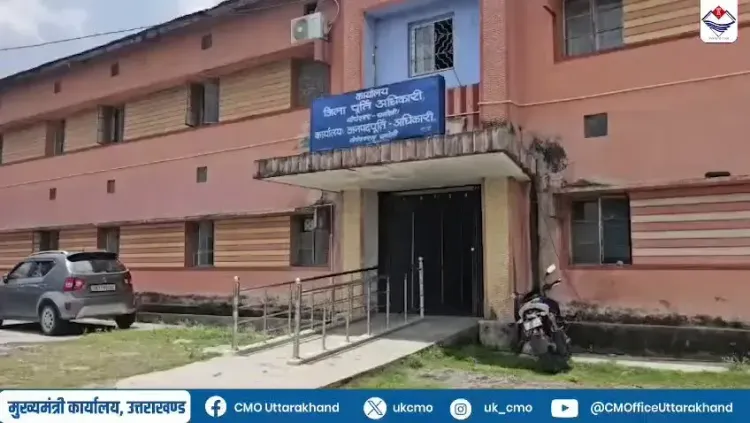
Synopsis
The Uttarakhand Chief Minister's Office has highlighted that the Chamoli district administration is treating monsoon disaster response and food grain availability as its highest priorities for the 2026 monsoon season, in line with post-2021 state mandates on district-level preparedness.
Key Takeaways
The Chamoli district administration has declared monsoon disaster management and food grain availability its top priorities for the 2026 monsoon season .
The announcement was shared by the Chief Minister's Office of Uttarakhand on 13 July 2026 .
Chamoli is among Uttarakhand's most disaster-prone districts, having suffered a major glacier burst in February 2021 and severe floods in 2013 .
Annual district-level monsoon preparedness reviews were mandated by the state after the 2021 Chamoli disaster , guided by NDMA frameworks.
The district's remote villages and the Badrinath pilgrimage corridor face the greatest risk of road isolation and supply disruption during peak monsoon months.
The Uttarakhand State Disaster Management Authority review meetings and activation of relief stocks will be key indicators as the monsoon intensifies.
The Chief Minister's Office of Uttarakhand on Monday, 13 July 2026 shared that the Chamoli district administration has placed effective monsoon disaster management and uninterrupted food grain availability at the top of its preparedness agenda for the ongoing monsoon season.
Context
The post, shared by the official CMO handle, states that the Chamoli district administration has given 'highest priority' (sarvoch prathamikta) to 'effectively dealing with any potential disaster during the monsoon and maintaining food grain availability.' The announcement signals that pre-monsoon contingency planning is now in active implementation mode across one of Uttarakhand's most disaster-prone districts.
Chamoli sits deep in the Garhwal Himalayas and is regularly cut off from supply lines when landslides and flash floods block key roads during the June-to-September monsoon window. Ensuring food stocks reach remote villages before roads are severed is a logistical challenge that district administrations must plan for months in advance.
Policy Backdrop
Uttarakhand mandated annual district-level monsoon preparedness reviews following the February 2021 Chamoli glacier burst, which triggered a devastating flash flood in the Rishiganga and Dhauliganga river valleys, killing over 200 people and destroying critical infrastructure. That event — coming less than a decade after the catastrophic June 2013 Kedarnath floods — underscored the need for standing district-level contingency plans rather than reactive responses.
The current preparedness framework draws from National Disaster Management Authority (NDMA) guidelines, which require district administrations to pre-position relief stocks, identify vulnerable settlements, and establish communication protocols before peak monsoon intensity. Chamoli's dual focus on disaster response capacity and food grain logistics is consistent with this framework.
Stakeholders and Impact
The most direct beneficiaries are the residents of Chamoli's remote high-altitude villages — many of which lie along the Badrinath corridor and border areas — who face the greatest risk of isolation. Local supply chains, fair-price shop networks, and civil defence volunteers are all part of the preparedness ecosystem the administration is activating.
For the broader state, Chamoli's approach also carries significance because the district is a critical transit zone for pilgrims on the Char Dham Yatra. Any disruption in the area has cascading effects on tourism, livelihoods, and inter-district road connectivity across Uttarakhand.
What's Next
Attention will now turn to the Uttarakhand State Disaster Management Authority (USDMA) and its review meetings as the monsoon intensifies through July and August 2026. Observers will watch for any reported activation of pre-positioned relief stocks, deployment of road-clearance machinery, or emergency food distribution in areas that become cut off.
If the 2026 monsoon follows recent patterns of above-normal rainfall in the western Himalayas, the district administration's early prioritisation of both disaster response and food security could prove decisive in limiting humanitarian impact across Chamoli.
Point of View
The administration signals awareness that supply-chain failure, not just physical destruction, is often what turns a natural hazard into a prolonged humanitarian crisis. This dual emphasis also aligns with NDMA's push for district-level contingency planning to move beyond generic protocols toward operationally specific, pre-positioned responses. Whether the stated priorities translate into measurable on-ground readiness will be tested as the 2026 monsoon intensifies over the Garhwal Himalayas in the weeks ahead.
NationPress
14 Jul 2026
Frequently Asked Questions
Why is Chamoli district particularly vulnerable during the monsoon?
Chamoli lies deep in the Garhwal Himalayas and is frequently cut off by landslides and flash floods that block key roads, isolating remote villages and disrupting food and relief supply chains for days or weeks at a time.
What steps has the Chamoli administration taken for monsoon 2026?
According to the Uttarakhand CMO, the Chamoli district administration has made effective disaster response and maintaining food grain availability its highest priorities for the 2026 monsoon season, consistent with state-mandated preparedness frameworks.
What triggered Uttarakhand's mandatory district monsoon preparedness reviews?
The February 2021 Chamoli glacier burst, which caused a devastating flash flood in the Rishiganga and Dhauliganga valleys and killed over 200 people, led Uttarakhand to mandate annual district-level monsoon preparedness reviews.
How does NDMA guidance shape Chamoli's disaster planning?
National Disaster Management Authority guidelines require district administrations to pre-position relief stocks, identify vulnerable settlements, and establish communication protocols before peak monsoon intensity — a framework Chamoli's current preparedness plan follows.
What should residents and pilgrims in Chamoli watch for during monsoon 2026?
Residents and Char Dham Yatra pilgrims should monitor advisories from the Uttarakhand State Disaster Management Authority, watch for road-closure notifications on the Badrinath corridor, and note any activation of emergency food distribution by the district administration.