CM Dhami: Char Dham Road Project 90% Complete, Cost Rs 12,000 Cr
Synopsis
Chief Minister Pushkar Singh Dhami announced that the Rs 12,000 crore Char Dham Road Project is approximately 90 per cent complete under PM Modi's leadership, improving road access across Uttarakhand's pilgrimage circuit and hill regions.
Key Takeaways
CM Dhami stated the Char Dham Road Project is approximately 90 per cent complete as of June 2026.
The project carries an estimated cost of Rs 12,000 crore and was approved by the Union Cabinet in 2016 .
It covers road upgrades connecting Badrinath, Kedarnath, Gangotri and Yamunotri shrines.
The project is part of the Bharatmala Pariyojana framework, serving both pilgrimage and strategic border connectivity needs.
Key beneficiaries include pilgrims, hill residents, and the Indian defence forces operating along the northern frontier.
The final 10 per cent of work, including any pending tunnels and environmentally sensitive stretches, remains under watch.
The Chief Minister's Office of Uttarakhand, citing Chief Minister Pushkar Singh Dhami, announced on Thursday, June 11, 2026 that the Char Dham Road Project is approximately 90 per cent complete, crediting the initiative to the leadership of Prime Minister Narendra Modi. The project, valued at Rs 12,000 crore, has been described as significantly improving movement across the Char Dham pilgrimage circuit and large parts of the hill region.
Context
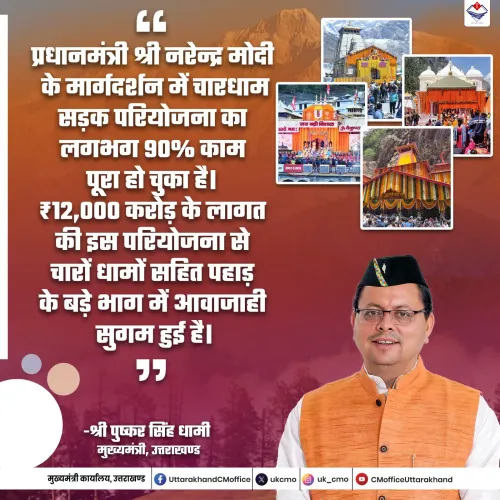
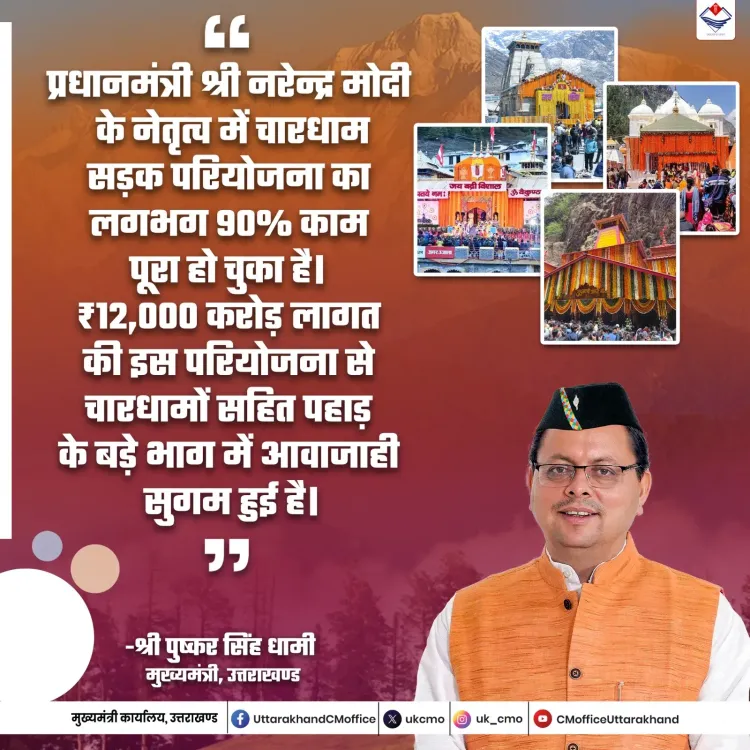
In the post, CM Dhami stated: 'Pradhanmantri Shri Narendra Modi ke netritva mein Char Dham Sadak Pariyojana ka lagbhag 90% kaam poora ho chuka hai' — ('Under the leadership of Prime Minister Narendra Modi, approximately 90 per cent of the Char Dham Road Project has been completed'). He added that the Rs 12,000 crore project has eased movement across the Char Dham shrines and a large portion of the hill areas. The post was tagged under #Uttarakhand and #12YearsOfGaribKalyan, linking the infrastructure milestone to the ruling dispensation's broader social welfare narrative.
Policy Backdrop
The Char Dham Road Project was formally approved by the Union Cabinet in 2016 at an estimated cost of approximately Rs 12,000 crore, forming part of the post-2014 national highway acceleration drive. The project aims to widen and upgrade roads connecting the four sacred shrines — Badrinath, Kedarnath, Gangotri and Yamunotri — from single-lane mountain tracks into two-lane national highways with tunnels and bridges. The routes were also incorporated under the Bharatmala Pariyojana, the 2015 umbrella highway programme that prioritised strategic border connectivity alongside pilgrimage access in Uttarakhand, which shares a border with China.
Since 2014, the central government has pursued all-weather road construction across Himalayan states to ensure year-round connectivity to pilgrimage sites and forward defence locations. Comparable upgrades are underway in Himachal Pradesh and Ladakh under the same strategic infrastructure framework, reflecting a consistent national policy of Himalayan connectivity.
Stakeholders and Impact
The project's beneficiaries span multiple groups: millions of pilgrims and tourists who undertake the Char Dham Yatra annually, hill residents who depend on reliable road access for daily commerce and emergency services, and the Indian defence forces that require rapid logistics movement along the northern frontier. Improved all-weather connectivity is expected to reduce travel time and risk during the monsoon season, when Himalayan roads have historically been vulnerable to landslides and closures. Local economies along the pilgrimage corridors stand to gain from higher tourist footfall and reduced transport costs.
What's Next
With approximately 90 per cent of the project reported as complete, attention will now turn to the remaining work, including any pending tunnels, bridges, or stretches in ecologically sensitive zones. The project has previously been subject to environmental scrutiny and periodic cost reviews, and the final phase of execution will be watched for revised timelines or expenditure updates. Completion of the full corridor would mark a significant milestone in the government's Himalayan infrastructure agenda ahead of the next Char Dham Yatra season.
Point of View
Framing the Char Dham project as a symbol of PM Modi's development agenda in the Himalayas. The hashtag '#12YearsOfGaribKalyan' signals that the post is part of a coordinated political communication campaign rather than a standalone infrastructure update. The Char Dham project sits at the intersection of pilgrimage economy, strategic defence logistics, and environmental sensitivity — making its final completion phase politically and administratively significant. How the government navigates the remaining work, particularly in ecologically contested stretches, will shape the project's legacy beyond the electoral cycle.
NationPress
26 Oct 2026
Frequently Asked Questions
What is the Char Dham Road Project?
The Char Dham Road Project is a central government initiative to widen and upgrade roads connecting the four sacred Himalayan shrines of Badrinath, Kedarnath, Gangotri and Yamunotri in Uttarakhand, approved by the Union Cabinet in 2016 at an estimated cost of Rs 12,000 crore.
How much of the Char Dham Road Project is complete?
Chief Minister Pushkar Singh Dhami stated on June 11, 2026 that approximately 90 per cent of the Char Dham Road Project has been completed.
What is the total cost of the Char Dham Road Project?
The project was approved at an estimated cost of approximately Rs 12,000 crore and forms part of the Bharatmala Pariyojana umbrella highway programme.
Who benefits from the Char Dham Road Project?
The project benefits pilgrims and tourists undertaking the Char Dham Yatra, hill residents across Uttarakhand, and Indian defence forces that require reliable logistics along the northern border with China.
What is Bharatmala Pariyojana and how is it linked to Char Dham roads?
Bharatmala Pariyojana is a central highway programme launched in 2015 that prioritises strategic and economic road corridors; the Char Dham routes were incorporated under this framework to ensure all-weather connectivity for both pilgrimage and border defence purposes.