Char Dham Yatra 2026 Sets All-Time Record: 65.55 Lakh Pilgrims

Synopsis
Uttarakhand's Chief Minister's Office announced on November 17, 2026 that the Char Dham Yatra has set an all-time record, with more than 65.55 lakh devotees offering prayers across all four Himalayan shrines in a single season for the first time ever.
Key Takeaways
65.55 lakh-plus devotees visited the Char Dham shrines in 2026 — an all-time record for a single yatra season.
The Chief Minister's Office of Uttarakhand confirmed this is the first time the circuit has surpassed this threshold.
The Char Dham circuit spans four Himalayan shrines: Yamunotri, Gangotri, Kedarnath and Badrinath , open roughly May to November .
The Char Dham Highway Project (2016) and improved online registration and helicopter services are credited with enabling record-level safe access.
Rising footfall intensifies focus on crowd management, environmental carrying capacity and disaster preparedness protocols for future seasons.
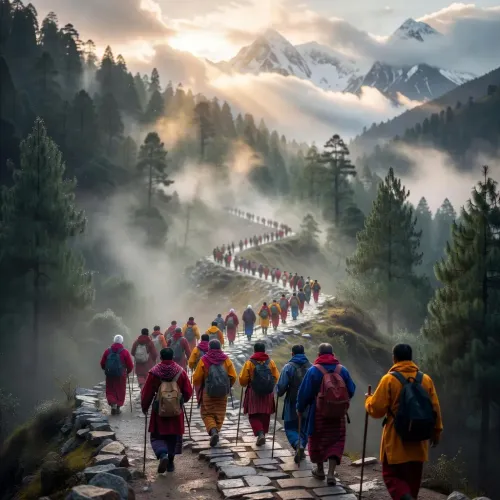
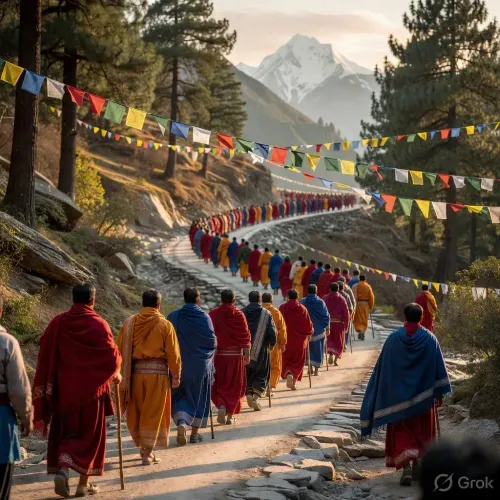
A mountain pilgrimage route that winds through some of the most forbidding terrain on Earth just rewrote its own history. The Chief Minister's Office of Uttarakhand announced on Tuesday, November 17, 2026 that the Char Dham Yatra 2026 has set an all-time record — for the first time in the pilgrimage's history, more than 65.55 lakh devotees completed darshan across all four shrines in a single yatra season.
The official post declared: 'Chardham Yatra mein bana naya record, pehli baar poore yatra kaal mein 65.55 lakh se adhik shraddhaaluon ne kiye darshan' — 'A new record has been set in the Char Dham Yatra; for the first time ever, more than 65.55 lakh devotees have offered prayers across the entire yatra period.'Four shrines, one historic season
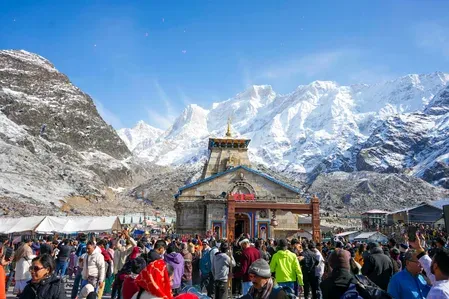
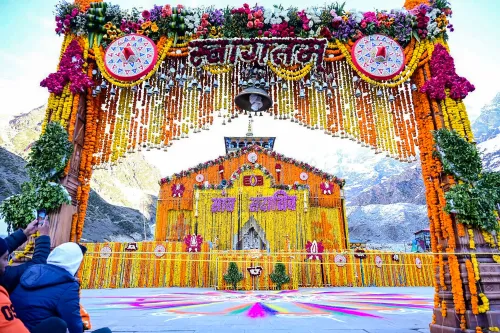
The Char Dham circuit — comprising Yamunotri, Gangotri, Kedarnath and Badrinath — sits deep in the Uttarakhand Himalayas, with shrines accessible only during a window that typically runs from May through November. At its heart is Kedarnath, the glacial-valley shrine that draws the largest single-shrine crowds and whose infrastructure has been the subject of sustained government investment since the devastating 2013 floods nearly obliterated the pilgrim trail.
The scale of 65.55 lakh — over 6.5 million people — flowing through high-altitude passes in a single season is a logistical and devotional feat of considerable magnitude. It places the 2026 season above every previous recorded year, a threshold the CMO explicitly flagged as a first.
Roads, registrations, and the infrastructure shift behind the numbers
The surge in footfall did not arrive by accident. The Char Dham Highway Project, approved by the central government in 2016, set out to widen and all-weather-proof the arterial roads connecting all four shrine towns. The decade-long project has steadily reduced travel times and improved safety on stretches that were once single-lane, landslide-prone bottlenecks — directly lowering the barrier for older pilgrims and families who previously could not make the journey.
Alongside roads, mandatory online registration systems and expanded helicopter services to Kedarnath have spread peak-day crowds across the season, reducing dangerous single-day surges. Post-COVID-19 recovery campaigns and state tourism promotion from 2021 onwards also accelerated a broader national appetite for domestic religious travel that has now culminated in the 2026 record.
What the milestone means for Uttarakhand
Uttarakhand's economy is structurally tied to religious tourism; the Char Dham circuit is its single largest pilgrimage draw. A record season translates directly into revenue for the state's hotels, transport operators, pujaris, and local vendors — communities that bore the sharpest losses during the pandemic years. For the state government, the announcement also carries political weight: consistently rising yatra numbers are presented as evidence that infrastructure investment and administrative planning are delivering results.
The flip side is pressure. Higher footfall intensifies questions around crowd management, environmental carrying capacity and disaster preparedness — the ecologically sensitive Himalayan zone has seen glacial floods and landslides that have killed pilgrims in previous seasons. As the 2026 portals close, attention will now shift to whether the state's review of this season produces fresh protocols robust enough to manage whatever the next record brings.
Sixty-five lakh pilgrims — and counting. The Himalayas have absorbed another historic season; now comes the harder question of how to do it again, safely.
Point of View
Not a one-off event. The Char Dham Highway Project and digital registration reforms set in motion in the mid-2010s have now compounded to unlock a scale of religious travel that was structurally impossible before. For the Uttarakhand government, the milestone is a powerful political-economic signal — but it also sharpens a tension that state managers cannot defer indefinitely: Himalayan ecosystems and disaster-prone terrain have hard carrying limits that footfall records will eventually stress-test. The next policy chapter is not about promotion; it is about sustainable management.
NationPress
17 Nov 2026
Frequently Asked Questions
What is the Char Dham Yatra record for 2026?
In 2026, more than 65.55 lakh (6.55 million) pilgrims completed darshan at the four Char Dham shrines — the highest figure ever recorded in a single yatra season, according to the Uttarakhand Chief Minister's Office.
Which four shrines make up the Char Dham circuit in Uttarakhand?
The Uttarakhand Char Dham circuit comprises Yamunotri, Gangotri, Kedarnath and Badrinath , all located in the Himalayan ranges and open to pilgrims roughly from May to November each year.
Why has Char Dham Yatra footfall been rising in recent years?
Key drivers include the Char Dham Highway Project (2016) improving road access, mandatory online registration systems , expanded helicopter services , state tourism promotion post-COVID, and a broader national surge in domestic religious travel.
When does the Char Dham Yatra season close?
The Char Dham shrines typically close for the winter between October and November , with exact dates varying by shrine and determined by religious calendars. The CMO's November 17, 2026 record announcement coincides with the approaching end of the season.
What are the concerns around record Char Dham pilgrim numbers?
Higher footfall raises concerns about crowd management, environmental carrying capacity in the ecologically sensitive Himalayas, and disaster preparedness — the region is prone to glacial floods and landslides that have caused pilgrim casualties in past seasons.