Priyanka Chaturvedi: Understanding Heroes and Villains in History
Synopsis
In a recent statement, Shiv Sena-UBT MP Priyanka Chaturvedi argued for the necessity of including both heroes and villains, like Jinnah, in educational curriculums to ensure future generations grasp the complexities of India's history and its ongoing conflicts.
Key Takeaways
Historical Context: Understanding both heroes and villains is crucial for grasping historical narratives.
Educational Impact: Removing key figures from curricula can impair students' understanding of current events.
Cultural Significance: Recognizing adversaries is essential in the study of history and culture.
Political Reactions: Various political figures express differing views on the portrayal of historical figures in education.
Future Generations: The knowledge imparted to students shapes their understanding of national identity and history.
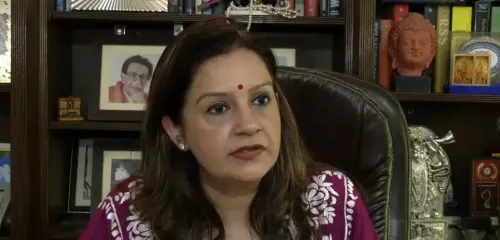
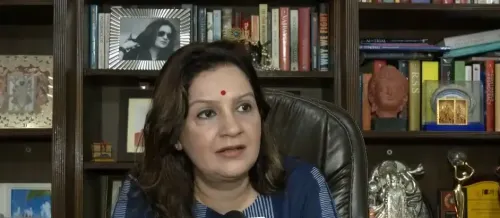
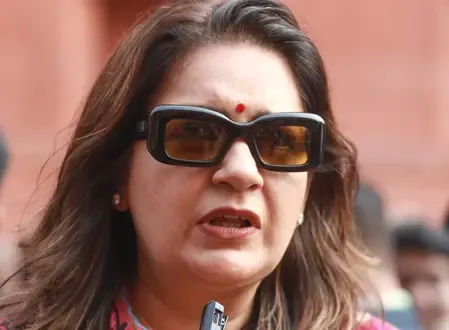
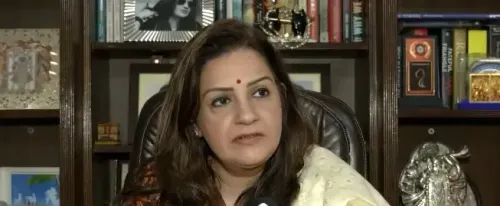
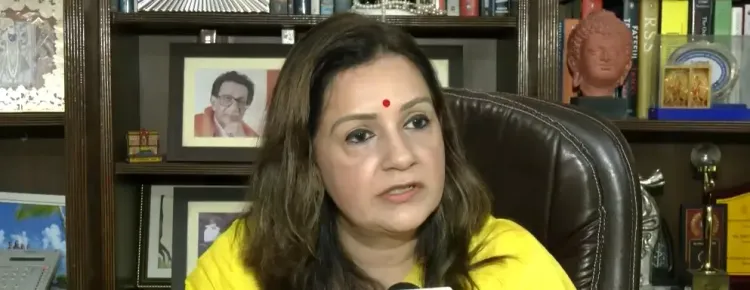
New Delhi, March 23 (NationPress) Shiv Sena-UBT MP Priyanka Chaturvedi expressed her views regarding the Jammu University committee's suggestion to eliminate references to Muhammad Ali Jinnah, the founder of Pakistan, from the academic curriculum. She argued on Monday that a comprehensive understanding of history necessitates acknowledging both heroes and villains.
Chaturvedi highlighted that if we celebrate heroes, it is imperative to recognize their adversaries. "If there are heroes, then who did they confront? There are villains as well," she stated.
She emphasized that omitting such significant historical figures from educational materials would rob future generations of an essential perspective on history and the origins of current issues. She raised concerns about how students would grasp the complexities surrounding India's partition and its ongoing conflicts with Pakistan if such pivotal narratives are disregarded.
"On the pages of history, if there are heroes, then who did they fight? For that, there are villains too. The greatest villain for our country was Jinnah, who divided our nation. Before Independence, Jinnah demanded division and called for Pakistan and Bangladesh," Chaturvedi told IANS.
"He established East Pakistan and West Pakistan. What will our future generations learn about him? How will they comprehend the reasons behind the country's division? The root cause of all this lies with Jinnah," she added.
Stressing the necessity of historical knowledge, she remarked, "If that is excluded from textbooks, how will future generations understand our conflicts with Pakistan?"
In a cultural analogy, Chaturvedi noted, "If we revere heroes, we must also acknowledge the villains. If we worship Lord Ram, we should also learn about Ravan and his significance in our culture. Understanding both is crucial."
Meanwhile, Congress spokesperson Surendra Rajput commented on the matter, stating, "Not only Jinnah, but also Syed Ahmad Khan should be included in discussions. The Sangh and the BJP should clarify their position on Sir Syed Ahmad. The RSS needs to explain why Jinnah was listed among top freedom fighters."
Rajput further alleged that these topics are raised to distract from more pressing issues. "Members associated with the BJP often bring up trivial matters to avoid discussing significant topics like Jammu and Kashmir’s statehood. Grant them statehood, and other matters can resolve themselves," he told IANS.
National Conference MP Mian Altaf Ahmed Larvi expressed that there is no justification for protests regarding these topics, advocating that students should focus on their university challenges instead. He described these actions as cheap publicity that only exacerbates the situation and noted that the people of Jammu do not support such actions.
Conversely, Bihar Minister Ram Kripal Yadav backed the decision, asserting that the initiatives undertaken by the government through the Education Department are appropriate and should be welcomed.
The Department Affairs Committee of the University of Jammu on Sunday recommended the exclusion of topics related to former Pakistan Governor-General Jinnah from the political science curriculum following protests by ABVP, as noted in a press release. Additionally, the committee suggested removing references to Sir Syed Ahmad Khan and poet Mohammad Iqbal.
Frequently Asked Questions
Why is Jinnah considered a villain in Indian history?
Jinnah is often viewed as a villain due to his role in advocating for the partition of India, which led to the creation of Pakistan and significant communal strife.
What was the recommendation made by Jammu University regarding Jinnah?
The Jammu University committee recommended removing references to Muhammad Ali Jinnah from the political science curriculum.
What impact might removing Jinnah from the curriculum have?
Removing Jinnah from the curriculum could limit students' understanding of the historical context of India's partition and its ongoing impact on Indo-Pak relations.
How did Priyanka Chaturvedi react to these recommendations?
Priyanka Chaturvedi criticized the recommendations, emphasizing the importance of including both heroes and villains for a comprehensive understanding of history.
What did other political figures say about this issue?
Other politicians, including Congress spokesperson Surendra Rajput, suggested that figures like Syed Ahmad Khan should also be discussed in educational contexts.