Chhattisgarh CMO Calls for Drug-Free Society on World Drug Day
Synopsis
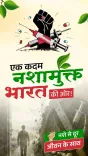
The Chief Minister's Office of Chhattisgarh marked World Drug Day on 26 June 2026 by urging citizens to pledge collectively for a drug-free society, aligning the state with the UN-designated observance and India's Nasha Mukt Bharat Abhiyan.
Key Takeaways
The Chhattisgarh CMO posted a public pledge on 26 June 2026 — International Day Against Drug Abuse and Illicit Trafficking — calling for a drug-free society.
World Drug Day has been observed annually on 26 June since a UN General Assembly resolution in 1987 .
India's Nasha Mukt Bharat Abhiyan , launched in 2020 , targets 272 high-risk districts with awareness, counselling and de-addiction services.
The NDPS Act, 1985 and India's 1978 ratification of the UN Convention on Psychotropic Substances form the legal backbone of the country's drug-control framework.
Chhattisgarh's tribal communities and youth are among the key stakeholders in state-level anti-drug outreach efforts.
Follow-up announcements on new de-addiction centres or expanded scheme coverage in Chhattisgarh will indicate whether the pledge translates into policy action.
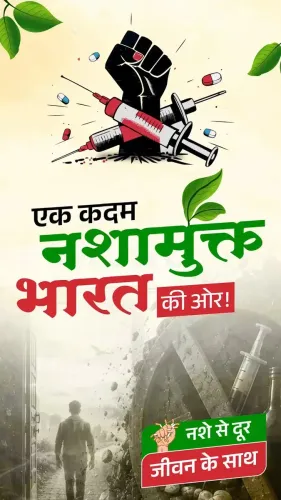
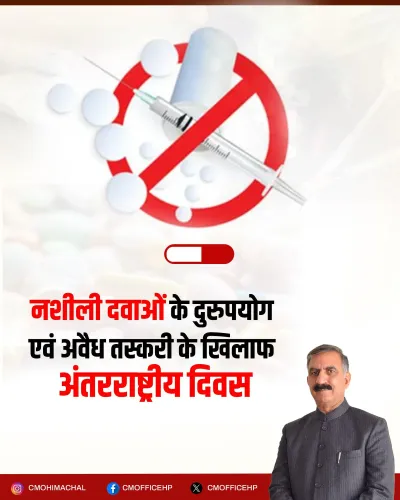
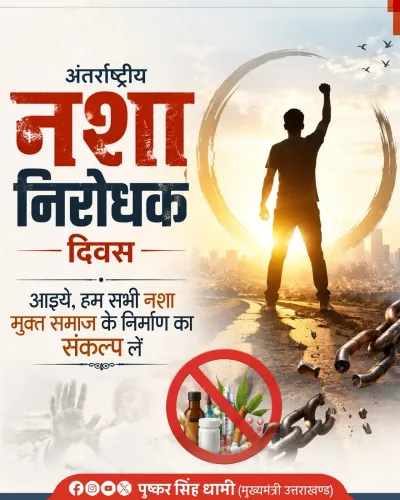
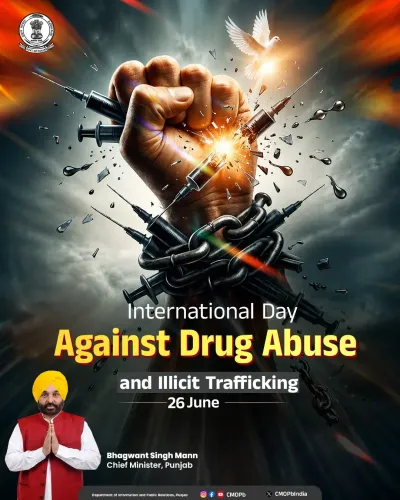
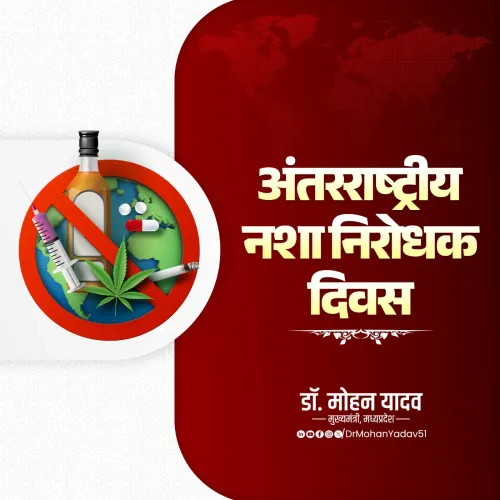
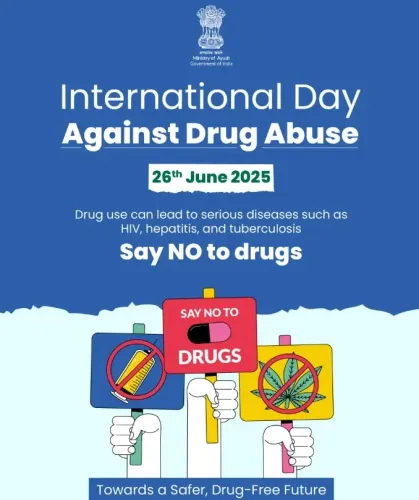
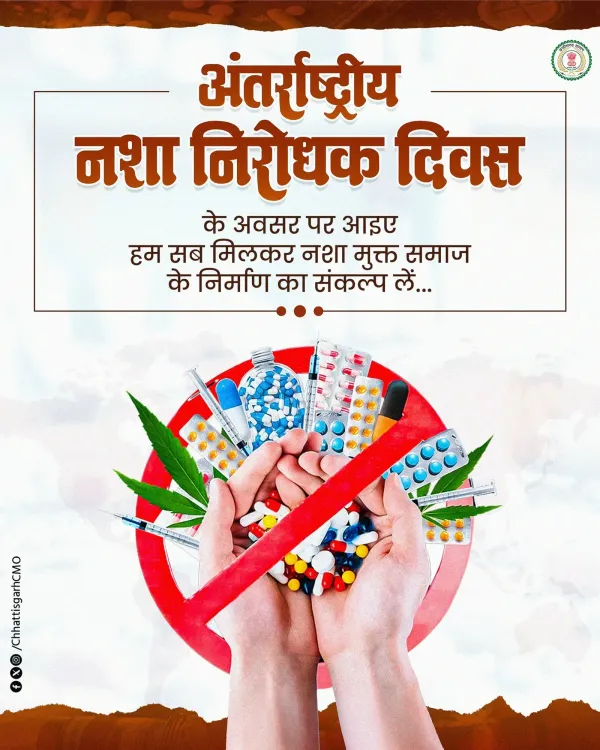
The Chief Minister's Office of Chhattisgarh on Friday, 26 June 2026, marked the International Day Against Drug Abuse and Illicit Trafficking by calling on citizens to collectively pledge to build a drug-free society, aligning the state with global and national anti-narcotics observances.
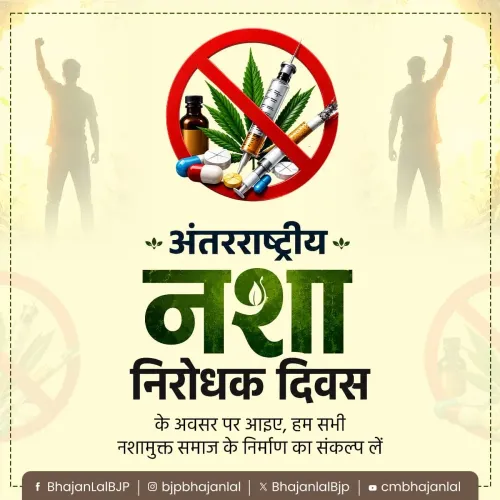
Posting on X, the official handle of the Chhattisgarh CMO wrote: 'Antararashtriya Nasha Nirodak Divas ke avasar par aiye hum sab milkar nasha mukt samaj ke nirman ka sankalp lein' — 'On the occasion of International Anti-Drug Day, let us all together resolve to build a drug-free society.' The message was accompanied by the hashtags #SayNoToDrugs and #WorldDrugDay.
Context
World Drug Day, observed every year on 26 June, was established by the United Nations General Assembly in 1987 to strengthen global action against drug abuse and illicit trafficking. The United Nations Office on Drugs and Crime (UNODC) coordinates the annual theme and provides technical support to member states, including India, under its drug-control conventions. Indian state governments routinely align local messaging with this UN-designated date to reinforce national anti-narcotics policy.Policy Backdrop
India's legislative foundation on drug control dates to the Narcotic Drugs and Psychotropic Substances (NDPS) Act, 1985, which consolidated and amended laws relating to narcotic drugs across the country. India had earlier ratified the UN Convention on Psychotropic Substances in 1978, committing to international cooperation on drug control. Building on this framework, the Union Ministry of Social Justice and Empowerment launched the Nasha Mukt Bharat Abhiyan in 2020, targeting 272 high-risk districts with awareness drives, counselling, and de-addiction services. The campaign was expanded nationwide in 2021 with a specific focus on educational institutions and community-based rehabilitation. Chhattisgarh, a central Indian state with significant tribal populations, sits at the intersection of health and social welfare delivery where substance abuse programmes carry particular importance. The state's participation in the annual observance reflects a broader national pattern of integrating drug-prevention awareness into existing health and social-justice schemes.Stakeholders and Impact
The pledge is directed at multiple vulnerable groups: youth, tribal communities, and frontline health workers who form the backbone of outreach under schemes such as the Nasha Mukt Bharat Abhiyan. For tribal belts in Chhattisgarh, where access to formal de-addiction infrastructure can be limited, state-level visibility of the issue is seen as a prerequisite for mobilising community participation. Annual observances also serve to keep district health administrations accountable for implementing centrally sponsored de-addiction programmes.What's Next
Attention will now turn to whether the Chhattisgarh government follows the symbolic pledge with concrete budgetary or programmatic announcements — such as new district-level de-addiction centres or expanded coverage under the Nasha Mukt Bharat Abhiyan — in the weeks following the 26 June observance. The next annual review of the scheme's coverage in the state will be a key indicator of how the government translates today's public commitment into measurable outcomes on the ground.Point of View
Where tribal health and substance abuse intersect with deeper socioeconomic vulnerabilities, such pledges carry weight only if followed by measurable programme expansions. The real test will be whether the June 26 statement catalyses fresh allocations under the Nasha Mukt Bharat Abhiyan or remains a ceremonial marker on the political calendar.
NationPress
26 Jun 2026
Frequently Asked Questions
What is International Day Against Drug Abuse and Illicit Trafficking?
It is a UN-designated global observance held every year on 26 June , established by the UN General Assembly in 1987 to strengthen worldwide action against drug abuse and illicit trafficking. The UNODC coordinates the annual theme.
What is Nasha Mukt Bharat Abhiyan?
Nasha Mukt Bharat Abhiyan is a national campaign launched in 2020 by India's Ministry of Social Justice and Empowerment. It targets 272 high-risk districts with awareness drives, counselling, and de-addiction services, and was expanded to educational institutions nationwide in 2021 .
Why did the Chhattisgarh CMO post about World Drug Day 2026?
The Chief Minister's Office of Chhattisgarh posted on 26 June 2026 to mark World Drug Day , calling on citizens to collectively pledge to build a drug-free society — in line with the annual UN observance and India's national anti-narcotics policy framework.
What law governs drug control in India?
The primary legislation is the Narcotic Drugs and Psychotropic Substances (NDPS) Act, 1985 , which consolidated and amended all laws relating to narcotic drugs in India. India also ratified the UN Convention on Psychotropic Substances in 1978 .
How does Chhattisgarh's tribal population relate to drug abuse programmes?
Chhattisgarh has significant tribal communities where access to formal de-addiction infrastructure can be limited. State-level participation in anti-drug observances helps mobilise community outreach and keeps district health administrations accountable for implementing centrally sponsored programmes.