Chhattisgarh CMO Expands Krishak Unnati Yojana, Offers ₹15,000/Acre
Synopsis
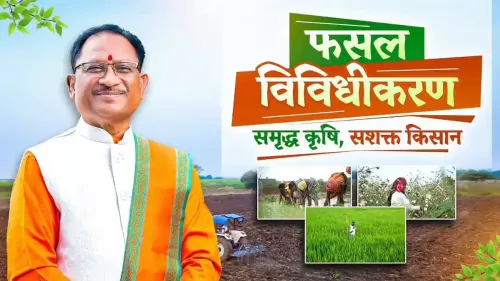
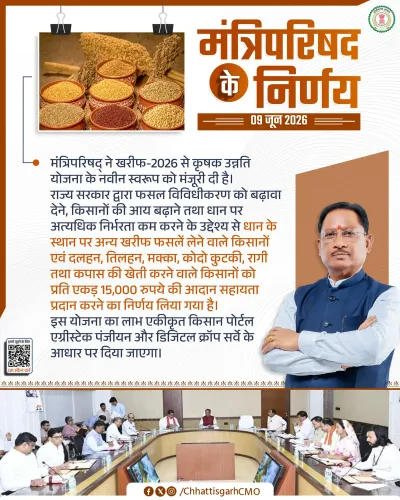
Chhattisgarh's CMO has expanded the Krishak Unnati Yojana to offer ₹15,000 per acre to farmers who replace paddy with pulses, oilseeds, maize, millets, or cotton — a direct push to reduce paddy monoculture and build climate-resilient agriculture in the state.
Key Takeaways
The Chief Minister's Office of Chhattisgarh announced an expansion of the Krishak Unnati Yojana on 23 June 2026 .
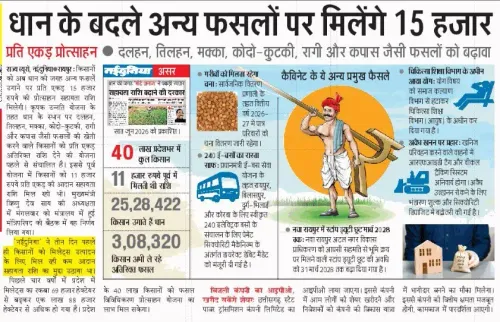
Farmers shifting from paddy to pulses, oilseeds, maize, kodo, kutki, ragi, and cotton will receive ₹15,000 per acre as input assistance.
The scheme builds on the Rajiv Gandhi Kisan Nyay Yojana (2020) model of direct per-acre income support.
The move targets reduction of water-intensive paddy monoculture and promotes crop diversification in the kharif season.
Tribal and smallholder farmers growing traditional coarse grains like kodo, kutki, and ragi are among the key new beneficiaries.
Kharif 2026 sowing data and timely fund disbursement will be the key metrics to assess scheme impact.
The Chief Minister's Office of Chhattisgarh on Tuesday, 23 June 2026, announced an expansion of the Krishak Unnati Yojana, extending per-acre input support to farmers who shift away from paddy cultivation to alternative crops including pulses, oilseeds, maize, millets, and cotton.
Context
The official post states: 'किसानों की समृद्धि सुशासन सरकार की प्राथमिकता' ('Farmer prosperity is the priority of good-governance government'). Under the expanded scheme, farmers cultivating pulses (dal), oilseeds (til), maize (makka), kodo millet, kutki, ragi, and cotton in place of paddy will now receive ₹15,000 per acre as input assistance. The announcement signals a formal policy push toward crop diversification in the state's kharif season.Policy Backdrop
Chhattisgarh is one of India's significant rice-producing states, where paddy monoculture has long strained groundwater reserves and limited soil health. The Krishak Unnati Yojana was designed to address this by offering crop-specific financial incentives, building on the model established by the Rajiv Gandhi Kisan Nyay Yojana launched in 2020, which provided income and input support to farmers and set the template for direct per-acre assistance in the state. The current expansion broadens the eligible crop basket significantly, adding coarse cereals and cotton alongside the earlier categories. This move aligns with a wider national policy direction of reducing water-intensive paddy acreage in favour of pulses, oilseeds, and millets — crops that demand less irrigation, improve soil nitrogen, and contribute to nutritional security. Several rice-belt states across India have introduced similar diversification incentives under both central and state-level programmes aimed at building climate resilience in agriculture.Stakeholders and Impact
The primary beneficiaries are Chhattisgarh's paddy farmers who choose to diversify their cropping pattern in the current kharif cycle. Pulse and millet growers who were previously outside the scheme's ambit will now be eligible for the ₹15,000 per acre support. The inclusion of kodo, kutki, and ragi — traditional coarse grains cultivated in the state's tribal and hilly belts — is particularly significant for smallholder and tribal farming communities who have historically grown these crops but lacked formal income-support access. Cotton farmers, operating in a cash-crop segment with high input costs, also stand to benefit from the added cushion. Crop diversification at scale, if achieved, could reduce pressure on irrigation infrastructure and improve long-term soil productivity across the state.What's Next
Key indicators to watch will be kharif 2026 sowing data from Chhattisgarh, which will reveal whether farmers respond to the ₹15,000 incentive by shifting acreage away from paddy. The timely disbursement of the input assistance to enrolled farmers will be critical to the scheme's credibility and uptake. The government's ability to register eligible farmers, verify crop choices, and release funds before the sowing window closes will determine whether this policy intent translates into measurable diversification on the ground.Point of View
Farmer income volatility, and nutritional security. By anchoring the incentive at ₹15,000 per acre, the government is attempting to make diversification financially rational for farmers who currently find paddy's procurement guarantee more reliable. The inclusion of tribal millets like kodo and kutki signals a deliberate effort to bring marginal farming communities into the formal support architecture. Whether the scheme delivers depends less on its design and more on the state's administrative capacity to disburse funds before the sowing window, a persistent weak link in India's farm-support programmes.
NationPress
23 Jun 2026
Frequently Asked Questions
What is the Krishak Unnati Yojana in Chhattisgarh?
The Krishak Unnati Yojana is a Chhattisgarh state scheme that provides per-acre input financial assistance to farmers, originally designed to incentivise a shift away from paddy cultivation toward alternative crops. It builds on the direct-benefit model established by the Rajiv Gandhi Kisan Nyay Yojana of 2020.
How much money will farmers get under the expanded Krishak Unnati Yojana?
Farmers who cultivate pulses, oilseeds, maize, kodo, kutki, ragi, or cotton in place of paddy will receive ₹15,000 per acre as input assistance under the expanded scheme announced on 23 June 2026.
Which crops are covered under the new Chhattisgarh farm support scheme?
The expanded scheme covers pulses (dal), oilseeds (tilhan), maize (makka), kodo millet, kutki, ragi, and cotton — all as alternatives to paddy cultivation.
Why is Chhattisgarh pushing farmers to move away from paddy?
Paddy monoculture in Chhattisgarh has placed significant stress on groundwater resources and soil health. Diversifying to pulses, millets, and oilseeds reduces irrigation demand, improves soil nitrogen, and supports nutritional security, aligning with a broader national policy direction.
Who benefits most from the Krishak Unnati Yojana expansion?
Paddy farmers across Chhattisgarh who choose to diversify are the primary beneficiaries. Tribal and smallholder farmers in hilly regions who traditionally grow kodo, kutki, and ragi are among the key new groups brought into the formal support framework.