Chhattisgarh CMO highlights ₹3100/quintal paddy support for farmers
Synopsis
The Chhattisgarh CMO on 20 July 2026 spotlighted paddy procurement at ₹3,100 per quintal, timely fertiliser and seed supply, and farmer-centric schemes as the foundation of its 'Sushasan Sarkar' model, framing agricultural prosperity as central to the vision of a developed Chhattisgarh.
Key Takeaways
The Chief Minister's Office of Chhattisgarh posted on 20 July 2026 highlighting its farmer-welfare measures under the Sushasan Sarkar framework.
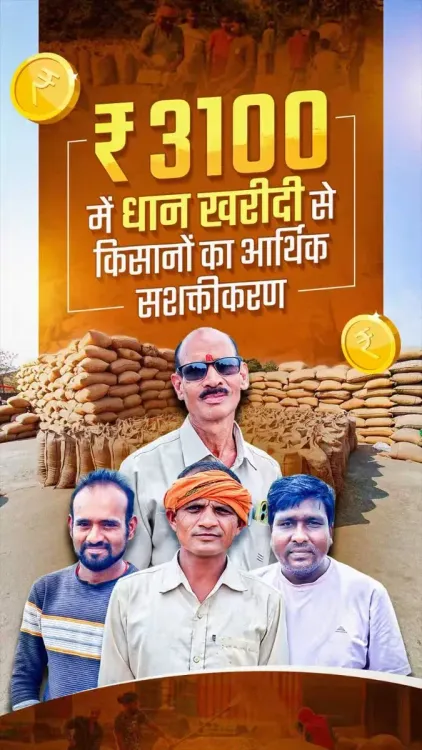
Paddy procurement is cited at ₹3,100 per quintal , above the central government's Minimum Support Price.
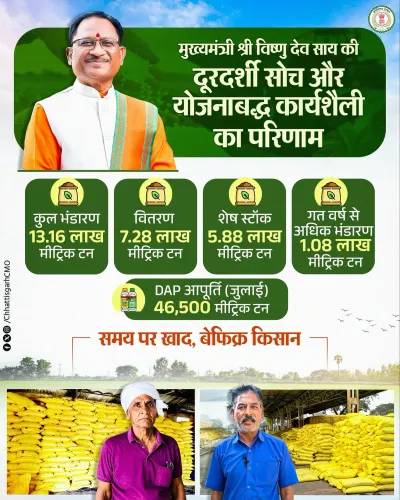
The government claims timely availability of fertilisers and seeds as a key pillar of its agricultural support model.
The messaging is tied to the #ViksitChhattisgarh campaign, linking farm prosperity with the state's broader development vision.
Chhattisgarh has maintained above-MSP paddy procurement since at least 2018 , continuing a multi-year policy of state-level price bonuses.
The 2026-27 kharif procurement calendar and state budget revisions will be the next key indicators of policy continuity.
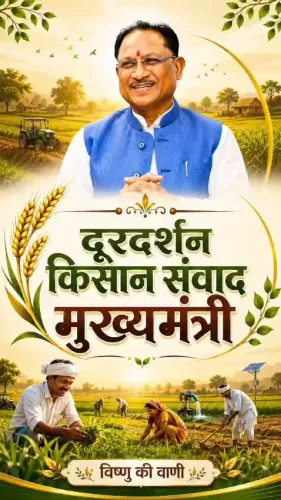
The Chief Minister's Office of Chhattisgarh on Monday, 20 July 2026 highlighted the state government's farmer-welfare measures, citing paddy procurement at ₹3,100 per quintal, timely supply of fertilisers and seeds, and a suite of farmer-centric schemes as the pillars of what it calls Sushasan Sarkar — or 'Good Governance Government'.
Context
The post, shared on the official @ChhattisgarhCMO handle, states that 'farmer-friendly policies of the good governance government are becoming the strong foundation of prosperous farming.' It credits assured paddy procurement, input availability, and targeted schemes with having 'economically empowered' the state's farming community. The accompanying hashtags — #kisan_smridhhi, #ViksitChhattisgarh, and #धान_खरीदी — point to an ongoing campaign linking agricultural support with the vision of a 'developed Chhattisgarh.'
Policy Backdrop
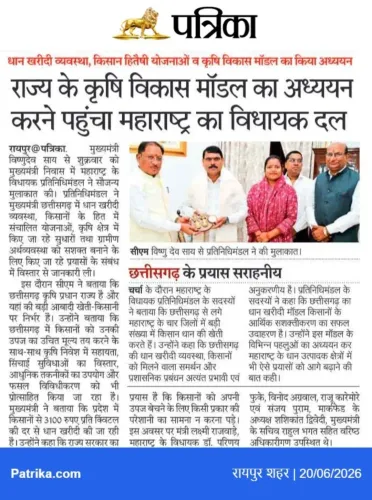
Chhattisgarh is one of central India's largest paddy-producing states, with agriculture sustaining the livelihoods of a large share of its rural population. The state has maintained a paddy procurement mechanism that layers a state-level support price on top of the central government's Minimum Support Price, a practice with roots going back to at least 2018. The CMO's reference to ₹3,100 per quintal as the procurement rate positions it significantly above the central MSP, a recurring feature of Chhattisgarh's agricultural policy aimed at shoring up incomes in its predominantly rain-fed farming regions.
Timely availability of fertilisers and certified seeds has been a stated priority of the Sushasan Sarkar governance framework, which seeks to reduce the input-supply gaps that have historically undermined kharif yields in interior districts. This approach mirrors strategies in other major rice-producing states that combine price guarantees with input logistics to address rural distress at its source.
Stakeholders and Impact
The primary beneficiaries of these measures are paddy farmers and rural households across Chhattisgarh's agricultural belt. Assured procurement at an above-MSP rate provides a price floor that reduces the risk of distress sales to private traders, while guaranteed fertiliser and seed supply cuts pre-sowing uncertainty. Together, these interventions are designed to stabilise seasonal incomes and encourage investment in cultivation.
The CMO's framing — 'prosperous agriculture, rising incomes, and happy farmers are the identity of a developed Chhattisgarh' — signals that the government intends these outcomes to serve as measurable benchmarks for its broader rural development agenda. The messaging also reflects a political emphasis on visible, farmer-facing delivery ahead of future electoral cycles.
What's Next
The 2026-27 kharif procurement calendar will be the immediate test of the government's commitments. Any revision to support prices or changes to input-distribution timelines announced in the upcoming state budget will indicate whether the ₹3,100 per quintal rate and the supply-chain guarantees are being sustained or expanded. Observers will watch whether the state's procurement infrastructure — warehousing, payment timelines, and registration of new beneficiaries — can match the scale implied by the CMO's claims. Continued investment in these systems would be necessary to translate policy announcements into durable income gains for the state's farming communities.
Point of View
Memorable price point — ₹3,100 per quintal — to make policy tangible for rural audiences. The Sushasan Sarkar branding signals a deliberate effort to differentiate the current administration's delivery record, particularly on agricultural procurement, from past regimes. This fits a broader pattern seen across several state governments of using above-MSP procurement as both a welfare instrument and a political signal ahead of election cycles. The durability of the model, however, will depend on whether procurement infrastructure and payment timelines keep pace with the headline price commitment.
NationPress
21 Jul 2026
Frequently Asked Questions
What is the paddy procurement price in Chhattisgarh in 2026?
The Chhattisgarh government has cited a paddy procurement rate of ₹3,100 per quintal as part of its farmer-support measures, according to the Chief Minister's Office post dated 20 July 2026.
What is Sushasan Sarkar in Chhattisgarh?
Sushasan Sarkar refers to the Chhattisgarh state government's governance framework that prioritises delivery of agricultural inputs and assured procurement support to farmers, emphasising 'good governance' as its defining feature.
How does Chhattisgarh support farmers with fertilisers and seeds?
The state government has committed to ensuring timely availability of fertilisers and certified seeds as part of its agricultural policy, aiming to reduce pre-sowing input gaps that affect kharif yields in rain-fed regions.
What is Viksit Chhattisgarh?
Viksit Chhattisgarh ('Developed Chhattisgarh') is the state government's campaign vision linking agricultural prosperity, rising farmer incomes, and rural welfare with overall state development goals.
Does Chhattisgarh offer a bonus above the central MSP for paddy?
Yes, Chhattisgarh has historically supplemented the central government's Minimum Support Price with a state-level bonus for paddy procurement, a practice maintained since at least 2018 across successive governments.