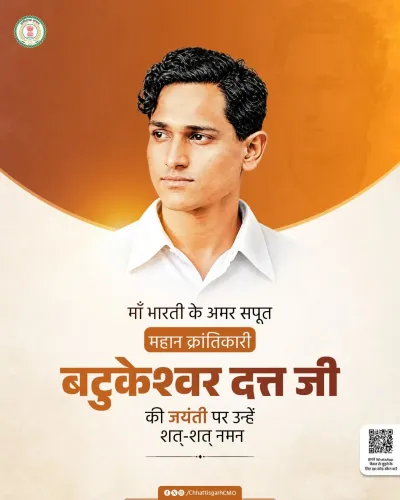
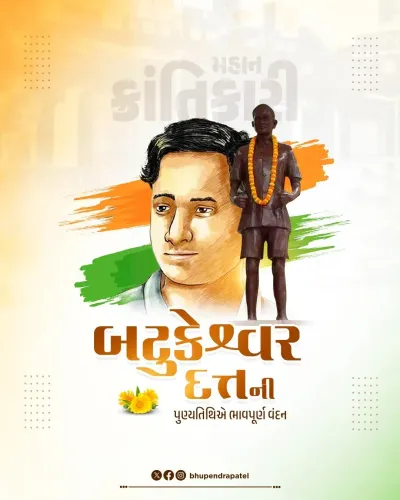
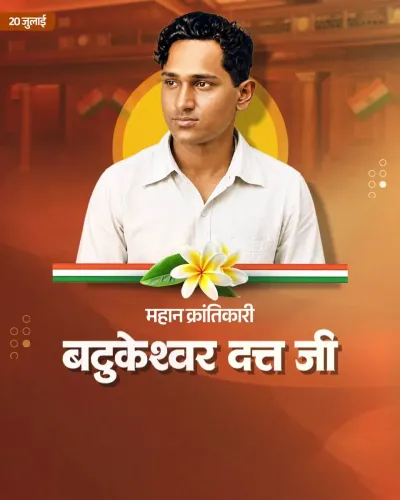
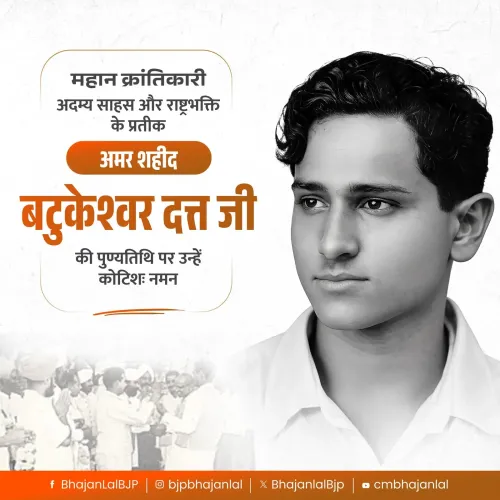
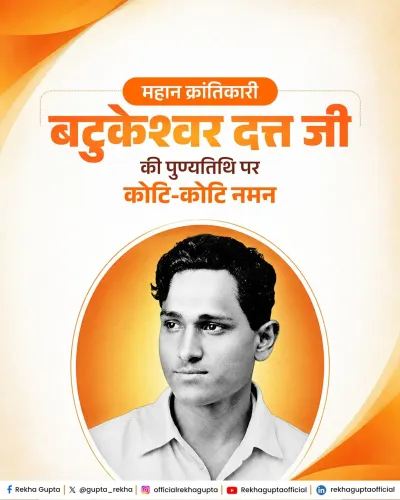
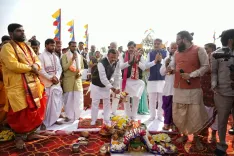
Chhattisgarh CMO pays tribute to Batukeshwar Dutt on jayanti
Synopsis
The Chief Minister's Office of Chhattisgarh paid homage to freedom fighter Batukeshwar Dutt on his birth anniversary, recalling his legendary 1929 act of defiance alongside Bhagat Singh in the Central Legislative Assembly.
Key Takeaways
The Chhattisgarh CMO posted a tribute to Batukeshwar Dutt on his birth anniversary on 18 November 2026 .
Dutt, born in 1910 , threw smoke bombs in the Central Legislative Assembly alongside Bhagat Singh on 8 April 1929 to protest the Public Safety Bill and Trade Disputes Bill.
He was sentenced to transportation for life and imprisoned in the Cellular Jail in the Andaman Islands.
Dutt lived until 1965 , outliving Bhagat Singh by over three decades, though he received comparatively less public recognition.
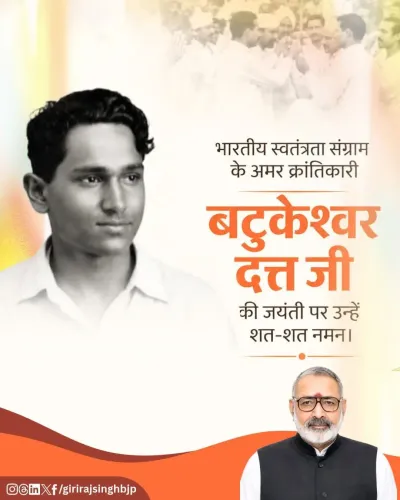
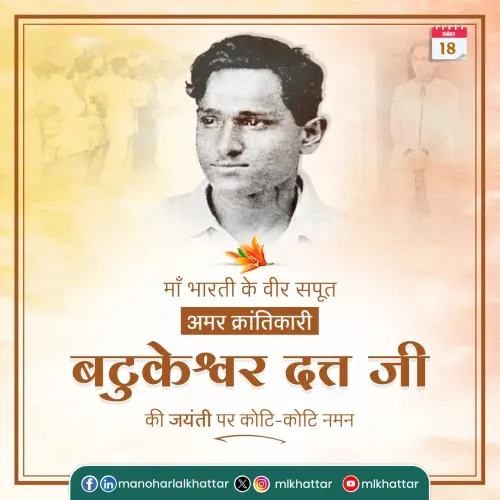
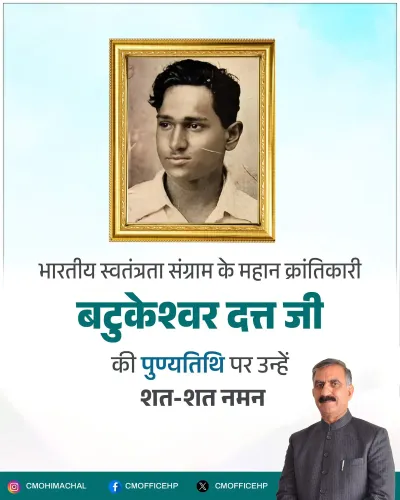
Indian state governments across party lines routinely mark the jayantis of HSRA revolutionaries on official social media, keeping armed resistance figures in national memory.
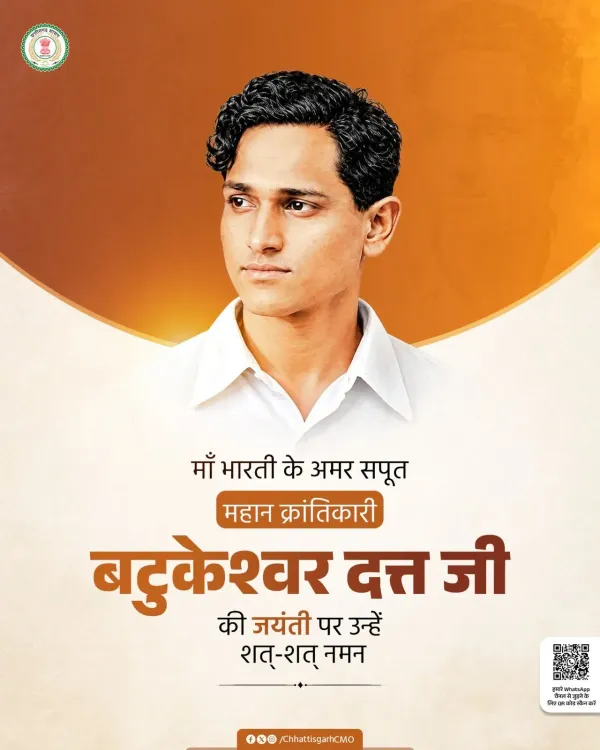
A revolutionary who shook the British Empire with a single act of defiance is remembered today — the Chief Minister's Office of Chhattisgarh honoured Batukeshwar Dutt on his birth anniversary, 18 November 2026, with a heartfelt tribute on X.
The post, written in Hindi, reads: 'Maa Bharati ke veer sapoot, amar balidaani Batukeshwar Dutt ji ko unki jayanti par shat-shat naman' — ('Hundred salutations to the brave son of Mother India, the immortal martyr Batukeshwar Dutt, on his birth anniversary.')
The man behind the bomb in Parliament
On 8 April 1929, a 19-year-old Batukeshwar Dutt walked into the Central Legislative Assembly in Delhi alongside Bhagat Singh and hurled two smoke bombs into the chamber. The target was not human life — the bombs were deliberately low-intensity — but the message was seismic: a protest against the draconian Public Safety Bill and the Trade Disputes Bill, which the colonial government was pushing through to crush organised labour and silence political dissent. 'Inquilab Zindabad' rang through the halls of British power.
Both men surrendered willingly. Both were tried. Dutt was sentenced to transportation for life — exile to the Cellular Jail in the Andaman Islands — while Bhagat Singh was later hanged in 1931. Dutt endured years of imprisonment, returned to India after independence, and died in 1965, largely outside the spotlight that history trained on his more celebrated comrade.
A tribute pattern across India's states
The Chhattisgarh CMO's post is part of a consistent, cross-party practice that has become a fixture of Indian political communication — official social media channels marking the jayantis of independence-era revolutionaries, particularly members of the Hindustan Socialist Republican Association (HSRA) that counted both Dutt and Bhagat Singh among its ranks. These tributes serve a dual function: keeping the memory of armed resistance alive in public consciousness while signalling a government's connection to the nationalist legacy.
Dutt's story, more than most, deserves that signal. He lived long enough to see independence — and long enough to be forgotten by much of the machinery that independence created. Official remembrance, however routine, corrects that imbalance.
On a birth anniversary that arrives 116 years after Dutt's birth, the Chhattisgarh government's salute is a small but pointed reminder that the revolution was never a one-man act.
Point of View
A figure whose contributions were long overshadowed by Bhagat Singh's martyrdom. Official social media has become a consistent vehicle for this corrective memory work, normalising armed resistance figures alongside Gandhian icons in the state's historical canon. The regularity of such posts also reflects how digital civic ritual has replaced physical commemoration as the dominant mode of political remembrance in modern India.
NationPress
18 Nov 2026
Frequently Asked Questions
Who was Batukeshwar Dutt?
Batukeshwar Dutt was an Indian revolutionary, born in 1910 , who threw smoke bombs inside the Central Legislative Assembly in Delhi on 8 April 1929 alongside Bhagat Singh to protest repressive British colonial legislation. He was sentenced to life imprisonment and died in 1965 .
Why did Batukeshwar Dutt bomb the Central Legislative Assembly in 1929?
The act was a protest against the Public Safety Bill and the Trade Disputes Bill , colonial laws designed to suppress organised labour and silence political dissent. The bombs were deliberately low-intensity — the goal was publicity and defiance, not casualties.
What happened to Batukeshwar Dutt after the 1929 Assembly bombing?
Dutt was tried, convicted, and sentenced to transportation for life , serving years in the Cellular Jail in the Andaman Islands. He was eventually released on health grounds and lived to see Indian independence, dying in 1965 .
Why is Batukeshwar Dutt's birth anniversary observed on 18 November?
Batukeshwar Dutt was born on 18 November 1910 , and his birth anniversary is commemorated annually as his jayanti by government bodies, freedom fighter associations, and citizens across India.
Why did the Chhattisgarh CMO pay tribute to Batukeshwar Dutt?
The Chief Minister's Office of Chhattisgarh posted a tribute as part of a broad, cross-party Indian government practice of marking the birth anniversaries of independence-era revolutionaries on official social media channels.