Chhattisgarh CMO spotlights Bastar rail push in Janman magazine

Synopsis
The Chhattisgarh CMO has spotlighted rail corridor expansion in Bastar as a driver of tribal-area development, anchored by a special feature in the state's official Hindi monthly Chhattisgarh Janman for July-August 2026.
Key Takeaways
The Chief Minister's Office of Chhattisgarh promoted rail connectivity expansion in Bastar on 16 October 2026 .
A special feature on rail corridors was published in the July-August 2026 edition of the state magazine Chhattisgarh Janman .
Bastar is a tribal-dominated southern division historically constrained by limited infrastructure and left-wing extremism.
CM Vishnu Deo Sai , in office since December 2023 , has prioritised tribal-area infrastructure as a core agenda item.
The 'double engine' framing links state and central BJP governments as joint drivers of the railway push.
Full article is accessible at cgjanman.in , extending the state's vernacular publication to digital audiences.
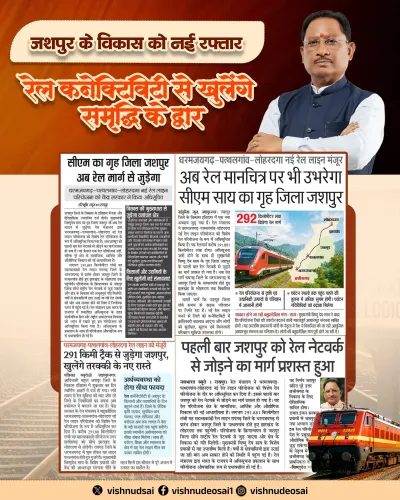
A region long defined by isolation and insurgency is now being redrawn by rail. The Chief Minister's Office of Chhattisgarh on Friday, 16 October 2026, highlighted expanding railway connectivity in Bastar as a transformative force for development, prosperity, and new opportunity in one of India's most remote tribal divisions.
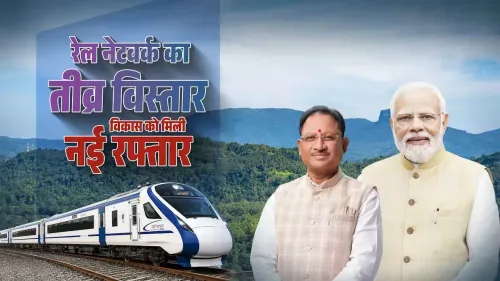
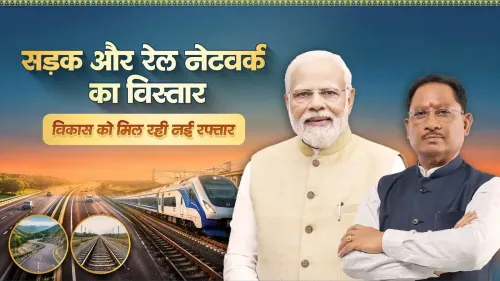
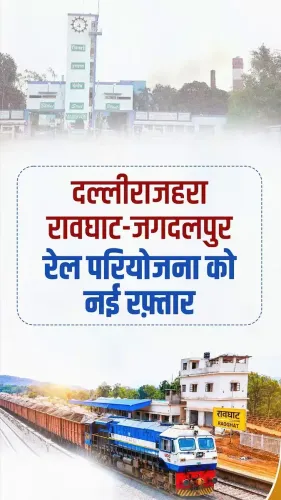
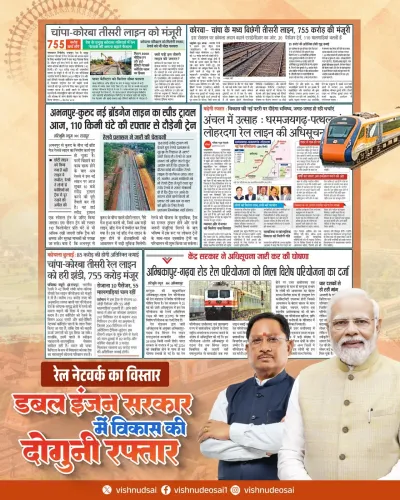
The post promoted a special feature titled 'Rail Corridor se Sampark Sadh Raha Vikas' ('Development Finding Its Connect Through Rail Corridors') published in the July-August 2026 edition of Chhattisgarh Janman, the state government's official Hindi monthly magazine. The government described the railway expansion as gaining momentum under the 'double engine' government — a phrase that refers to aligned BJP administrations at both the state and central levels.
Bastar's long road to connectivity
Bastar division, spread across southern Chhattisgarh, is home to dense forests, significant tribal populations, and a long history of left-wing extremist activity that suppressed infrastructure investment for decades. Limited road and rail access historically meant that goods, services, and government reach struggled to penetrate the region. Rail, when it arrives, doesn't just carry passengers — it carries market access, supply chains, and the symbolic weight of state presence.
Chief Minister Vishnu Deo Sai, in power since December 2023, has framed tribal-area infrastructure as a central pillar of his administration's agenda. Railway expansion into Bastar aligns with a broader national pattern: since 2014, BJP-led central and state governments have consistently pushed rail and road links into remote, former conflict zones across central India's tribal belt, treating connectivity as both an economic and a security instrument.
Why Chhattisgarh Janman matters as a messenger
Chhattisgarh Janman is not an incidental outlet — it is the state government's primary Hindi-language platform for translating policy into public narrative, aimed squarely at the state's vernacular readership. Featuring the rail corridor story as the lead piece in the July-August 2026 issue signals how prominently the government intends to carry this message into districts where internet reach remains thin and print still travels far.
The CMO's post directs readers to cgjanman.in for the full article — an increasingly common pattern of governments using social media to amplify traditional state publications and extend their reach to urban and diaspora audiences simultaneously.
What progress in Bastar's rail network would mean
Sanctioned railway lines in Bastar division, if completed on schedule, would connect mineral-rich and forest-economy areas to major urban centres, opening new corridors for both trade and tourism. Tribal communities stand to gain the most tangible benefits: access to healthcare, education hubs, and markets that today require hours of road travel. Investors in the region's substantial mineral resources would also gain logistics options currently unavailable.
The real test will come in upcoming state and railway budget announcements — whether the political momentum around Bastar's connectivity translates into accelerated project timelines and fresh capital allocation.
In Bastar, a rail line isn't just infrastructure — it's a statement about which India the region belongs to now.
Point of View
Tying state-level gains to the central government's infrastructure record and sharing political credit upward. Rail investment in tribal and former insurgency zones has been a consistent BJP governance motif since 2014, serving dual purposes — economic integration and the consolidation of state presence. Whether Bastar's connectivity push accelerates beyond magazine features into on-ground project delivery will ultimately determine how durable this narrative becomes.
NationPress
16 Oct 2026
Frequently Asked Questions
What is the rail connectivity project in Bastar Chhattisgarh?
The Chhattisgarh government is expanding railway lines into Bastar division, a tribal-dominated region in southern Chhattisgarh, as part of a broader infrastructure drive to improve market access, reduce isolation, and spur economic development in the area.
What is Chhattisgarh Janman magazine?
Chhattisgarh Janman is the official Hindi monthly magazine published by the Chhattisgarh state government, aimed at communicating government policies, schemes, and development stories to a vernacular readership across the state.
Who is the Chief Minister of Chhattisgarh in 2026?
Vishnu Deo Sai is the Chief Minister of Chhattisgarh, having assumed office in December 2023 following the BJP's victory in the state assembly elections.
What does 'double engine government' mean in the context of Chhattisgarh?
The term 'double engine government' refers to aligned BJP governments at both the state level (Chhattisgarh) and the central level (Government of India), implying coordinated policy and funding support for development projects.
How does rail connectivity help Bastar's tribal communities?
Rail connectivity in Bastar would give tribal communities faster access to healthcare, education, and markets, while also improving logistics for the region's forest economy and mineral resources, reducing dependence on time-consuming road travel.