Chhattisgarh SHGs: 18 women groups script growth story with tomato farming
Synopsis
In a tribal village in Chhattisgarh's Balrampur district, 18 women-led SHGs turned a ₹20,000 grant into a seasonal income of ₹3–4 lakh per member through tomato farming. With over 100 women now active across multiple gram panchayats, Patrapara is fast becoming a model for SHG-driven agricultural self-reliance in central India.
Key Takeaways
18 Self-Help Groups with more than 100 women in Patrapara, Balrampur district , Chhattisgarh are engaged in tomato and vegetable farming.
Each SHG began with a seed grant of ₹20,000 ; each member now earns an estimated ₹3–4 lakh per season .
Current yield stands at 20–25 trays of tomatoes per harvest , sold at the local mandi.
Crops include tomatoes, chillies, beans, and cauliflower , turning fields into diversified income hubs.
Many women have attained 'Lakhpati Didi' status (annual income of at least ₹1 lakh ); others are nearing the milestone.
Operations span three gram panchayats , reflecting the initiative's growing organisational scale.
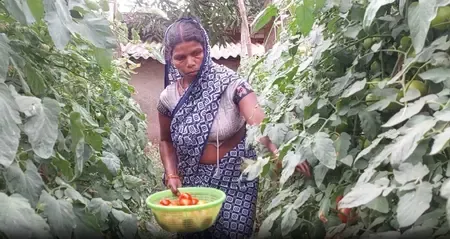
In Patrapara, a tribal-majority village in Chhattisgarh's Balrampur district, 18 Self-Help Groups (SHGs) comprising more than 100 women are rewriting the narrative of rural livelihoods — one tomato crop at a time. Through sustained effort in vegetable farming, these women are setting new benchmarks in agricultural self-reliance and economic independence.
From Grant to Growth
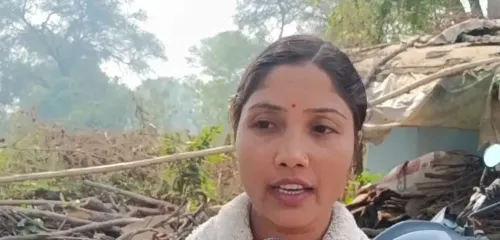
The initiative traces its roots to a modest seed capital. Each SHG received a grant of ₹20,000, which the women channelled into tomato cultivation. Sonia, an SHG member who has been part of the initiative since 2017, said: 'We received 20,000 rupees, which we used to start tomato cultivation.' That small sum has since grown into a thriving micro-enterprise spanning multiple fields and kitchen gardens across Patrapara and its surrounding areas.
Jageshwari, another SHG member, shared that their groups are currently producing 20–25 trays of tomatoes per harvest, all sold at the local market (mandi). She noted that tomatoes worth several lakh rupees have already been sold this season, with more of the harvest still pending.
Beyond Tomatoes: A Diversified Crop Portfolio
While tomatoes remain the primary crop, the women have diversified into chillies, beans, and cauliflower, transforming their fields and kitchen gardens into what they describe as 'income hubs'. This diversification has helped reduce dependence on a single crop and smoothed out income volatility across the season.
Savitri Shandilya, one of the key members, mentioned that she oversees farming operations across three different gram panchayats, reflecting the geographic spread and organisational depth of the initiative.
Earnings and the 'Lakhpati Didi' Milestone
According to SHG members, each woman is expected to earn between ₹3 lakh and ₹4 lakh in a single farming season. Many have already achieved the status of 'Lakhpati Didi' — a designation for women earning an annual income of at least ₹1 lakh — while others are rapidly approaching that threshold. This outcome aligns with the Centre's broader 'Lakhpati Didi' programme, which targets rural women's financial empowerment through SHG-linked livelihoods.
Wider Impact on the Community
The income gains have extended beyond individual households. The financial independence these women have secured is reportedly enabling improved spending on education, health, and household assets within Patrapara's tribal community. The model, rooted in collective effort and minimal initial capital, has the potential to serve as a replicable template for other tribal villages across Chhattisgarh.
As the current harvest season progresses, all eyes will be on whether this SHG-driven agricultural model can be formally scaled and supported by district administration and state agricultural agencies.
Point of View
Still-unresolved policy debate about whether SHG-linked livelihoods can consistently bridge the tribal income gap. The ₹3–4 lakh per-season figure is striking, but it deserves scrutiny: is it gross or net of input costs, and how many members are actually hitting that range versus the median? More importantly, the model's dependence on a single dominant crop — tomatoes — and local mandi pricing exposes it to commodity-price volatility that no grant or training can fully hedge. Scaling this across Chhattisgarh's hundreds of tribal villages will require district-level market linkage support, cold-chain investment, and verifiable income tracking — none of which is mentioned in the current initiative.
NationPress
20 Nov 2026
Frequently Asked Questions
What is the SHG tomato farming initiative in Chhattisgarh's Balrampur district?
It is a women-led agricultural programme in Patrapara village, Balrampur district, where 18 Self-Help Groups with over 100 members are cultivating tomatoes and other vegetables. Starting with a ₹20,000 seed grant, each member is expected to earn ₹3–4 lakh per farming season.
How much are the SHG women earning from tomato farming?
Each woman member of the SHGs is expected to earn between ₹3 lakh and ₹4 lakh in a single season, according to group members. Many have already achieved 'Lakhpati Didi' status, meaning an annual income of at least ₹1 lakh.
What is 'Lakhpati Didi' and how does it relate to this initiative?
'Lakhpati Didi' is a designation — also a government-backed programme — for rural women who earn an annual income of at least ₹1 lakh, typically through SHG-linked livelihoods. Many women in the Patrapara initiative have already crossed this threshold through vegetable farming.
What crops are the SHG women in Patrapara growing?
While tomatoes are the primary crop, the women are also cultivating chillies, beans, and cauliflower, diversifying their income sources across fields and kitchen gardens.
How many SHGs and women are involved in this farming initiative?
A total of 18 Self-Help Groups, comprising more than 100 women, are involved in tomato and vegetable farming in Patrapara and surrounding areas of Balrampur district, with operations spanning three gram panchayats.