Chhattisgarh Government Introduces Bill to Combat Coercive Conversions Amid Opposition Walkout

Synopsis
The Chhattisgarh government is intensifying its stance against coercive religious conversions with the introduction of the Freedom of Religion Bill 2026. This legislative move has ignited significant opposition protests, raising critical questions about legality and social justice.
Key Takeaways
Chhattisgarh government introduces the Freedom of Religion Bill 2026.
Bill aims to prevent coercive religious conversions.
Defined terms include coercion and digital proselytization.
Severe penalties for unlawful conversions.
Opposition raises concerns over the Bill's timing amidst Supreme Court cases.
Raipur, March 19 (NationPress) The Chhattisgarh administration has taken significant steps to strengthen regulations against religious conversions that occur through coercion or inducement by presenting the Chhattisgarh Swatantraya Vidheyak 2026 (Freedom of Religion Bill 2026) in the Assembly.
The state’s Home Minister, Vijay Sharma, introduced the proposed legislation, which enhances the existing Freedom of Religion Act of 1968, initially borrowed from Madhya Pradesh following the establishment of Chhattisgarh in 2000.
This new Bill provides more precise definitions for terms such as inducement, coercion, misrepresentation, mass conversion, and even conversions facilitated via digital platforms like social media. It also enforces stringent penalties aimed at curtailing such coercive practices.
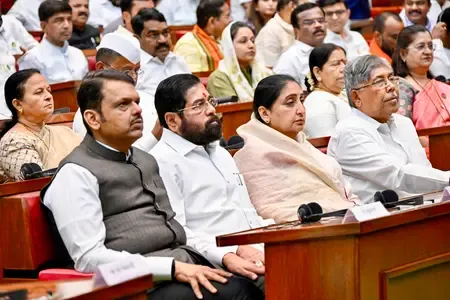
The introduction of the Freedom of Religion Bill 2026 triggered a heated debate within the Assembly, culminating in a walkout by the Opposition when their concerns were disregarded.
Opposition Leader Charandas Mahant contended that similar issues are currently being deliberated by the Supreme Court in eleven states and advocated for the Bill to be referred to a Select Committee.
He cautioned against legislating while the apex court is still reviewing these matters, invoking the principles of unity, tolerance, and social justice articulated by Ambedkar, Vajpayee, and Buddha.
The proposed legislation aims to prohibit conversions through coercion, inducement, or fraud, mandating that individuals wishing to convert must inform the District Magistrate in advance, with their details made available for public objections.
The Bill delineates inducement, coercion, misrepresentation, mass conversion, and digital proselytization, while clarifying that reverting to one’s ancestral faith will not be classified as conversion. It also encompasses healing prayers.
Penalties are severe; unlawful conversions could result in imprisonment ranging from seven to ten years and fines starting at Rs 5 lakh, escalating to 20 years and Rs 10 lakh if the victim is a minor, woman, or belongs to SC, ST, or OBC communities.
Mass conversions may lead to life imprisonment and fines of Rs 25 lakh, with all offenses being cognizable, non-bailable, and adjudicated in Special Courts.
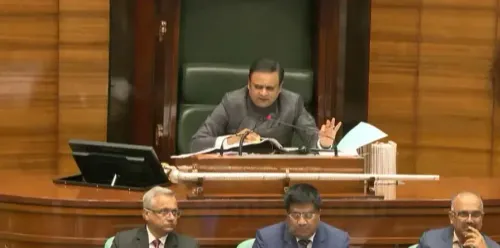
BJP MLA Ajay Chandrakar defended the legality of the Bill, while Home Minister Vijay Sharma asserted that there is no prohibition from the Supreme Court on states enacting such legislation. He called for consensus, but after the Chair dismissed the Opposition's requests, members exited the Assembly.
Sharma criticized the walkout, accusing the Opposition of shirking serious discourse and overlooking tribal issues.
A related amendment that was passed by the Chhattisgarh assembly in 2006 was returned by the President in December of the previous year, Mahant pointed out, urging the government to tread cautiously.
Point of View
The opposition raises valid concerns about ongoing Supreme Court deliberations, underscoring the complexity of balancing legislative action with judicial processes.
NationPress
26 Sept 2026
Frequently Asked Questions
What is the Freedom of Religion Bill 2026?
The Freedom of Religion Bill 2026 is a proposed legislation by the Chhattisgarh government aimed at prohibiting coercive and inducive religious conversions, establishing clear definitions and penalties for such practices.
What penalties are included in the Bill?
Penalties for unlawful conversions can range from seven to ten years in prison and fines starting at Rs 5 lakh, with harsher penalties for cases involving minors or vulnerable communities.
Why did the Opposition walk out?
The Opposition staged a walkout in protest after their objections regarding the Bill were dismissed, arguing that similar legal matters are under review by the Supreme Court.
What does the Bill say about digital proselytization?
The Bill includes provisions that address conversions conducted through digital platforms like social media, categorizing them under coercive practices.
Is there a provision for returning to one's ancestral faith?
Yes, the Bill clarifies that returning to one's ancestral faith will not be classified as a conversion under its provisions.