Chirag Paswan Highlights Ladakh Woman's Apricot Value-Chain Under PMFME
Synopsis
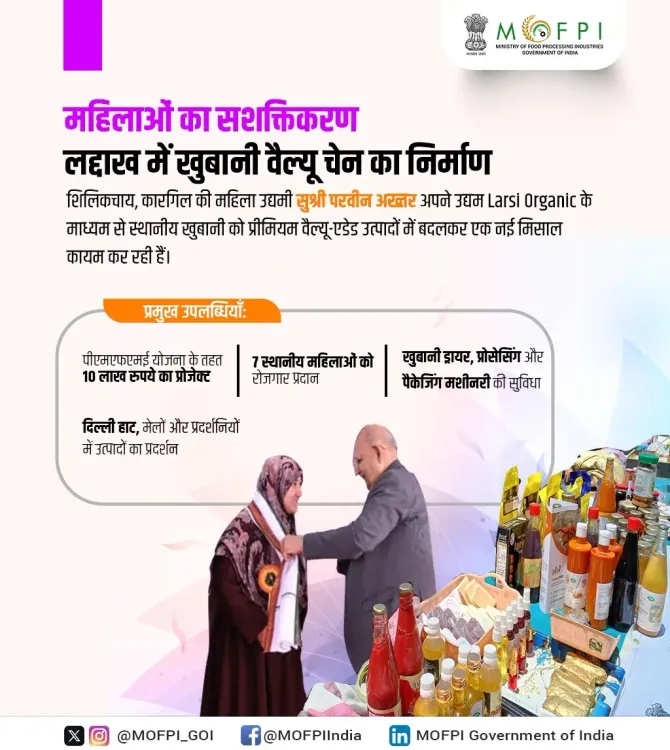
Union Food Processing Minister Chirag Paswan on June 1, 2026, highlighted Kargil's Parveen Akhtar, who built an apricot value-chain under the PMFME Scheme, creating local employment for women and linking regional produce to wider markets — calling it a sign of India's food processing revolution.
Key Takeaways
Union Food Processing Minister Chirag Paswan posted on June 1, 2026 highlighting a Ladakh entrepreneur's work under the PMFME Scheme .
Parveen Akhtar of Kargil developed an apricot-based value-chain, generating employment for local women and market access for regional produce.
The PMFME Scheme was launched in June 2020 under Atmanirbhar Bharat to provide credit-linked subsidies and support to micro food processing enterprises.
Ladakh is a significant apricot-producing Union Territory, making it a natural focus for horticultural value-chain development under central schemes.
The initiative aligns with the One District One Product (ODOP) framework and national goals of increasing farmers' income and formalising micro-enterprises.
The ministry is expected to continue expanding PMFME cluster development in remote regions, with possible scheme reviews in upcoming parliamentary sessions.
Union Food Processing Minister Chirag Paswan on Monday, June 1, 2026, spotlighted a Ladakh-based entrepreneur from Kargil who has built an apricot value-chain under the PM Formalisation of Micro Food Processing Enterprises (PMFME) Scheme, calling it a glimpse of the food processing revolution reshaping India's villages, farmers, and entrepreneurs.
Context
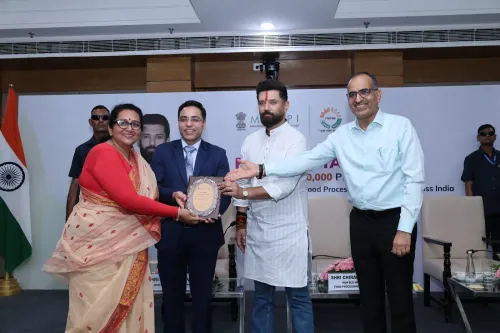
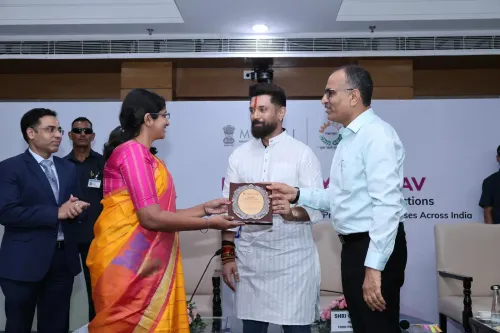
In his post, Minister Paswan highlighted the work of Parveen Akhtar of Kargil, describing how she leveraged the PMFME Scheme to develop an apricot-based value-chain that has created local employment for women and connected regional produce to wider markets. 'लद्दाख की उद्यमशीलता अब देश को दिशा दे रही है' ('Ladakh's entrepreneurship is now showing the country the way'), he wrote, urging others to join what he called a food processing revolution.
The minister framed the case not as an isolated success story but as representative of a broader transformation taking place across India's rural economy under central government schemes.
Policy Backdrop
The PMFME Scheme was launched in June 2020 as part of the Atmanirbhar Bharat package to provide credit-linked capital subsidy, technical support, and business development assistance to micro food processing enterprises across the country. The scheme targets the unorganised segment of the food processing sector, which accounts for the bulk of units but operates largely outside formal credit and market networks.
Ladakh, a Union Territory with significant horticultural output — particularly apricots — has been among the regions where central schemes have sought to promote local value addition and reduce post-harvest losses. The PMFME framework also links with the One District One Product (ODOP) initiative, which identifies and promotes a signature product from each district, making apricot-based processing in Kargil a natural fit.
Stakeholders and Impact
The primary beneficiaries of such value-chain development are women entrepreneurs, horticulture farmers, and micro food processors in remote regions like Ladakh who have historically lacked access to formal credit and organised markets. By formalising micro-enterprises, the scheme aims to improve farmers' income while building resilient local supply chains.
For Kargil specifically, an apricot-based value-chain means local growers can access processing infrastructure and market linkages rather than selling raw produce at low prices. Women-led enterprises in such clusters also contribute to broader goals of economic inclusion in aspirational districts.
What's Next
The Ministry of Food Processing Industries is expected to continue tracking quarterly disbursement progress under PMFME and expanding cluster development in remote territories including Ladakh. Possible reviews of scheme guidelines or additional ODOP linkages could emerge during upcoming parliamentary sessions or budget announcements. Minister Paswan's public amplification of grassroots success stories signals an intent to build awareness and encourage new applicants to come forward under the scheme.
Point of View
Lending a human face to a programme that has struggled with visibility despite its scale. Highlighting a woman entrepreneur from Kargil — a border district in a Union Territory — also carries political weight, signalling the Centre's developmental reach into strategically sensitive regions. The framing of individual success as a 'revolution' is consistent with the ministry's broader push to position food processing as a pillar of rural economic transformation under Atmanirbhar Bharat. Whether such visibility translates into accelerated disbursements or new cluster approvals in Ladakh will be the real measure of intent.
NationPress
16 Oct 2026
Frequently Asked Questions
What is the PMFME Scheme and who can apply?
The Pradhan Mantri Formalisation of Micro Food Processing Enterprises (PMFME) Scheme was launched in June 2020 under Atmanirbhar Bharat to provide credit-linked capital subsidy, technical support, and business development assistance to micro food processing units. Individual entrepreneurs, self-help groups, farmer producer organisations, and cooperatives in the food processing sector are eligible to apply.
What did Chirag Paswan say about Ladakh's food processing sector?
Minister Chirag Paswan posted on June 1, 2026 that Ladakh's entrepreneurship is now showing the country the way , citing the example of Parveen Akhtar of Kargil, who built an apricot-based value-chain under the PMFME Scheme to employ local women and connect regional products to markets.
How does the PMFME Scheme help women entrepreneurs in remote areas?
The PMFME Scheme provides financial assistance in the form of credit-linked subsidies and technical support, enabling women entrepreneurs in remote regions to set up or upgrade micro food processing units, develop value-chains for local produce, and access formal markets — reducing dependence on low-value raw produce sales.
Why is Ladakh significant for apricot-based food processing?
Ladakh is one of India's notable apricot-producing regions, and the fruit is closely associated with the territory's horticultural identity. The One District One Product (ODOP) framework makes apricot processing a natural focus for schemes like PMFME in districts such as Kargil , helping farmers capture more value from their harvest.
What is the Ministry of Food Processing Industries' role in the PMFME Scheme?
The Ministry of Food Processing Industries (MOFPI) , headed by Minister Chirag Paswan , is the nodal ministry for the PMFME Scheme. It oversees policy design, scheme implementation, cluster development, and disbursal of subsidies to eligible micro food processing enterprises across India.