Chirag Paswan Hails 2 Lakh PMFME Credit Sanctions
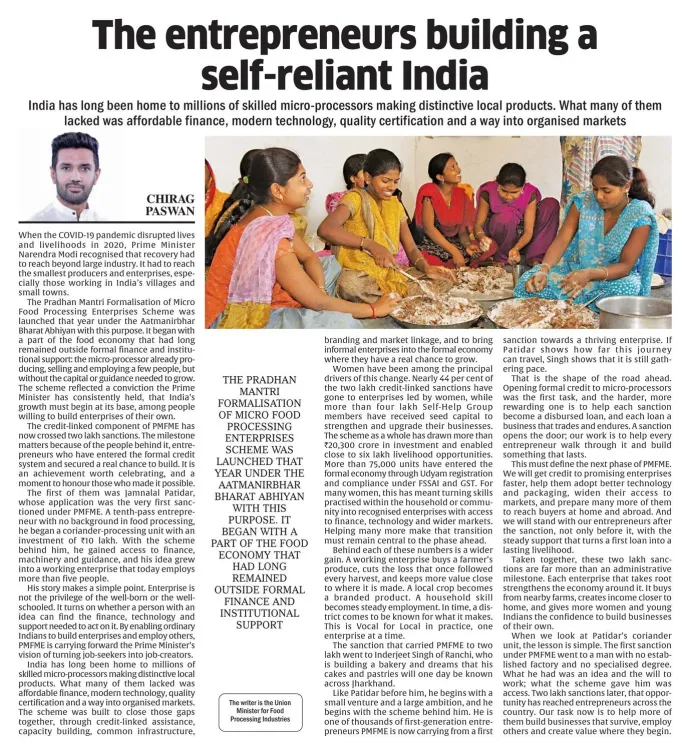
Synopsis
Union Food Processing Minister Chirag Paswan has highlighted two lakh credit sanctions under the PMFME Scheme, launched in 2020 as part of the Aatmanirbhar Bharat package. The Rs 10,000-crore scheme targets micro food processors, women and first-generation entrepreneurs to formalise enterprises and build rural livelihoods.
Key Takeaways
Union Food Processing Minister Chirag Paswan announced two lakh credit sanctions have been achieved under the PMFME Scheme as of 21 July 2026 .
The PMFME Scheme was launched in June 2020 under the Aatmanirbhar Bharat package with an outlay of Rs 10,000 crore over five years.
The scheme's stated target was to formalise two lakh micro food processing units through credit-linked subsidies and support.
Women entrepreneurs and first-generation entrepreneurs are among the primary beneficiaries of the programme.
The scheme provides collateral-free credit, technical assistance, skill training and branding support to micro food processors.
The milestone is being positioned by the Ministry as evidence of progress toward the broader Aatmanirbhar Bharat self-reliance vision.
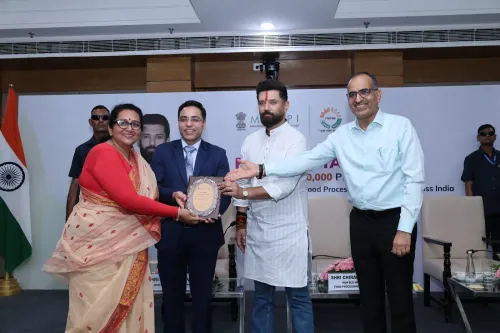
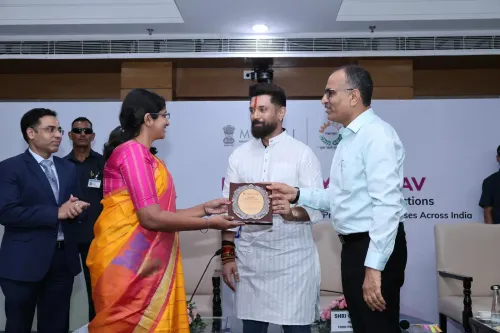
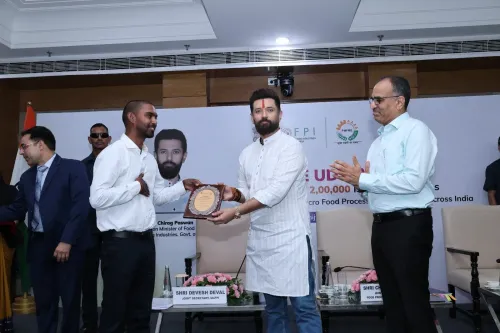
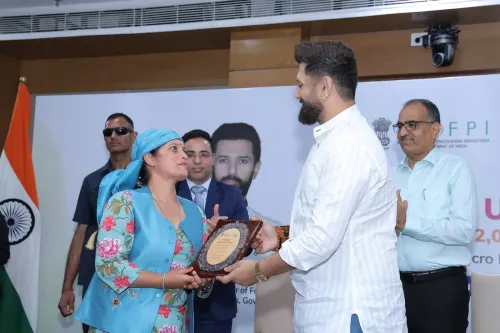
Union Food Processing Minister Chirag Paswan on Tuesday, 21 July 2026 highlighted that two lakh credit sanctions have been achieved under the Pradhan Mantri Formalisation of Micro Food Processing Enterprises (PMFME) Scheme, calling the milestone a reflection of the strength and enterprise of India's people.
Context
In a post on X, Minister Paswan wrote that 'two lakh credit sanctions under the PMFME Scheme reflect the strength and enterprise of India's people.' He added that the scheme is enabling micro food processors, 'particularly women and first-generation entrepreneurs, to formalise their enterprises, create livelihoods and contribute to Aatmanirbhar Bharat [self-reliant India].' The minister also noted he had authored a full piece on the milestone published the same day.
The post underscores the government's framing of the scheme not merely as a credit programme but as a structural intervention to bring unorganised food micro-enterprises into the formal economy.
Policy Backdrop
The PMFME Scheme was launched in June 2020 as part of the Aatmanirbhar Bharat package announced by Prime Minister Narendra Modi in response to the economic disruptions of the COVID-19 pandemic. The scheme carries a total outlay of Rs 10,000 crore over five years, with the explicit target of formalising two lakh micro food processing units through credit-linked subsidies, technical support and capacity building.
The Ministry of Food Processing Industries administers the scheme, which provides collateral-free credit access, branding assistance and skill training to help small processors integrate into formal supply chains. The food processing sector contributes significantly to rural non-farm employment and agricultural value addition, making its formalisation a priority across successive Union Budgets.
Reaching the two-lakh credit-sanction mark would mean the scheme has met its original unit-coverage target, a significant programme milestone if confirmed by official data.
Stakeholders and Impact
Women entrepreneurs and first-generation business owners are among the primary beneficiaries cited by Minister Paswan. The scheme's design specifically targets micro units — typically home-based or village-level food processors — that have historically operated outside formal financial systems and lacked access to institutional credit.
By formalising these enterprises, the government aims to improve their access to markets, enable compliance with food safety standards and boost export potential. Broader agricultural value chains, particularly in states with high concentrations of micro food processors, stand to benefit from improved integration and productivity.
What's Next
Parliamentary scrutiny of scheme utilisation rates, state-wise credit disbursement figures and any upward revision of targets or fresh allocations in the next Union Budget will be closely watched. With the two-lakh target reportedly met, the Ministry of Food Processing Industries may be expected to announce an expanded phase or enhanced outlay to deepen the scheme's reach among underserved micro-enterprise clusters across India.
Point of View
A notable administrative outcome for a programme designed during one of India's most severe economic disruptions. For Minister Chirag Paswan, amplifying this milestone publicly reinforces his ministry's delivery credentials ahead of budget cycles where fresh allocations will be contested. The emphasis on women and first-generation entrepreneurs also aligns with a broader government narrative of inclusive growth through MSME formalisation. Whether independent audit of credit-sanction quality and enterprise survival rates matches the headline number will determine the scheme's lasting policy legacy.
NationPress
22 Jul 2026
Frequently Asked Questions
What is the PMFME Scheme?
The Pradhan Mantri Formalisation of Micro Food Processing Enterprises (PMFME) Scheme is a central government programme launched in June 2020 under the Aatmanirbhar Bharat package. It provides credit-linked subsidies, technical support, skill training and branding assistance to micro food processing units to help them enter the formal economy.
How much money was allocated to the PMFME Scheme?
The PMFME Scheme was allocated a total outlay of Rs 10,000 crore over five years to formalise two lakh micro food processing enterprises across India.
What milestone did Chirag Paswan announce for the PMFME Scheme?
Union Food Processing Minister Chirag Paswan announced on 21 July 2026 that two lakh credit sanctions have been achieved under the PMFME Scheme, which he described as meeting the scheme's original coverage target.
Who benefits from the PMFME Scheme?
The primary beneficiaries are micro food processors, particularly women entrepreneurs and first-generation business owners who operate small or home-based food processing units and have historically lacked access to formal credit and institutional support.
What is Aatmanirbhar Bharat and how does PMFME relate to it?
Aatmanirbhar Bharat, meaning 'self-reliant India', is an economic vision and package announced by Prime Minister Narendra Modi in 2020 to support domestic manufacturing and reduce import dependence. The PMFME Scheme was launched as part of this package to formalise and strengthen India's micro food processing sector.