Chirag Paswan targets Congress, urges dialogue on reservation protests
Synopsis
Union Minister Chirag Paswan used a single press conference in Patna to hit three targets at once — Congress over Vande Mataram, Tejashwi Yadav over street politics, and reservation protesters over tactics. His call for dialogue, even as over 50 protesters were detained at Jantar Mantar, signals the government wants to control the narrative before Bihar's reservation debate turns into an electoral liability.
Key Takeaways
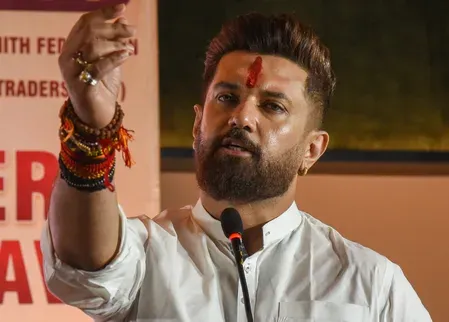
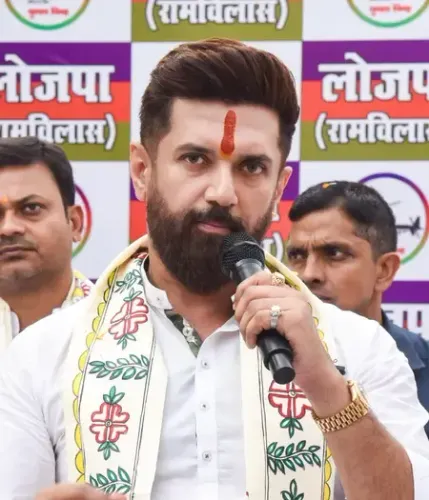
Union Minister Chirag Paswan addressed media in Patna on 22 August , targeting Congress, RJD's Tejashwi Yadav , and reservation protesters.
Paswan accused Congress of disrupting Parliament during the Monsoon Session by keeping the Vande Mataram controversy alive.
He argued Tejashwi Yadav should have raised protesters' demands inside the Bihar Assembly rather than supporting street agitation.
More than 50 people were reportedly detained at Jantar Mantar after protesters gathered there instead of the permitted venue, Ramlila Maidan .
Paswan pointed to the existing 10 per cent EWS reservation as evidence of economic criteria already in the framework.
On sugar prices , he called the rise temporary and said the Centre has initiated corrective measures.
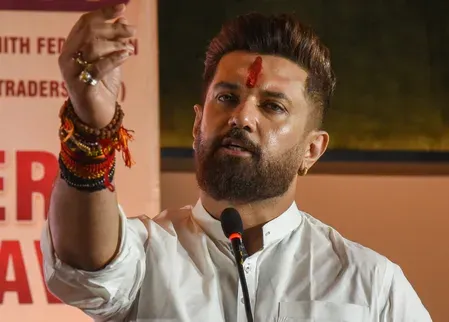
Union Minister Chirag Paswan on Saturday, 22 August launched a sharp political offensive in Patna, targeting the Indian National Congress over the Vande Mataram controversy, questioning Rashtriya Janata Dal (RJD) leader Tejashwi Yadav's backing of street demonstrations, and calling for structured dialogue on the ongoing reservation-related protests. The remarks, made to reporters, reflected the ruling coalition's attempt to reframe the reservation debate on its own terms ahead of a politically charged season in Bihar.
Attack on Congress Over Parliament Disruptions
Paswan accused the Congress of deliberately keeping the Vande Mataram issue alive during the Monsoon Session of Parliament, arguing that the opposition repeatedly raised matters that disrupted proceedings and diverted attention from substantive legislative business. He maintained that Parliament's functioning suffered as a result of what he described as calculated obstructionism by the opposition.
Tejashwi Yadav in the Crosshairs
The Union Minister also trained his sights on Tejashwi Yadav, the Leader of the Opposition in the Bihar Legislative Assembly, questioning his decision to visit and express solidarity with students and youth at protest sites. Paswan argued that a Leader of the Opposition carries greater institutional responsibility and should have used the Assembly floor — when it was in session — to forcefully raise the protesters' demands rather than lending political weight to street agitation. He suggested that Yadav's approach bypassed the very democratic institution he is mandated to represent.
Conciliatory Tone on Reservation Protests
On the demonstrations at Jantar Mantar in New Delhi over reservation demands, Paswan adopted a notably measured stance. He acknowledged that protest is a fundamental democratic right but cautioned that reservation is an inherently sensitive subject where misunderstandings can rapidly generate public anxiety and broader unrest. He urged demonstrators to clearly articulate their demands to the government so that authorities could respond and clarify their position.
Reports indicated that more than 50 people associated with the reservation protest were detained after gathering at Jantar Mantar. According to police, permission had been granted for the demonstration at Ramlila Maidan, but the protesters assembled at Jantar Mantar instead — a deviation that reportedly prompted the detentions.
Paswan also pointed to the existing 10 per cent reservation for Economically Weaker Sections (EWS) as evidence that economic criteria are already embedded in India's reservation framework, implicitly pushing back against demands for further structural changes.
Sugar Prices: Government Aware, Measures Underway
Separately, Paswan addressed the recent rise in sugar prices, acknowledging the issue was a concern for the government. He said discussions were ongoing to bring prices under control and attributed the spike partly to lower-than-expected sugar production. He characterised the situation as temporary and stated that the Centre had already initiated several corrective measures, though he did not specify them.
What Comes Next
The political temperature around reservation policy is unlikely to cool quickly, particularly in a state like Bihar where caste arithmetic shapes every electoral calculation. Paswan's call for dialogue, while conciliatory in tone, sets up the government's preferred narrative — that it is open to discussion rather than confrontation. Whether protest groups accept that framing, or escalate, will determine the next phase of this standoff.
Point of View
But deliberately soft on the reservation protesters themselves. That split tone is not accidental: the Lok Janshakti Party's core Dalit and OBC base is directly invested in reservation politics, making outright confrontation with protesters electorally risky. What is missing from his framing is any concrete government commitment — 'dialogue' without a timeline or interlocutor is a holding position, not a resolution. With Bihar heading into a politically charged cycle and over 50 people already detained at Jantar Mantar, the gap between Paswan's conciliatory language and the administration's actions on the ground is a contradiction mainstream coverage has largely glossed over.
NationPress
7 Oct 2026
Frequently Asked Questions
What did Chirag Paswan say about the reservation protests at Jantar Mantar?
Paswan called for structured dialogue, acknowledging protest as a democratic right while warning that misunderstandings around reservation can trigger wider public unrest. He urged demonstrators to clearly communicate their demands to the government so authorities can respond.
Why did Chirag Paswan criticise Tejashwi Yadav?
Paswan argued that Tejashwi Yadav, as Leader of the Opposition in the Bihar Assembly, should have raised protesters' demands on the Assembly floor rather than visiting demonstration sites. He said the role carries greater institutional responsibility than street-level solidarity.
What happened at Jantar Mantar during the reservation protest?
More than 50 people associated with the reservation protest were reportedly detained after gathering at Jantar Mantar. Police had granted permission for the demonstration at Ramlila Maidan, but protesters assembled at Jantar Mantar instead, reportedly prompting the detentions.
What is the EWS reservation Chirag Paswan referred to?
The Economically Weaker Sections (EWS) reservation provides a 10 per cent quota in government jobs and education for individuals from economically disadvantaged general-category backgrounds. Paswan cited it to argue that economic criteria are already embedded in India's reservation framework.
What did Chirag Paswan say about rising sugar prices?
Paswan acknowledged the sugar price rise was a government concern, attributing it partly to lower-than-expected production. He described the situation as temporary and said the Centre had already initiated several corrective measures, without specifying them.