Shivraj Singh Chouhan orders time-bound grievance fix for farmers, rural poor
Synopsis
Chouhan's directive goes beyond a routine administrative reshuffle — he has set a one-week deadline to map every bottleneck in farm and rural welfare delivery, ordered daily complaint reviews by 10-officer teams, and demanded proof that benefits actually reached citizens, not just that grievances were 'disposed' on paper.
Key Takeaways
Shivraj Singh Chouhan on 22 May directed Agriculture and Rural Development officials to establish a time-bound grievance redressal mechanism for farmers and rural poor.
Dedicated teams of at least 10 officers each to review complaints and grievances on a daily basis in both Ministries.
Officials must verify that scheme benefits have genuinely reached intended recipients , not merely been marked as disposed.
Grievance redressal performance to be reviewed every month by the Union Minister.
Officials given one week to identify all policy bottlenecks and complex procedures requiring reform across all schemes.
Meeting also directed a dedicated team to propose AI and technology integration across Agriculture, Rural Development, Land Resources, and ICAR.
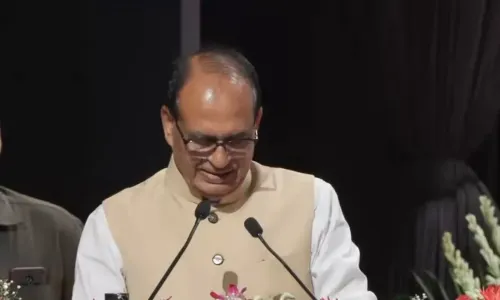
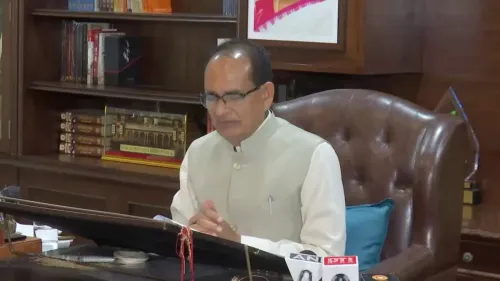
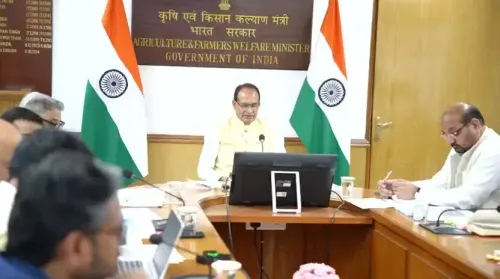
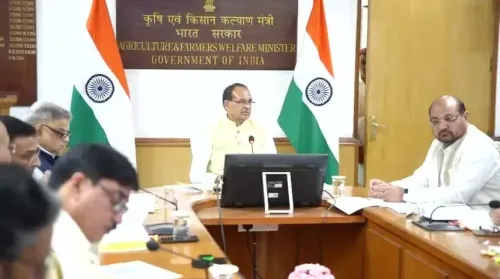
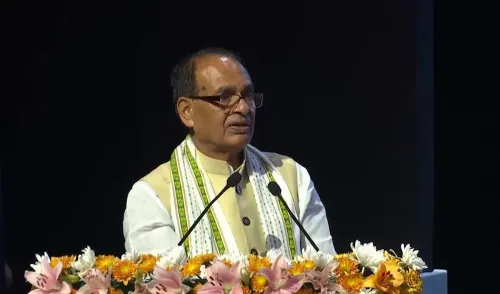
Union Minister for Agriculture and Farmers' Welfare and Rural Development Shivraj Singh Chouhan on Friday, 22 May directed officials across both his Ministries to immediately put in place a planned, time-bound, and result-oriented mechanism ensuring that farmers and poor rural citizens no longer face bureaucratic obstacles while accessing government scheme benefits or seeking grievance redressal.
Key Directives Issued
Chairing a high-level meeting in New Delhi, Chouhan instructed all concerned departments and institutions — including Agriculture, Rural Development, Land Resources, and the Indian Council of Agricultural Research (ICAR) — to strengthen grievance redressal systems and make them more effective, accountable, and responsive. He cited Prime Minister Narendra Modi's stated priority that ordinary citizens must not be subjected to unnecessary delays or bureaucratic friction while availing government benefits.
A critical structural change ordered was the formation of dedicated teams of at least 10 officers each in the Agriculture and Rural Development Ministries to review complaints, public grievances, representations from elected representatives, citizen letters, and issues raised across various portals — on a daily basis.
Beyond Paper Disposal: Outcome Verification
Chouhan drew a sharp distinction between technical 'disposal' of grievances and actual relief reaching beneficiaries. Officials were explicitly instructed to verify whether scheme benefits had genuinely reached intended recipients — not merely whether a complaint had been marked closed on a portal. The minister announced that grievance redressal mechanisms would be reviewed every month.
He also flagged the current fragmentation problem, noting that different schemes and departments operate through separate grievance portals, and called for a more integrated, outcome-oriented system to replace the existing siloed approach.
Red Tape Reforms Within One Week
Chouhan directed officials to identify within one week all policy bottlenecks, complex procedures, and outdated provisions obstructing implementation across programmes — from Pradhan Mantri Awas Yojana and road schemes to agriculture, horticulture, insurance, and marketing initiatives. He questioned the need for excessive licensing and suggested that simple registration-based systems could suffice in many cases.
'Whether in the Pradhan Mantri Awas Yojana, road schemes, agriculture programmes, horticulture, insurance, marketing or any other initiative, any process causing unnecessary inconvenience to beneficiaries must be simplified through reforms in rules, procedures and systems,' Chouhan said.
AI and Technology in Governance
The meeting devoted considerable attention to the role of technology in transforming rural governance. Chouhan directed the creation of a dedicated team to study technological integration and submit practical proposals, stressing that Artificial Intelligence, digital platforms, data sharing, and inter-departmental coordination must be strengthened across Agriculture, Rural Development, Land Resources, and ICAR.
Referring to a new promotion system at ICAR, he noted that greater weight is now being assigned to field impact and practical outcomes rather than research publications alone — a reform he described as capable of fundamentally changing institutional work culture.
Cross-Ministry Coordination Push
Chouhan also underscored the need for stronger coordination among Agriculture, Animal Husbandry, Fisheries, Food Processing, and allied sectors. He said integrated farming, value addition, food processing, and regional agricultural roadmaps all require collaborative functioning across Ministries and departments — a signal that siloed governance in the farm sector is squarely in the government's crosshairs.
With a one-week deadline for identifying bottlenecks and monthly reviews of grievance systems, the directives set a measurable accountability clock — the results of which will become visible in the weeks ahead.
Point of View
A one-week bottleneck audit, and outcome verification rather than disposal counts are measurable commitments. The harder question is whether the bureaucratic machinery, which has resisted similar reform cycles before, will internalise the shift or treat it as another compliance exercise. The fragmentation of grievance portals across schemes is a structural problem that a 10-officer team cannot resolve without genuine inter-ministerial IT integration — something that has eluded the Centre for years. The ICAR promotion reform, linking advancement to field impact over publications, is quietly the most consequential institutional change in this meeting, and deserves closer scrutiny than it has received.
NationPress
7 Oct 2026
Frequently Asked Questions
What did Shivraj Singh Chouhan direct at the Agriculture and Rural Development meeting?
Chouhan directed officials to immediately establish a time-bound, result-oriented grievance redressal mechanism ensuring farmers and rural poor can access government scheme benefits without bureaucratic delays. He ordered daily complaint reviews, monthly performance audits, and a one-week deadline to identify all policy bottlenecks.
What are the dedicated officer teams being set up?
Teams of at least 10 officers each are to be formed in the Agriculture and Rural Development Ministries to review complaints, public grievances, representations from elected representatives, and issues raised on various portals on a daily basis.
Which government schemes were specifically mentioned?
Chouhan specifically named Pradhan Mantri Awas Yojana, road schemes, agriculture programmes, horticulture, insurance, and marketing initiatives as areas where procedures causing unnecessary inconvenience must be simplified.
How does the directive address technology and AI in governance?
Chouhan instructed officials to create a dedicated team to study technological integration and submit practical proposals, with AI, digital platforms, data sharing, and inter-departmental coordination to be strengthened across Agriculture, Rural Development, Land Resources, and ICAR.
What is the reform at ICAR mentioned in the meeting?
A new promotion system at ICAR now assigns greater importance to field impact and practical outcomes rather than research publications alone. Chouhan described this as a major reform capable of changing the institution's work culture.