Chouhan invokes PM-KISAN to target Left, TMC record in Bengal
Synopsis
Union Agriculture Minister Shivraj Singh Chouhan on 20 June 2026 invoked PM-KISAN to accuse Left Front and TMC of decades of neglect in West Bengal, asserting the BJP-led central government is now working at 'super-fast speed' to deliver farmer welfare in the state.
Key Takeaways
Shivraj Singh Chouhan posted on X on 20 June 2026 targeting the Left Front and TMC's governance record in West Bengal .
He used the phrase 'double-engine government' and the #PMKISAN hashtag, linking political messaging directly to the central farmer-welfare scheme.
PM-KISAN provides ₹6,000 per year in direct transfers to eligible farmer families and has been a contested issue between the BJP Centre and TMC state government.
The scheme was launched in February 2019 and operates as a central direct-benefit transfer, bypassing state governments in fund disbursal.
BJP has consistently used centrally-funded schemes to build rural support in opposition-ruled states, with West Bengal being a key political battleground.
Next PM-KISAN instalment releases in Bengal and state-Centre data-sharing developments will be closely watched.
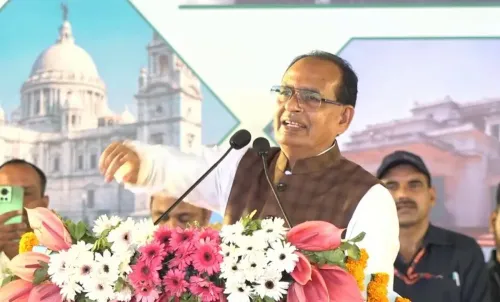
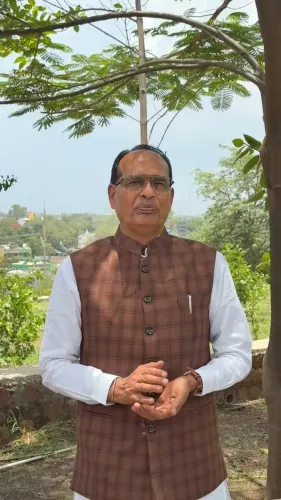
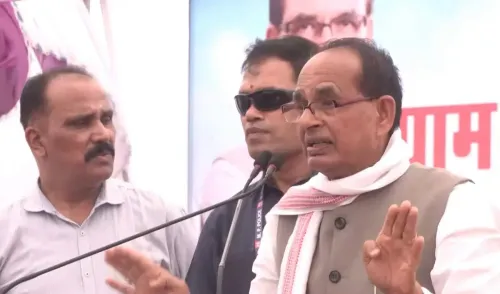
Union Agriculture Minister Shivraj Singh Chouhan on Saturday, 20 June 2026, took to X to assert that the BJP-led central government is working at 'super-fast speed' to address what he described as decades of neglect inflicted on West Bengal by successive Left Front and Trinamool Congress governments, anchoring his message to the #PMKISAN hashtag and tagging Prime Minister Narendra Modi.
Context
Chouhan's post, written in Hindi, states: 'Bangal mein dashakon tak pehle Left aur phir TMC ne jo gaddhe banaye, use bharne ke liye double engine ki sarkar ne super-fast speed se kaam karna shuru kar diya hai' — ('To fill the pits dug in Bengal for decades, first by the Left and then by the TMC, the double-engine government has begun working at super-fast speed'). The reference to a 'double-engine government' is a standard BJP formulation implying alignment between the central government and a state government; its use here in the context of an opposition-ruled state signals an aspirational framing rather than a description of a sitting alliance.
The post is tagged to Prime Minister Narendra Modi and carries the #PMKISAN hashtag, directly linking the political message to the flagship central farmer-welfare scheme.
Policy Backdrop
PM-KISAN — the Pradhan Mantri Kisan Samman Nidhi — was launched in February 2019 as a central direct-benefit transfer scheme providing ₹6,000 per year in three equal instalments to eligible landholding farmer families across India. Crucially, the scheme is administered directly by the central government, bypassing state governments in its fund-transfer mechanism.
West Bengal has historically been a contested ground for PM-KISAN implementation. The Trinamool Congress government, which has ruled the state since 2011, was preceded by over three decades of Left Front rule. The BJP central government has, since 2014, consistently positioned centrally-funded schemes as instruments to deliver benefits directly to citizens in opposition-ruled states, often framing those state administrations as obstacles to welfare delivery.
In West Bengal specifically, disputes over beneficiary data-sharing between the state and the Centre have at various points affected the pace of PM-KISAN disbursal, making the scheme a recurring flashpoint in BJP-TMC political rivalry.
Stakeholders and Impact
West Bengal farmers are the primary intended beneficiaries of PM-KISAN outreach. The state has a large agrarian population, and any acceleration in scheme delivery would have direct income implications for eligible rural households receiving the ₹2,000 per instalment transfer.
For the BJP, Chouhan's messaging serves a dual political purpose: reinforcing the party's farmer-welfare credentials at the national level while simultaneously pressing its long-running critique of both the TMC and the Left Front ahead of future assembly election cycles in the state. The invocation of 'decades' of neglect is designed to frame the BJP's central-government outreach as a corrective to a multi-generational governance failure.
The Trinamool Congress and remnants of the Left Front have consistently contested such characterisations, arguing that Bengal's rural transformation under successive governments predates BJP's national rise.
What's Next
Attention will now turn to the next scheduled PM-KISAN instalment release for West Bengal and whether the Centre and state administration move toward smoother beneficiary data coordination. Any formal announcement of accelerated disbursal figures or a state-level event featuring central ministers would lend concrete weight to Chouhan's 'super-fast speed' assertion. With West Bengal assembly elections on the political horizon, BJP's rural welfare push in the state is likely to intensify, making PM-KISAN a key metric by which both the Centre and the opposition will measure ground-level impact.
Point of View
He elevates a state-level political attack into a national farmer-welfare story. The 'double-engine government' framing in an opposition-ruled state is notably aspirational — it signals intent and pressure rather than administrative reality. With West Bengal assembly elections on the horizon, this kind of high-visibility social media messaging from a senior cabinet minister signals that Bengal's rural electorate is firmly in the BJP's cross-hairs.
NationPress
19 Sept 2026
Frequently Asked Questions
What is PM-KISAN and how does it benefit West Bengal farmers?
PM-KISAN is a central government scheme launched in February 2019 that provides ₹6,000 per year in three instalments of ₹2,000 directly to eligible landholding farmer families. West Bengal farmers enrolled in the scheme receive these transfers directly from the Centre, independent of the state government.
What did Shivraj Singh Chouhan say about West Bengal on 20 June 2026?
Chouhan posted in Hindi on X asserting that the BJP-led central government is working at 'super-fast speed' to fill the 'pits dug for decades' in West Bengal by the Left Front and then the Trinamool Congress, tagging PM Modi and using the #PMKISAN hashtag.
What does 'double engine government' mean in BJP's political language?
'Double engine government' is a BJP phrase implying that a state and the Centre are governed by the same party, enabling faster policy delivery. When used in opposition-ruled states like West Bengal, it functions as an aspirational or political framing rather than a description of the current administrative arrangement.
Why has PM-KISAN implementation been contested in West Bengal?
Disputes over beneficiary data-sharing between the TMC-led West Bengal state government and the BJP-led Centre have at various points slowed PM-KISAN disbursal in the state, making it a recurring point of political friction between the two governments.
What is Shivraj Singh Chouhan's role in the central government?
Shivraj Singh Chouhan is the Union Minister of Agriculture and Farmers Welfare and Rural Development. He is a senior BJP leader and served four terms as Chief Minister of Madhya Pradesh before joining the Union Cabinet.