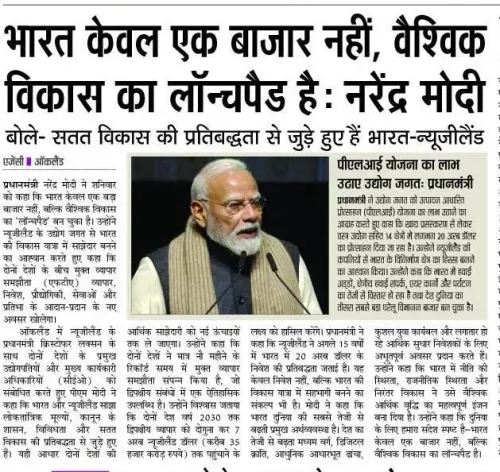
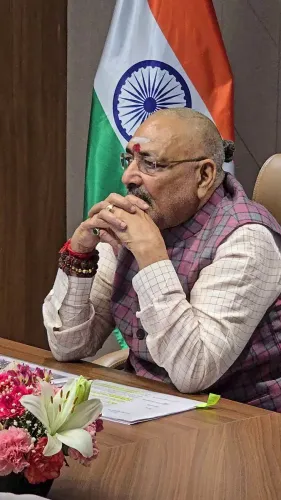
Giriraj Singh shares Citi exec's India top-5 market remark
Synopsis
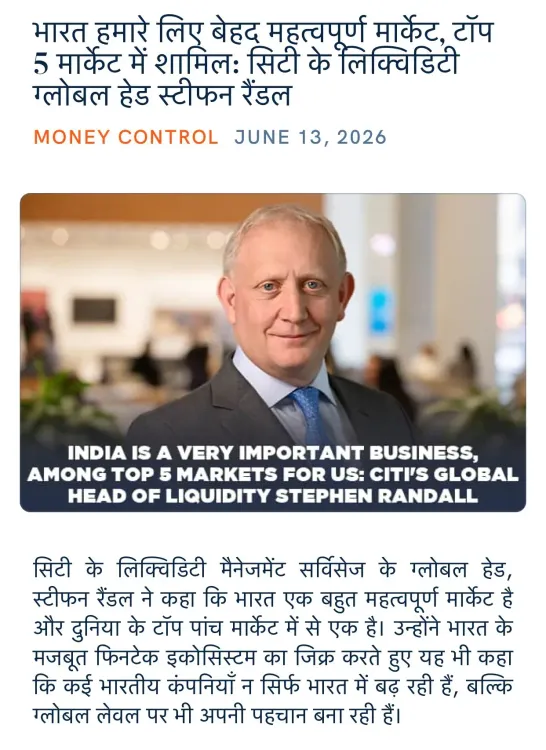
Union Textiles Minister Giriraj Singh amplified a statement by Citigroup's Global Head of Liquidity Stephen Randall, who described India as one of the bank's top five global markets — reflecting growing foreign institutional confidence in India's financial ecosystem.
Key Takeaways
Citigroup's Global Head of Liquidity, Stephen Randall , described India as 'a very important market' and among the bank's top five global markets.
Union Textiles Minister Giriraj Singh shared the remarks on 14 June 2026 via the NaMo App .
Citigroup has operated in India since the country's banking sector liberalisation beginning in 1991 .
RBI's 2016 guidelines on foreign bank expansion have encouraged deeper institutional participation in India.
Quarterly DPIIT FDI data and the RBI's next policy statement will be key indicators of whether positive bank sentiment converts into higher capital flows.
Union Textiles Minister Giriraj Singh on Sunday, 14 June 2026 shared a statement by Citigroup's Global Head of Liquidity, Stephen Randall, describing India as one of the bank's top five global markets — amplifying the remarks via the NaMo App.
Context
The post shared by Minister Singh quotes Stephen Randall as saying, 'Bharat hamare liye behad mahatvapurn market, top 5 market mein shamil' — ('India is a very important market for us, among the top five markets') — a sentiment the Citigroup executive expressed publicly. The minister's decision to amplify the remark signals the ruling dispensation's interest in showcasing foreign institutional confidence in the Indian economy.
Citigroup has maintained a significant operational presence in India for decades, offering liquidity management, transaction banking, and capital markets services to corporate and institutional clients across the country.
Policy Backdrop
India's gradual liberalisation of the banking sector — beginning with the landmark 1991 balance-of-payments reforms — opened the door for foreign banks including Citigroup to deepen their footprint. Subsequent Reserve Bank of India (RBI) guidelines in 2016 on foreign bank branch expansion and wholly-owned subsidiaries further encouraged long-term market participation.
Since 2014, global banks have steadily scaled up their India operations as regulatory predictability improved and the country's share in global trade finance and cross-border payments rose. Statements from senior executives at multinationals increasingly rank India among their fastest-growing liquidity and transaction-banking hubs.
Stakeholders and Impact
For India's financial sector, an endorsement from a senior Citigroup official carries weight: it signals that a globally systemic bank views the country's liquidity environment and growth trajectory as competitive with larger, more mature markets. This can influence other foreign banks and institutional investors assessing their own India allocations.
Domestic corporates that rely on Citigroup for cross-border liquidity solutions and trade finance stand to benefit if the bank deepens its product offerings. Broader foreign direct investment (FDI) sentiment, tracked quarterly by the Department for Promotion of Industry and Internal Trade (DPIIT), may also reflect such positive institutional signals over time.
What's Next
Analysts will watch the RBI's next bi-monthly monetary policy statement and quarterly DPIIT FDI inflow data to assess whether positive sentiment from global banks like Citigroup translates into measurable capital commitments. If India sustains its position among the top markets for major global liquidity providers, it could strengthen the case for further easing of foreign bank participation norms in the next regulatory review cycle.
Point of View
Coming from a global liquidity head, carries credibility beyond a domestic policy speech. It also arrives at a moment when India is actively courting deeper foreign bank participation, making the signal strategically useful. Whether the sentiment converts into measurable capital commitments will be the real test of the claim's durability.
NationPress
13 Sept 2026
Frequently Asked Questions
What did Citigroup's Stephen Randall say about India?
Stephen Randall, Citigroup's Global Head of Liquidity, said India is a very important market for the bank and ranks among its top five global markets.
Why did Giriraj Singh share the Citigroup statement?
Giriraj Singh, Union Minister of Textiles and a senior BJP leader, shared the statement via the NaMo App, signalling the government's interest in highlighting foreign institutional confidence in the Indian economy.
What is Citigroup's history in India?
Citigroup has operated in India since the country began liberalising its banking sector in 1991, offering liquidity management, transaction banking, and capital markets services.
How does RBI policy affect foreign banks in India?
The RBI's 2016 guidelines on foreign bank branch expansion and wholly-owned subsidiaries provided a clearer regulatory framework, encouraging global banks like Citigroup to deepen their India presence.
What should investors watch after Citi's India ranking statement?
Investors and analysts should track the RBI's next bi-monthly monetary policy statement and quarterly DPIIT FDI inflow figures to see if positive bank sentiment translates into higher capital commitments.