Viksit Bengal key to Viksit Bharat, says CM Adhikari on Independence Day
Synopsis
On West Bengal's 80th Independence Day stage, CM Suvendu Adhikari did more than invoke freedom fighters — he tied Bengal's development directly to Modi's Viksit Bharat vision and called for an end to partisan politics. Meanwhile, a minister hoisted the flag at Siliguri's Uttarkanya for the first time in twelve years, signalling a deliberate assertion of elected authority in a region long governed by bureaucrats.
Key Takeaways
CM Suvendu Adhikari addressed the 80th Independence Day celebrations at Red Road, Kolkata on 15 August 2026 .
Adhikari called on all political parties to end 'narrow-mindedness' and unite for the development of West Bengal .
He framed a 'Viksit Bengal' as essential to achieving PM Modi's 'Viksit Bharat' target by 2047 .
His development priorities include employment generation , women's empowerment , and state security , spanning the Sundarbans to North Bengal .
North Bengal Development Minister Nisith Pramanik hoisted the National Flag at Uttarkanya, Siliguri — breaking a twelve-year tradition of bureaucrat-led ceremonies.
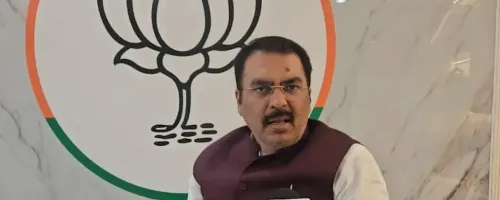
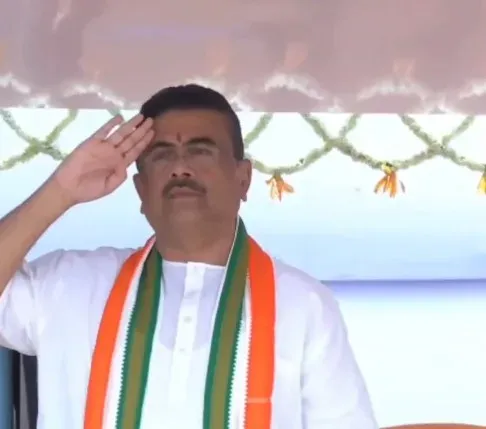
West Bengal Chief Minister Suvendu Adhikari on 15 August 2026 called on all political parties to shed partisan narrow-mindedness and unite for the holistic development of West Bengal, framing the state's progress as indispensable to Prime Minister Narendra Modi's vision of a 'Viksit Bharat' by 2047. Adhikari made the appeal while addressing the 80th Independence Day state government celebrations at Red Road in central Kolkata.
Adhikari's Independence Day Address
Invoking Bengal's storied contribution to India's freedom movement, Adhikari drew on the legacies of Rishi Aurobindo, Netaji Subhas Chandra Bose, Khudiram Bose, Matangini Hazra, and Bina Das to underscore the state's nationalist credentials.
'Bengal is the land of nationalism. This is the land of freedom fighters like Rishi Aurobindo, Netaji Subhas Chandra Bose, Khudiram Bose, Matangini Hazra and Bina Das, whose contributions in the Indian freedom movement are simply unforgettable. Let us join hands and put aside political narrow-mindedness and get united for the development of Bengal,' Adhikari said.
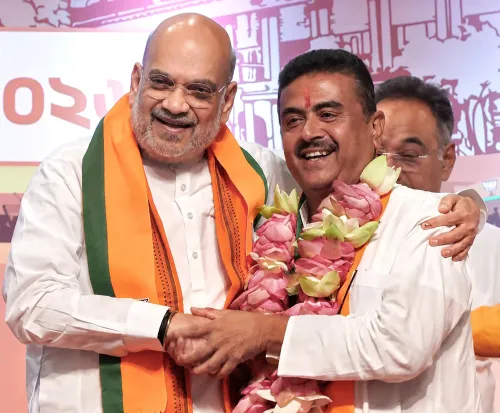
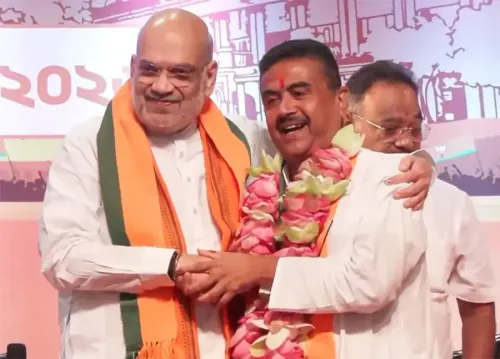
He also reaffirmed his commitment to the oath he took at the Brigade Parade Ground on 9 May 2026 in the presence of Prime Minister Modi. 'I will always honour the resolve with which I took the oath in the brigade in the presence of Prime Minister Narendra Modi on May 9, 2026. There will be no dishonor to that oath,' he added.
The Viksit Bengal Vision
Adhikari outlined a development agenda stretching from the Sundarbans in the south to the hills of North Bengal, with a stated focus on employment generation, women's empowerment, and state security. He invoked the founding of West Bengal — established on 20 June 1947 by Dr Syama Prasad Mookerjee and Pranabananda Maharaj — as a touchstone for the state's accession to India and its original promise to its people.
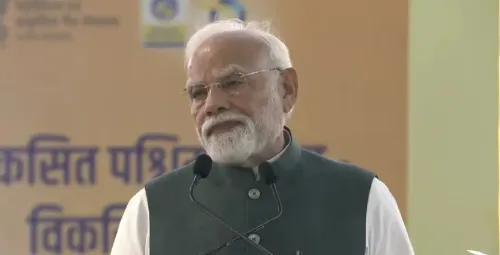
'The dream of a Viksit Bharat in 2047 will be fulfilled only when we build a Viksit Bengal. Our goal is to revive the lost glory of West Bengal,' Adhikari said. This framing directly aligns the state government's agenda with the Centre's broader national development targets, a notable political signal from a Bharatiya Janata Party (BJP)-led state administration.
North Bengal: A Symbolic Break from Tradition
A parallel Independence Day ceremony unfolded at Uttarkanya in Siliguri — the mini-secretariat for North Bengal — where North Bengal Development Minister Nisith Pramanik hoisted the National Flag. The act broke a twelve-year tradition in which administrative bureaucrats, not elected ministers, had led the ceremony at the venue.
'Although almost 12 years have passed since the construction of Uttarkanya, no minister before had hoisted the flag here so far. Earlier, bureaucrats used to do this flag hoisting. But like everything else, this time too, there has been a change,' Pramanik told reporters. The move is being read as a deliberate assertion of elected authority over North Bengal's administrative apparatus — a region that has historically felt underrepresented in state governance.
What This Signals Politically
Adhikari's unity appeal comes against the backdrop of West Bengal's sharply polarised political landscape, where the BJP and the All India Trinamool Congress (TMC) have been in sustained confrontation. His call to transcend 'narrow-mindedness' — delivered on Independence Day from the state's most prominent ceremonial stage — is both a governance message and a political one. The emphasis on reviving Bengal's 'lost glory' and the symbolic flag-hoisting in Siliguri suggest the new administration is keen to project a break from the previous regime across both optics and governance structure. How these intentions translate into policy outcomes will be closely watched in the months ahead.
Point of View
He signals that West Bengal's BJP administration intends to run on Delhi's development vocabulary — a calculated contrast to the TMC's more regional identity politics. The twelve-year bureaucratic lock on Uttarkanya's flag-hoisting is a small but telling detail: the new government is consciously dismantling symbols of the old order in North Bengal, a region it needs to consolidate electorally. The harder question is whether the unity appeal — delivered from a stage the opposition did not share — can bridge a political divide that has been deepening for nearly a decade.
NationPress
15 Aug 2026
Frequently Asked Questions
What did West Bengal CM Suvendu Adhikari say on Independence Day 2026?
CM Suvendu Adhikari called on all political parties to abandon partisan divisions and unite for West Bengal's development, framing a 'Viksit Bengal' as the foundation for PM Modi's 'Viksit Bharat' goal by 2047. He spoke at the 80th Independence Day celebrations at Red Road in Kolkata on 15 August 2026.
What is the 'Viksit Bengal' vision outlined by CM Adhikari?
'Viksit Bengal' is Adhikari's development agenda for West Bengal, focusing on employment generation, women's empowerment, and state security across the region from the Sundarbans to the North Bengal hills. He has positioned it as a direct contributor to the Centre's Viksit Bharat 2047 target.
Why was the flag-hoisting at Uttarkanya in Siliguri significant?
North Bengal Development Minister Nisith Pramanik hoisted the National Flag at Uttarkanya — the North Bengal mini-secretariat — for the first time since its construction roughly twelve years ago, breaking a tradition where administrative bureaucrats led the ceremony. The move signals a shift toward elected ministerial authority in North Bengal's governance.
Who are the freedom fighters CM Adhikari invoked in his speech?
Adhikari cited Rishi Aurobindo, Netaji Subhas Chandra Bose, Khudiram Bose, Matangini Hazra, and Bina Das as symbols of Bengal's nationalist legacy and its central role in India's freedom movement.
When did CM Adhikari take his oath of office?
Suvendu Adhikari took his oath as Chief Minister of West Bengal on 9 May 2026 at the Brigade Parade Ground in Kolkata, in the presence of Prime Minister Narendra Modi. He reaffirmed his commitment to that oath in his Independence Day address.