CM Bhagwant Mann Meets Bandi Singhs Panel, Vows Swift Action
Synopsis
Punjab Chief Minister Bhagwant Mann met the Bandi Singh Insaaf Morcha committee on 6 October 2026, assuring them his government will take priority legal steps — left untaken by previous administrations — to resolve the long-pending issue of releasing Sikh prisoners who have served their full sentences.
Key Takeaways
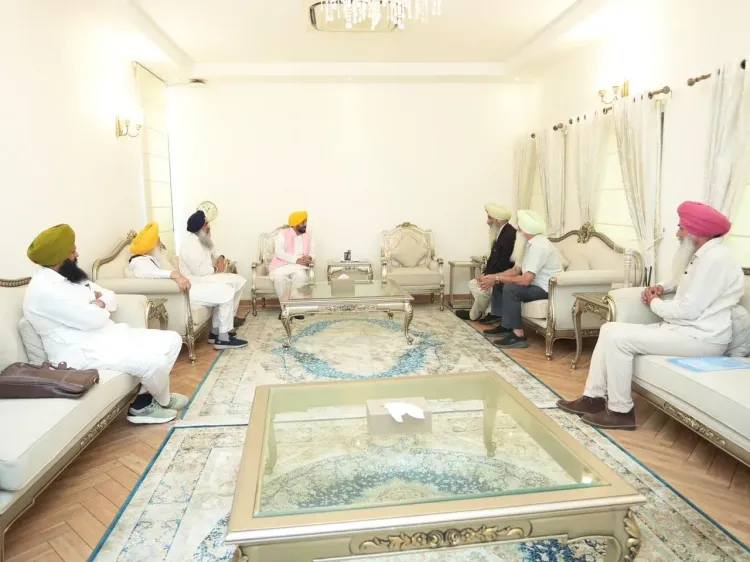
CM Bhagwant Mann held a formal meeting on 6 October 2026 with a four-member committee of the Bandi Singh Insaaf Morcha .
The committee included S.
Gurdeep Singh Bathinda , Advocate Jaspal Singh Manjhpur , S.
Pal Singh France , and S.
Balwinder Pal Singh .
Mann pledged the Punjab government will pursue 'reasonable and legal' steps on a priority basis to resolve the release issue.
He argued that previous governments had failed to take these steps for years, positioning his AAP administration as a break from the past.
No specific prisoners, timelines, or mercy petition details were disclosed in the public communication.
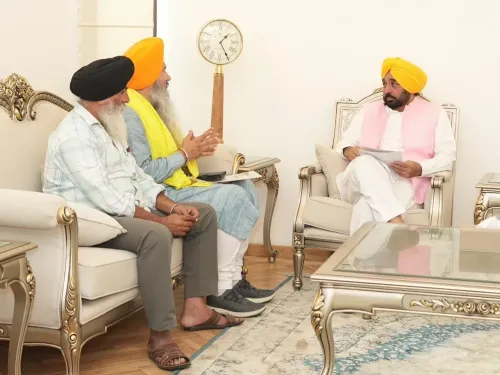
A decades-old wound in Punjab politics was brought to the table on Tuesday, 6 October 2026, when Punjab Chief Minister Bhagwant Mann held a significant meeting with a four-member committee formed by the Bandi Singh Insaaf Morcha — an organisation demanding the release of Sikh prisoners who have served their full sentences yet remain behind bars. Mann listened, he promised, and he drew a sharp line between his government and those that came before.
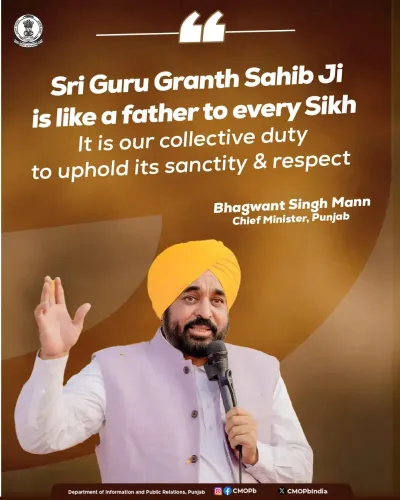
The committee that sat across from the Chief Minister comprised S. Gurdeep Singh Bathinda, Advocate Jaspal Singh Manjhpur, S. Pal Singh France, and S. Balwinder Pal Singh. Mann wrote on X that he 'listened very carefully' to the committee's views and appeals on the matter of releasing the Bandi Singhs — Sikh detainees, many of them convicted in cases linked to the militancy era of the 1980s and 1990s, whose continued imprisonment has long been a source of grief and grievance in sections of the Sikh community.
The Assurance Mann Put on Record
The Chief Minister was explicit in his post: the Punjab government is committed to finding an appropriate resolution to this issue at the earliest. He assured the committee that steps which were 'reasonable and legal' — but left untaken by previous governments for years — will now be pursued on a priority basis. The closing salvo, Inquilab Zindabad (Long live the revolution), was pointed: this was not a routine bureaucratic meeting but a political statement of intent.
What Previous Governments Left Undone
The Bandi Singh issue has outlasted multiple administrations in Punjab — Congress, Shiromani Akali Dal, and BJP-led — without a lasting resolution. The cases are complex: many involve mercy petitions pending before the Governor of Punjab or the President of India, constitutional processes that require state government recommendation and follow-through. Critics of past governments have argued that successive administrations either lacked the political will or feared backlash when it came to formally recommending clemency.
Mann's framing — that his government will do what previous ones refused to — is as much a political jab as a policy pledge. It positions the Aam Aadmi Party government as the administration finally willing to move the legal machinery that has been stalled for years.
A Sensitive File With Constitutional Layers
Releasing long-term prisoners typically requires a formal state cabinet recommendation followed by a decision from the Governor or the President. The process is legally defined but politically charged — each such case carries the weight of victims' families, security agencies' concerns, and community sentiment. Mann's assurance of 'legal steps' suggests the government intends to work within this constitutional framework rather than bypass it, though no specific timeline or names of prisoners were mentioned in the post.
The Bandi Singh Insaaf Morcha has been a persistent voice on this issue, and Tuesday's meeting — with photographs shared publicly — signals that the Chief Minister is treating the matter as one requiring visible political engagement, not just bureaucratic handling. Whether that translates into tangible movement on pending mercy petitions will be the real test.
Point of View
Mann is staking reputational capital on an issue where outcomes depend on slow constitutional machinery involving the Governor and the President, neither of which is under state control. The AAP government's challenge is that sympathy and assurance are easy; a formal cabinet recommendation on contested cases is politically costly and legally scrutinised. How quickly the government converts Tuesday's warm optics into a filed mercy-petition recommendation will determine whether this meeting is remembered as a turning point or another in a long line of unfulfilled pledges on the Bandi Singh question.
NationPress
6 Oct 2026
Frequently Asked Questions
Who are the Bandi Singhs and why are they still in prison?
Bandi Singhs are Sikh prisoners, many convicted in cases linked to Punjab's militancy era of the 1980s and 1990s, who have completed their full sentences but remain incarcerated — largely because mercy petitions or remission orders have not been formally processed by successive state governments and the central authorities.
What did CM Bhagwant Mann promise the Bandi Singh Insaaf Morcha?
Mann assured the four-member committee on 6 October 2026 that the Punjab government is committed to finding an 'appropriate resolution at the earliest' and will take all reasonable and legal steps — left undone by previous governments — on a priority basis.
What is the Bandi Singh Insaaf Morcha?
The Bandi Singh Insaaf Morcha is an organisation that has campaigned for years for the release of long-term Sikh prisoners who have served their sentences, demanding that state and central authorities process pending mercy petitions and remission orders.
What legal process is required to release the Bandi Singhs?
Releasing long-term prisoners typically requires a formal recommendation from the state cabinet, followed by a decision from the Governor of Punjab or the President of India — a constitutional process that past governments have been accused of failing to initiate.
Has Punjab made progress on Bandi Singh releases before?
Multiple previous governments — Congress, Shiromani Akali Dal, and BJP-led administrations — have acknowledged the issue but critics say none followed through with the formal legal recommendations needed to move the process forward, leaving cases unresolved for decades.