CM Bhajan Lal Approves Pension Rule Amendments in Cabinet
Synopsis
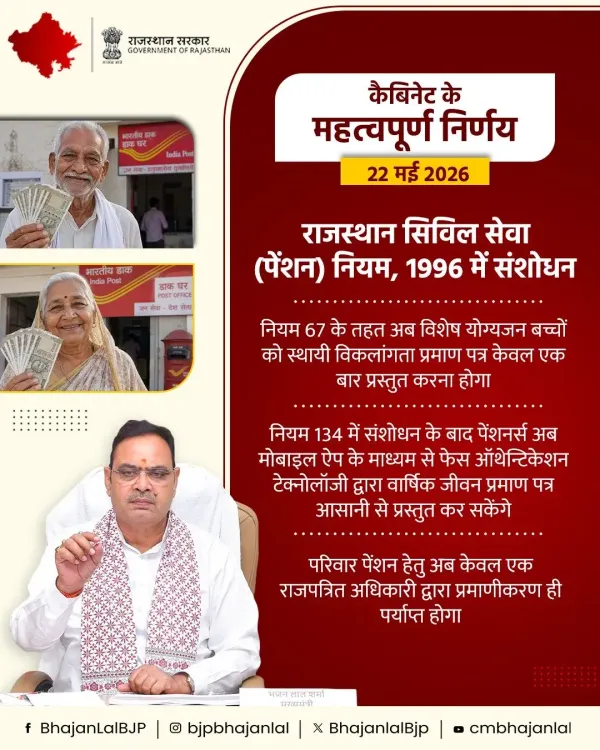
The Rajasthan cabinet, chaired by Chief Minister Bhajan Lal Sharma, approved significant amendments to the Rajasthan Civil Service (Pension) Rules, 1996 on 22 May 2026, aimed at improving facilities for retired state government employees. Details await an official gazette notification.
Key Takeaways
The Rajasthan State Cabinet approved amendments to the Rajasthan Civil Service (Pension) Rules, 1996 on 22 May 2026 .
Chief Minister Bhajan Lal Sharma announced the decision via a post on X, citing improved facilities for pensioners as the objective.
The exact content and financial impact of the amendments will be confirmed through an official gazette notification.
The move affects retired Rajasthan state civil servants and their families covered under the 1996 pension framework.
The decision follows a broader national pattern of states periodically revising legacy defined-benefit pension rules in the post-NPS era.
State employee unions and retiree associations are expected to scrutinise the gazette notification once published.
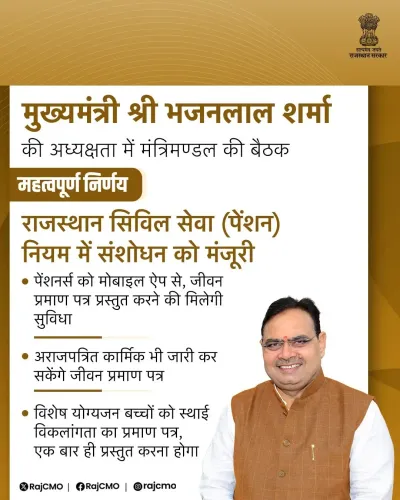
Rajasthan Chief Minister Bhajan Lal Sharma announced on Friday, 22 May 2026, that the state cabinet had approved significant amendments to the Rajasthan Civil Service (Pension) Rules, 1996, with the stated aim of improving facilities for pensioners across the state.
Posting on X, the Chief Minister wrote: 'पेंशनरों की सुविधाओं को ध्यान में रखते हुए आज राज्य मंत्रिमंडल की बैठक में राजस्थान सिविल सेवा (पेंशन) नियम, 1996 में महत्वपूर्ण संशोधनों को मंजूरी दी गई।' ['Keeping in mind the facilities for pensioners, important amendments to the Rajasthan Civil Service (Pension) Rules, 1996 were approved today in the state cabinet meeting.']
Context
The Rajasthan Civil Service (Pension) Rules, 1996 form the foundational legal framework governing pension eligibility, calculation methods, family pension provisions, and related benefits for retired Rajasthan state government employees. These rules have been periodically revised over the decades to reflect changing economic conditions, judicial directions, and employee welfare demands.
The cabinet meeting on 22 May 2026 marks the latest in a series of incremental updates to this framework. The exact nature and numerical details of the amendments approved have not yet been made public pending an official gazette notification.
Policy Backdrop
The broader national context for pension rule revisions stems from the introduction of the National Pension System (NPS) in 2004 for new central government recruits, which prompted states including Rajasthan to periodically review their legacy defined-benefit pension structures. Balancing the welfare commitments of the old framework against the fiscal realities of the post-NPS transition has been a recurring challenge for state governments.
Indian states have regularly amended civil service pension rules in response to inflation adjustments, court orders, and sustained pressure from employee associations. Rajasthan's move fits squarely within this national pattern of incremental reform, reflecting the state government's stated priority of addressing pensioner grievances.
Stakeholders and Impact
The primary beneficiaries of the amendments are retired Rajasthan state civil servants and their families who draw pensions under the 1996 rules. This is a significant constituency: state government pensioners number in the lakhs across Rajasthan, and any revision to calculation methods or eligibility criteria can have a direct bearing on monthly disbursements and family pension entitlements.
State employee unions and retiree associations have historically been vocal stakeholders in pension policy, and the cabinet's decision is likely to be scrutinised closely by these groups once the gazette notification spells out the specific changes and their financial implications.
What's Next
The immediate next step is the issuance of an official gazette notification by the Rajasthan government detailing the precise amendments and their effective date. This will allow pensioners, employee unions, and fiscal analysts to assess the full scope of the changes.
Depending on the content of the amendments, similar demands or legislative action could emerge in other states that maintain comparable defined-benefit pension frameworks. The Rajasthan cabinet's decision may also prompt follow-up proposals from state employee organisations seeking further revisions to the 1996 rules.
Point of View
Such welfare-oriented decisions are consistent with the party's strategy of consolidating its administrative record ahead of future electoral cycles. The move also reflects the persistent fiscal tension that state governments face in managing defined-benefit pension liabilities inherited from the pre-NPS era. Until the gazette notification is released, however, the substantive impact on pensioners remains an open question.
NationPress
10 Oct 2026
Frequently Asked Questions
What amendments were approved to the Rajasthan Civil Service Pension Rules 1996?
The Rajasthan cabinet approved 'important amendments' to the Rajasthan Civil Service (Pension) Rules, 1996 on 22 May 2026, but the precise details will be confirmed only after the official gazette notification is published.
Who announced the Rajasthan pension rule changes?
Chief Minister Bhajan Lal Sharma announced the cabinet decision on X on 22 May 2026, stating the amendments were aimed at improving facilities for pensioners.
Who is covered under the Rajasthan Civil Service Pension Rules 1996?
The 1996 rules cover retired Rajasthan state government civil servants and their families, governing pension eligibility, calculation methods, and family pension provisions.
Why do states amend civil service pension rules?
States periodically revise pension rules to account for inflation, comply with court orders, respond to employee association demands, and manage fiscal liabilities, particularly in the context of the transition to the National Pension System introduced in 2004.
When will the Rajasthan pension amendments take effect?
The effective date and full details of the amendments will be specified in the official gazette notification to be issued by the Rajasthan government following the cabinet approval on 22 May 2026.