CM Bhajan Lal Backs Cabinet Nod for Semicon 2.0, MPMS, NIPU-2026
Synopsis
India's Union Cabinet approved three major schemes on 15 July 2026 — Semicon 2.0 (₹1,27,500 crore), MPMS (₹62,500 crore), and NIPU-2026 — covering semiconductors, mobile manufacturing, and urea policy. Rajasthan CM Bhajan Lal Sharma called the decisions a historic roadmap toward a self-reliant and developed India.
Key Takeaways
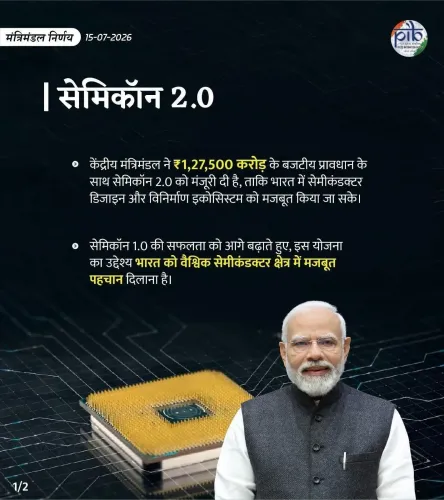
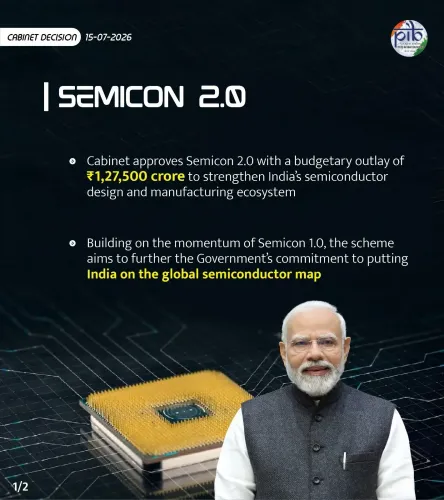
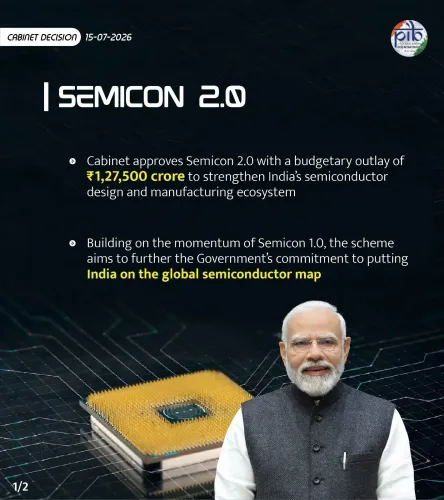
The Union Cabinet approved Semicon 2.0 with an outlay of ₹1,27,500 crore to strengthen India's domestic semiconductor ecosystem.
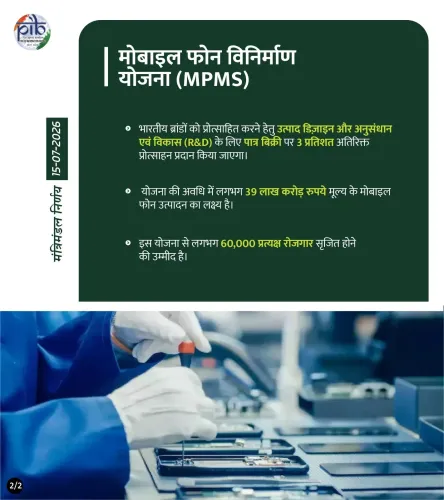
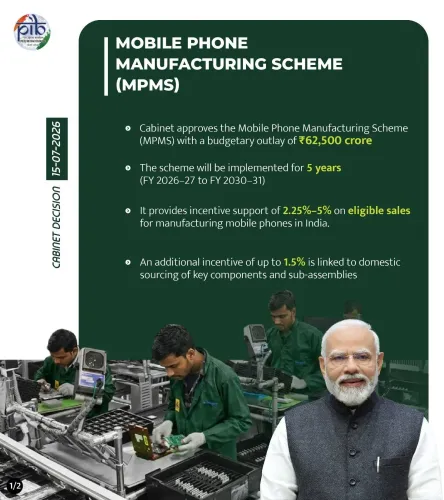
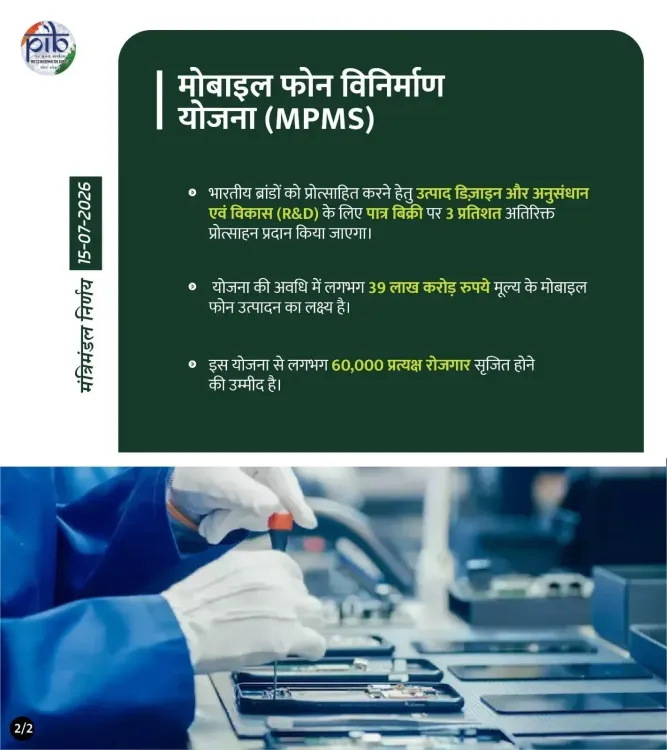
The Mobile Phone Manufacturing Scheme (MPMS) was approved with ₹62,500 crore to boost research, local production, and Indian electronics brands.
The National Urea Investment Policy 2026 (NIPU-2026) aims to secure fertilizer availability for farmers and attract investment in domestic urea production.
Rajasthan CM Bhajan Lal Sharma credited the approvals to PM Narendra Modi 's 'visionary leadership' and called them a 'decisive roadmap' for India's economic rise.
The combined outlay of the two technology schemes alone stands at nearly ₹1,90,000 crore , marking a significant escalation in incentive-linked manufacturing support.
All three schemes build on existing policy lineage — the India Semiconductor Mission (2021), PLI for mobiles (2020), and the New Urea Policy (2015).
Rajasthan Chief Minister Bhajan Lal Sharma on Wednesday, 15 July 2026, hailed three major Cabinet approvals — Semicon 2.0, the National Urea Investment Policy 2026 (NIPU-2026), and the Mobile Phone Manufacturing Scheme (MPMS) — as historic milestones for India's industrial, agricultural, and technology future, crediting the decisions to Prime Minister Narendra Modi's 'visionary leadership.'
Context
Sharma's post, written in Hindi, describes the Cabinet's approvals as giving 'new strength' (nayi shakti) to India's resolve to move from 'Atmanirbhar Bharat' toward a 'Viksit Bharat' — a self-reliant to a developed India. He characterised the three decisions collectively as a 'decisive roadmap' (sashakt roadmap) for innovation, investment, employment, and technological self-reliance. The post was accompanied by three images and carried the hashtag #CabinetDecisions.
The Union Cabinet's approval of the three schemes on the same day signals a coordinated push across three distinct but interconnected sectors: semiconductors, fertilizers, and mobile electronics manufacturing — each of which India has identified as strategically critical to reducing import dependence.
Policy Backdrop
Semicon 2.0, approved with an outlay of ₹1,27,500 crore, is positioned as the next phase of India's semiconductor ambitions, building on the India Semiconductor Mission launched in 2021 to develop domestic chip design and fabrication capacity. The original mission sought to integrate India into global semiconductor value chains at a time when supply-chain disruptions had exposed the country's near-total dependence on imported chips.
The Mobile Phone Manufacturing Scheme (MPMS), backed by an outlay of ₹62,500 crore, extends the logic of the Production Linked Incentive (PLI) framework introduced in 2020, which had already drawn global smartphone brands to manufacture in India. The new scheme is described as targeting research, local manufacturing, and the promotion of Indian brands to position India as a global electronics export hub.
The National Urea Investment Policy 2026 (NIPU-2026) follows the lineage of the New Urea Policy 2015, which aimed to attract private investment into domestic urea production and reduce India's dependence on imported fertilizer. Sharma specifically flagged its role in 'ensuring availability of fertilizers for farmers and empowering the agriculture sector.'
Stakeholders and Impact
Farmers stand to benefit most directly from NIPU-2026, which seeks to stabilise urea supply chains and reduce the subsidy burden on the government by encouraging domestic production. India remains one of the world's largest urea importers, making domestic capacity a long-standing policy priority.
Electronics manufacturers and semiconductor firms — both domestic and multinational — are the primary beneficiaries of Semicon 2.0 and MPMS. The combined outlay of nearly ₹1,90,000 crore across these two schemes represents a substantial escalation of incentive-linked manufacturing support. Indian brands, which have historically struggled to compete with global players on scale, could see targeted support under MPMS to build export-capable capacity.
State governments, including Rajasthan, are expected to play a role in attracting investment proposals under these centrally notified schemes, which partly explains the Chief Minister's public endorsement of the Cabinet decisions.
What's Next
Implementation will hinge on Cabinet-notified guidelines, state-level investment proposals, and the pace of first-year disbursements under all three approved outlays. The semiconductor sector in particular requires long gestation periods between policy approval and operational capacity — a challenge that Semicon 2.0's designers will need to address through streamlined clearance mechanisms.
As India seeks to position itself as a 'trusted manufacturer and hub of innovation for the world' — in Sharma's framing — the credibility of these schemes will ultimately be tested by the speed and scale of actual industrial investment they attract over the next three to five years.
Point of View
Mobile manufacturing, and urea policy reflects a deliberate effort to demonstrate policy breadth — linking high-technology ambition with agrarian welfare in a single news cycle. For a BJP chief minister like Sharma, publicly amplifying these decisions serves a dual political purpose: reinforcing the party's 'Viksit Bharat' narrative ahead of electoral cycles while signalling Rajasthan's readiness to compete for investment under centrally notified schemes. The sheer scale of the announced outlays — nearly ₹1,90,000 crore across two technology schemes — will be scrutinised for actual disbursement velocity, since India's PLI-era experience shows a consistent gap between approved incentive pools and actual claims. The broader arc here is India's decade-long shift from import-substitution to export-oriented manufacturing, and these three approvals represent its most ambitious single-day articulation yet.
NationPress
15 Jul 2026
Frequently Asked Questions
What is Semicon 2.0 and what is its budget?
Semicon 2.0 is India's upgraded semiconductor development scheme approved by the Union Cabinet on 15 July 2026 with an outlay of ₹1,27,500 crore. It aims to build domestic chip design and fabrication capacity, reducing India's dependence on imported semiconductors.
What is the Mobile Phone Manufacturing Scheme (MPMS)?
MPMS, or the Mobile Phone Manufacturing Scheme, is a Cabinet-approved initiative with a ₹62,500 crore outlay designed to promote research, local manufacturing, and Indian mobile brands, with the goal of making India a global electronics manufacturing and export hub.
What is NIPU-2026 and how does it help farmers?
NIPU-2026, the National Urea Investment Policy 2026, is a Cabinet-approved policy aimed at attracting investment in domestic urea production to ensure a stable supply of fertilizers for Indian farmers and reduce import dependence.
Why did Rajasthan CM Bhajan Lal Sharma comment on central Cabinet decisions?
As a BJP leader and Chief Minister, Sharma publicly endorsed the Cabinet approvals to reinforce the party's 'Viksit Bharat' development narrative and signal Rajasthan's alignment with national industrial policy priorities.
How do these Cabinet decisions connect to Atmanirbhar Bharat?
All three schemes — Semicon 2.0, MPMS, and NIPU-2026 — are direct extensions of the Atmanirbhar Bharat self-reliance campaign launched in 2020, which sought to reduce India's import dependence in strategic sectors including electronics, semiconductors, and fertilizers.