CM Bhajan Lal backs Modi's 'Saat Dhara' vision for Atmanirbhar Bharat
Synopsis
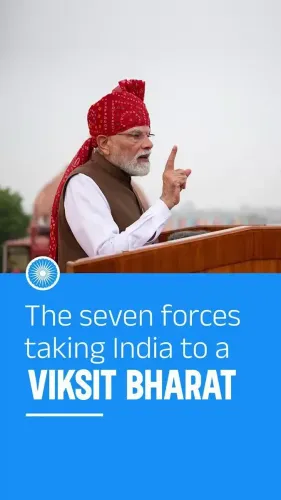
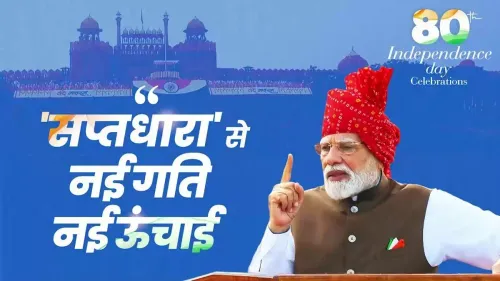
On Independence Day, Rajasthan CM Bhajan Lal Sharma backed PM Modi's 'Shakti ki Saptdhara' — a seven-sector framework spanning manufacturing, agriculture, technology, Gati Shakti, defence, green-blue economy, and soft power — as the roadmap for a self-reliant, developed India.
Key Takeaways
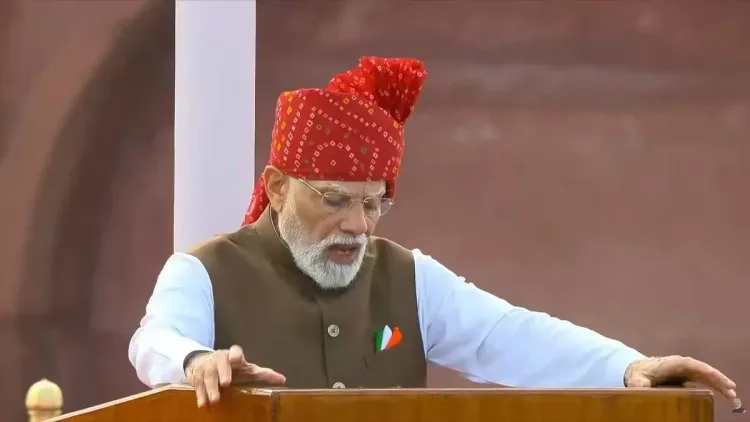
PM Narendra Modi unveiled a 'Shakti ki Saptdhara' (seven streams of strength) framework in his Independence Day address on 15 August from the Red Fort .
The seven sectors are: manufacturing, agriculture, technology, Gati Shakti, defence, green-blue economy, and soft power .
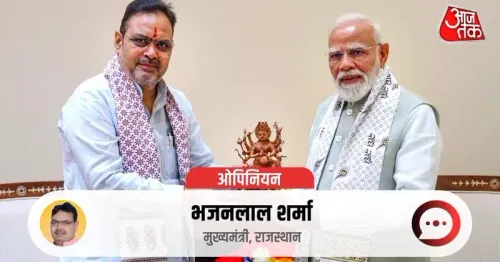
Rajasthan CM Bhajan Lal Sharma publicly endorsed the vision, framing it as a resolve to build a new, self-reliant India.
The framework draws on established policy pillars: Make in India (2014) , Atmanirbhar Bharat (2020) , and the Gati Shakti National Master Plan (2021) .
State-level alignment — especially in manufacturing, green energy, and defence corridors — will be the practical test of the seven-stream vision.
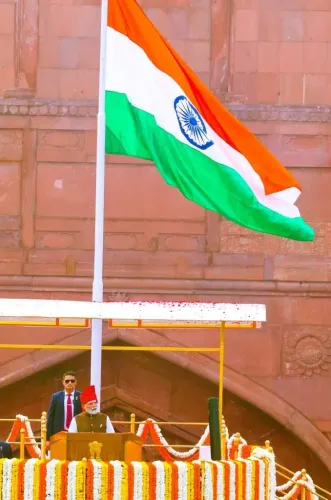
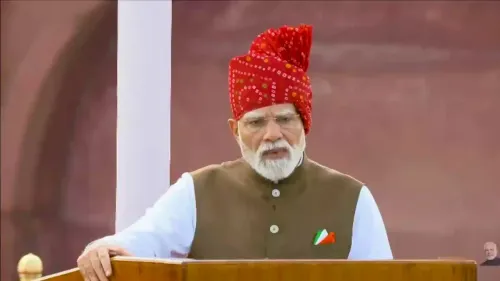
From the ramparts of the Red Fort on Independence Day, 15 August, Prime Minister Narendra Modi laid out a seven-stream framework — 'Shakti ki Saptdhara' (seven streams of strength) — as the blueprint for a self-reliant India. Rajasthan Chief Minister Bhajan Lal Sharma was among the first state leaders to amplify the call, framing it as nothing less than a national resolve to reach new heights of development.
In his post, CM Sharma listed the seven sectors at the heart of the vision: manufacturing, agriculture, technology, Gati Shakti, defence, green-blue economy, and soft power. His message, written in Hindi, declared that by building capacity across all seven, 'India will touch new heights of development' — a direct echo of the Prime Minister's Independence Day address.
What 'Shakti ki Saptdhara' actually means
The seven-stream framing is not a single new scheme but a unifying narrative that draws together years of policy groundwork. Make in India, launched in September 2014, anchors the manufacturing pillar. The Atmanirbhar Bharat package, announced in May 2020, extended self-reliance logic into defence, agriculture, and technology. The Gati Shakti National Master Plan, unveiled in October 2021, brought integrated infrastructure planning under one roof — and now appears explicitly by name in the Prime Minister's seven-stream list.
Grouping them under a single rhetorical umbrella is a deliberate move. It signals that the government views these not as parallel tracks but as interlocking pillars of a single national-strength agenda — one aimed at the Viksit Bharat 2047 goal of becoming a developed economy by the centenary of independence.
Why ruling-party CMs amplify the Red Fort address
It is a pattern as consistent as the address itself. Since 2014, Independence Day speeches from the Red Fort have doubled as policy road maps, and BJP chief ministers in states like Rajasthan routinely translate the central themes into local political messaging. CM Sharma's endorsement signals that Rajasthan's administrative machinery is expected to align its priorities — from agricultural reforms to green-energy investment — with the seven-stream framework.
The sectors that will bear watching at the state level include manufacturing clusters, green and blue economy initiatives tied to Rajasthan's solar capacity and water management, and defence-corridor investments that the state has been courting. The next Union Budget will be the clearest signal of how much fiscal muscle backs the rhetoric.
Seven streams, one direction. The question now is how fast the current runs.
Point of View
Atmanirbhar Bharat, Gati Shakti — under a single, memorable brand ahead of the Viksit Bharat 2047 deadline. CM Sharma's swift amplification reflects the BJP's disciplined message discipline: state leaders are expected to translate Red Fort themes into local political capital. The inclusion of 'green-blue economy' and 'soft power' alongside hard-infrastructure pillars suggests the government is broadening its development narrative beyond traditional manufacturing metrics. The real test will be whether the next Union Budget allocates the fiscal weight these seven streams require.
NationPress
30 Sept 2026
Frequently Asked Questions
What is 'Shakti ki Saptdhara' announced by PM Modi?
'Shakti ki Saptdhara' refers to seven streams of national strength — manufacturing, agriculture, technology, Gati Shakti, defence, green-blue economy, and soft power — outlined by PM Narendra Modi in his Independence Day address from the Red Fort as a framework for building a self-reliant, developed India.
What did Rajasthan CM Bhajan Lal Sharma say about Modi's Independence Day speech?
CM Bhajan Lal Sharma called PM Modi's seven-stream vision a 'resolve to build a new and self-reliant India', stating that strengthening capacity across all seven sectors will help India reach new heights of development.
What is the Gati Shakti scheme mentioned in the seven sectors?
Gati Shakti is the National Master Plan for Multi-modal Connectivity, launched in October 2021, designed to integrate infrastructure planning across government ministries and accelerate project delivery.
How does Atmanirbhar Bharat relate to the seven-sector framework?
Atmanirbhar Bharat, launched in May 2020, is the self-reliance campaign that underpins the seven-sector vision. The new framework extends its logic — domestic production, defence indigenisation, technology development — into a broader, unified national-strength narrative.
Why do BJP chief ministers echo the PM's Independence Day speech?
It is an established pattern within the BJP's political structure: state leaders publicly align with the central government's policy themes to signal administrative coordination and reinforce the party's unified development message at the grassroots level.