CM Bhajan Lal Champions ₹8 Meals for Rajasthan's Poorest
Synopsis
Rajasthan Chief Minister Bhajan Lal Sharma on 13 October 2026 highlighted the Shri Annapurna Rasoi Yojana, which provides fresh, nutritious meals at ₹8 per plate to citizens across the state, framing it as a commitment to Antyodaya — welfare for the last person in line.
Key Takeaways
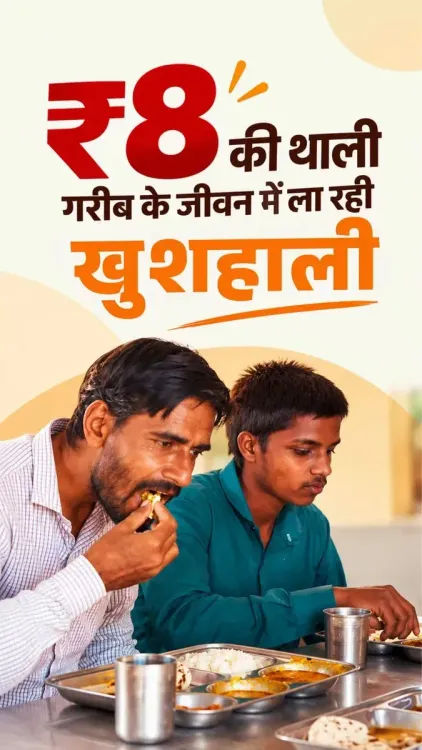
Shri Annapurna Rasoi Yojana serves cooked, nutritious meals at ₹8 per plate across Rajasthan.
CM Bhajan Lal Sharma invoked the Antyodaya philosophy, positioning the scheme as welfare rooted in BJP's ideological commitment to uplift the poorest.
Rajasthan has maintained subsidised cooked-meal schemes since at least the mid-2010s , making food subsidy a durable state policy.
Similar meal-subsidy programmes operate in multiple Indian states, reflecting a nationwide effort to address nutrition gaps beyond dry-ration distribution.
Sharma, who took office in December 2023 , is using the scheme as a visible marker of on-ground welfare delivery.
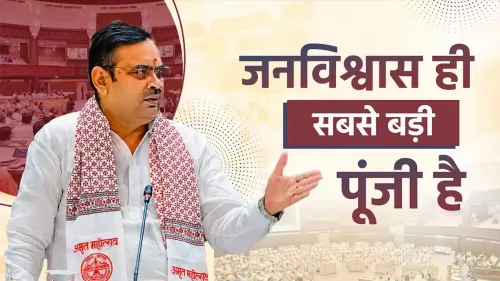
A full, hot, nutritious meal for less than the price of a bus ticket — that is the promise Rajasthan Chief Minister Bhajan Lal Sharma is holding up as the cornerstone of his government's welfare agenda. On Tuesday, 13 October 2026, Sharma took to X to reaffirm the state's commitment to the Shri Annapurna Rasoi Yojana, under which cooked, hygienic meals are served across Rajasthan at just ₹8 per plate.
In his post, Sharma wrote: 'हर जरूरतमंद को पोषण, हर थाली में सम्मान' — 'Nutrition for every needy person, dignity in every plate.' He added that the scheme delivers 'pure, fresh and nutritious food' to ordinary citizens continuously across the state, and that his government remains 'fully dedicated to the welfare of the people of the state with the spirit of Antyodaya upliftment and endless service.'
₹8 and the Philosophy of Antyodaya
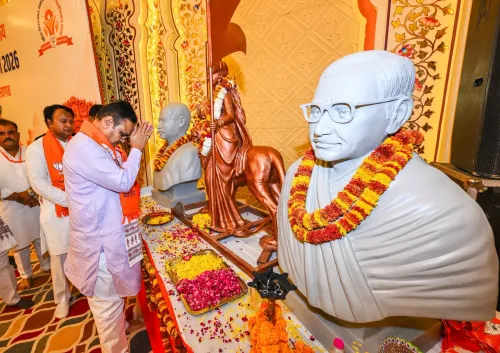
The word Antyodaya — literally 'rise of the last person' — is not incidental here. It is the ideological spine of the BJP's approach to welfare, rooted in the thinking of Pandit Deendayal Upadhyaya, and Sharma's invocation of it signals that the Annapurna Rasoi scheme is being positioned as a moral commitment, not merely a budget line. The fixed price of ₹8 is designed to place a meal within reach of the urban daily-wage worker, the migrant, and the rural poor who may fall outside the Central government's Public Distribution System for cooked food.
Rajasthan has operated subsidised canteen-style schemes for low-income groups since at least the mid-2010s, making food subsidy a durable feature of the state's social policy regardless of which party held power. What the current scheme emphasises is continuous, state-wide availability — not just pilot pockets in major cities, but a network stretching across districts.
Where Rajasthan Fits in India's Meal-Subsidy Landscape
Rajasthan is far from alone. States including Tamil Nadu, Andhra Pradesh, Odisha, Delhi, and Karnataka have each run variants of heavily subsidised or free cooked-meal programmes, reflecting a nationwide consensus that addressing nutrition gaps among the urban and rural poor requires more than dry-ration distribution. The competitive pressure among states to keep prices low — some offer meals at ₹5 or even free — has turned subsidised canteens into a visible electoral signal as much as a welfare instrument.
For Sharma, who assumed office in December 2023, keeping the Annapurna Rasoi network running and visible is an opportunity to demonstrate delivery on the ground ahead of future electoral cycles. State budget allocations for the scheme and any expansion announcements in the next Rajasthan assembly session will be the real test of how wide that ₹8 plate can travel.
Point of View
Signalling that his government is tracking the lived cost of survival for the urban and rural poor. Across India, subsidised meal schemes have become a competitive welfare arena where state governments signal responsiveness; Rajasthan's move keeps it in that conversation. The real accountability measure will come when the assembly scrutinises budget allocations and the actual geographic spread of the canteen network.
NationPress
13 Oct 2026
Frequently Asked Questions
What is the Shri Annapurna Rasoi Yojana in Rajasthan?
The Shri Annapurna Rasoi Yojana is a Rajasthan state scheme that provides fresh, hygienic, and nutritious cooked meals to citizens at just ₹8 per plate, targeting low-income and needy households across the state.
Who launched the Annapurna Rasoi scheme in Rajasthan?
The scheme operates under the Rajasthan state government. CM Bhajan Lal Sharma, who took office in December 2023, has reaffirmed and promoted it as a key welfare initiative of his BJP government.
How much does a meal cost under the Annapurna Rasoi Yojana?
A meal costs just ₹8 per plate under the Shri Annapurna Rasoi Yojana, making it one of India's most affordable state-run subsidised food programmes.
What does Antyodaya mean in the context of Rajasthan welfare schemes?
Antyodaya means 'rise of the last person' and refers to a welfare philosophy associated with BJP ideology, prioritising the upliftment of the poorest and most marginalised citizens. CM Sharma used the term to frame the Annapurna Rasoi scheme as serving those at the very bottom of the economic ladder.
Which other Indian states have similar subsidised meal schemes?
Several Indian states run similar programmes, including Tamil Nadu, Andhra Pradesh, Odisha, Delhi, and Karnataka, each offering heavily subsidised or free cooked meals to address nutrition gaps among low-income urban and rural populations.