Ayush Ministry releases skin disorder treatment guidelines on Ayurveda Day 2026
Synopsis
On the 11th Ayurveda Day, the Ministry of Ayush released the first Standard Treatment Guidelines for skin disorders — covering psoriasis, vitiligo, dermatitis and more — across all four Ayush systems plus Yoga. The move signals a serious push to bring evidence-based, standardised clinical practice to a healthcare segment that has long operated without uniform protocols.
Key Takeaways
The Ministry of Ayush released Standard Treatment Guidelines (STGs) for dermatological disorders on 13 October 2026 , coinciding with the 11th Ayurveda Day .
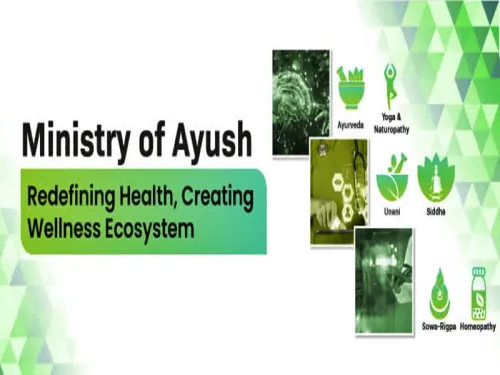
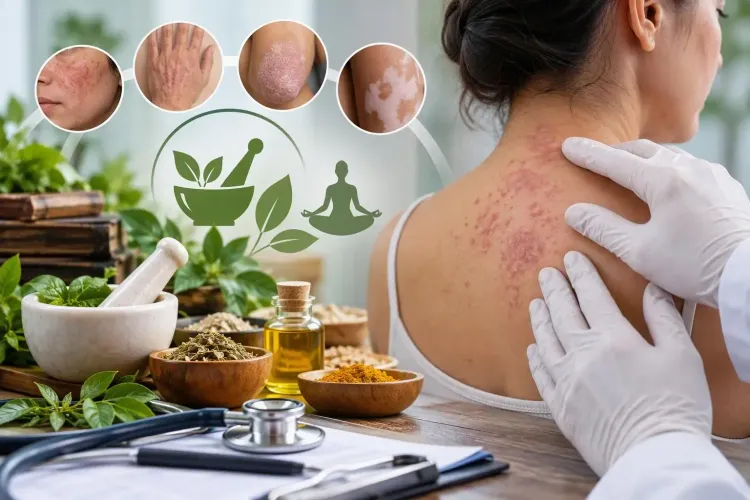
Guidelines cover Ayurveda, Siddha, Unani, Homoeopathy and Yoga , addressing conditions including psoriasis, dermatitis, vitiligo, urticaria and dermatophytosis .
The STGs were prepared by the Ayush Vertical under DGHS of the Ministry of Health and Family Welfare .
Development involved experts from Ayush research councils, traditional medicine academicians, Yoga specialists and modern medicine professionals.
The initiative aims to promote quality assurance, uniformity and evidence-based practice across Ayush healthcare delivery.
The Ministry of Ayush on Tuesday, 13 October 2026 released Standard Treatment Guidelines (STGs) for the management of dermatological disorders across Ayurveda, Siddha, Unani and Homoeopathy systems — with the inclusion of Yoga — on the occasion of the 11th Ayurveda Day. The move is aimed at promoting greater uniformity, quality assurance and evidence-based clinical practice within Ayush healthcare delivery.
Scope and Coverage
The guidelines cover common skin conditions including psoriasis, dermatitis, vitiligo, urticaria and dermatophytosis. For each Ayush discipline, the document outlines system-specific frameworks for prevention, diagnosis, treatment, follow-up care and rehabilitation, while preserving the core principles of each traditional medical system.
Prepared by the Ayush Vertical under the Directorate General of Health Services (DGHS) of the Ministry of Health and Family Welfare, the STGs are designed to strengthen clinical care for skin-related conditions and support the integration of Ayush systems within India's broader healthcare framework.
What Officials Said
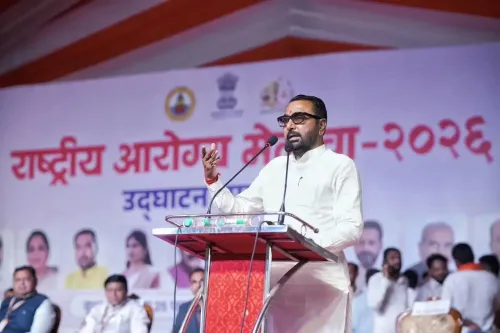
Union Minister of State (Independent Charge) for Ayush and Minister of State for Health and Family Welfare Prataprao Jadhav said the guidelines combine system-specific clinical approaches with contemporary scientific evidence 'to support safe, effective and holistic management of common dermatological conditions.' He added that the initiative would help improve patient care and enhance the contribution of Ayush systems to public health by encouraging standardised and evidence-informed treatment practices.
Ayush Secretary Vaidya Rajesh Kotecha described the guidelines as 'a significant step towards strengthening standardisation, quality and evidence-based practice across Ayush systems.' He noted that the document provides practical recommendations while preserving the core tenets of each traditional discipline.
Director General of Health Services Dr. Loveneesh G. Krishna said the guidelines would promote quality assurance and greater uniformity in healthcare delivery, emphasising that multidisciplinary collaboration would support practitioners in providing 'safe, effective and patient-centric care.'
How the Guidelines Were Developed
According to the Ministry, the development process involved an extensive interdisciplinary effort bringing together experts from Ayush research councils, senior academicians from Ayurveda, Siddha, Unani and Homoeopathy, Yoga specialists and experts from modern medicine. The process included reviews of classical texts, evaluation of scientific evidence, expert consultations and consensus-based discussions.
Broader Significance
This comes amid the Centre's ongoing push to mainstream Ayush systems alongside allopathic medicine in India's public health infrastructure. The release of dermatology-specific STGs marks a step toward formalising clinical standards in a space that has historically operated with limited regulatory uniformity. Notably, the 11th Ayurveda Day served as the platform for the unveiling, signalling the government's intent to use the occasion for substantive policy announcements rather than ceremonial observances alone.
With STGs now in place for dermatological conditions, attention is likely to turn to whether similar frameworks will be extended to other disease areas within the Ayush portfolio.
Point of View
But the harder question is enforcement: India has issued Ayush guidelines before without reliable mechanisms to ensure uptake at the practitioner level. The interdisciplinary authorship — blending classical texts with scientific evidence — is the right approach, yet the tension between system-specific doctrines and evidence-based medicine remains unresolved. The real test will be whether these protocols are adopted in Ayush hospitals and clinics, or remain reference documents gathering dust. Extending this framework to chronic non-communicable diseases, where Ayush sees high patient volumes, would be the logical — and more consequential — next step.
NationPress
13 Oct 2026
Frequently Asked Questions
What are the Standard Treatment Guidelines released by the Ministry of Ayush?
The Ministry of Ayush released Standard Treatment Guidelines (STGs) for managing dermatological disorders across Ayurveda, Siddha, Unani, Homoeopathy and Yoga systems on 13 October 2026. The guidelines cover conditions such as psoriasis, dermatitis, vitiligo, urticaria and dermatophytosis, providing system-specific frameworks for prevention, diagnosis, treatment and follow-up.
Why were these guidelines released on Ayurveda Day?
The 11th Ayurveda Day, observed on 13 October 2026, was chosen as the occasion to underscore the government's commitment to evidence-based practice within traditional medicine systems. The day is annually used to make substantive Ayush policy and programme announcements.
Which skin conditions do the Ayush dermatology guidelines cover?
The guidelines address five key dermatological conditions: psoriasis, dermatitis, vitiligo, urticaria and dermatophytosis. Each condition is addressed through system-specific protocols under Ayurveda, Siddha, Unani, Homoeopathy and Yoga.
Who was involved in developing the Ayush STGs for dermatology?
The guidelines were developed through an interdisciplinary process involving experts from Ayush research councils, senior academicians from Ayurveda, Siddha, Unani and Homoeopathy, Yoga specialists and modern medicine experts. The process included classical text reviews, scientific evidence evaluation and consensus-based discussions.
How do these guidelines affect Ayush practitioners and patients?
The STGs provide standardised clinical protocols that Ayush practitioners can follow for skin disorder management, aiming to improve consistency and patient outcomes. For patients, the guidelines are intended to ensure safer, more evidence-informed care within the Ayush healthcare system.