CM Bhajan Lal Sharma marks 12 years of PM Modi's governance
Synopsis
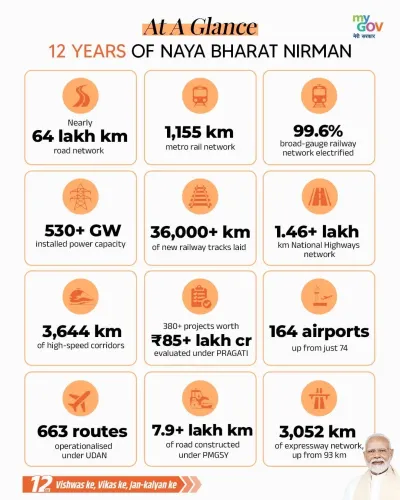
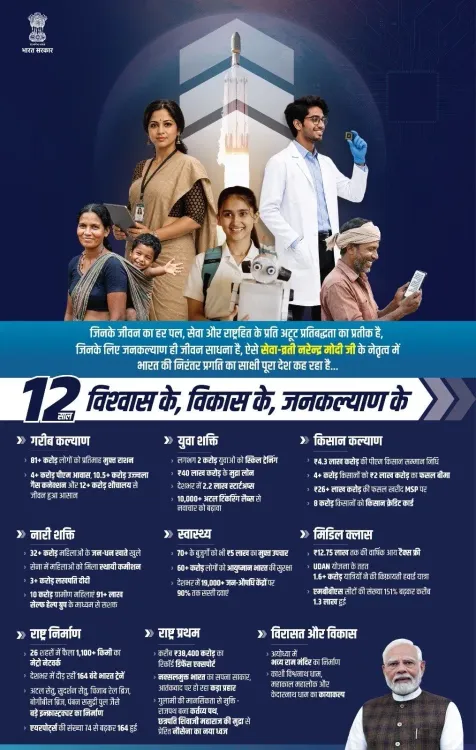
Rajasthan Chief Minister Bhajan Lal Sharma marked 12 years of Prime Minister Narendra Modi's leadership on 9 June 2026, citing Ujjwala Yojana, PM Awas Yojana, and Ayushman Bharat as proof that governance had been reoriented towards the poor, farmers, and youth under the BJP-led Centre.
Key Takeaways
Rajasthan CM Bhajan Lal Sharma posted a tribute on 9 June 2026 marking 12 years of PM Narendra Modi 's leadership under the hashtag #12YearsOfSeva .
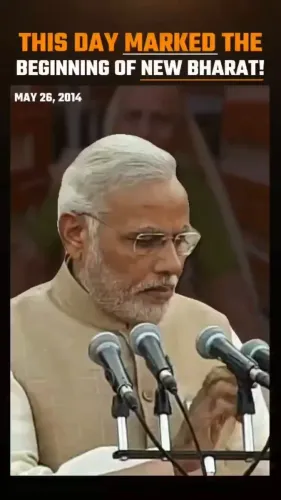
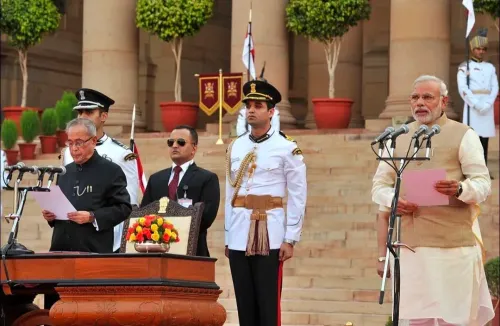
PM Modi was first sworn in on 26 May 2014 , making 2026 the 12th year of his continuous tenure as Prime Minister.
Sharma specifically referenced Pradhan Mantri Ujjwala Yojana (LPG for poor households, launched 2016 ), PM Awas Yojana (pucca housing, approved 2016 ), and Ayushman Bharat (up to Rs 5 lakh annual health cover, rolled out September 2018 ).
The post frames welfare delivery through direct benefit transfers and Aadhaar linkage as the defining governance model of the decade.
Rajasthan , with a large rural and below-poverty-line population, is a key state for scheme saturation under all three programmes cited.
The #12YearsOfSeva campaign indicates a coordinated BJP communication effort using the anniversary across state governments.
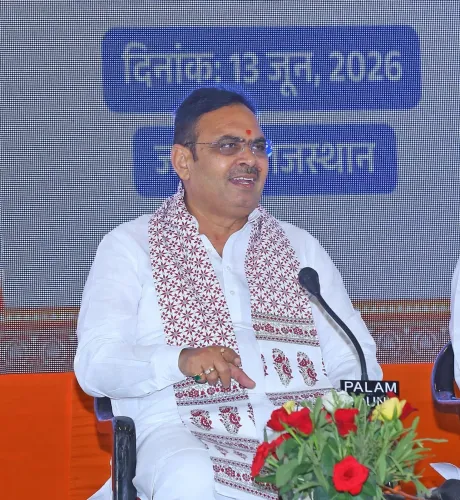
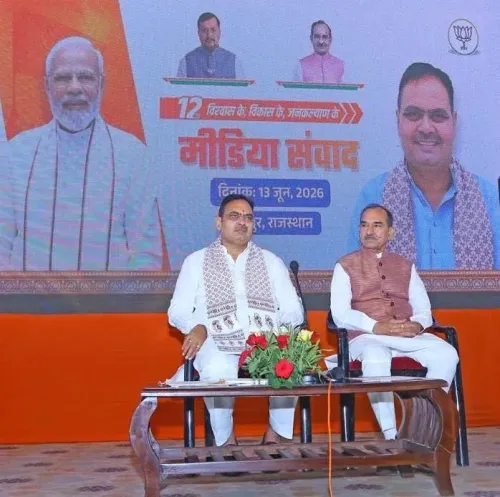
Rajasthan Chief Minister Bhajan Lal Sharma on Tuesday, 9 June 2026, took to X to mark 12 years of Prime Minister Narendra Modi's leadership, crediting the tenure with transforming governance into what he called 'service to every citizen.' The post, tagged #12YearsOfSeva, highlighted flagship welfare schemes and described the period as a chapter of historic change for India's poor, farmers, and youth.
Context
Narendra Modi was first sworn in as Prime Minister on 26 May 2014, marking the start of a BJP-led government at the Centre. The 12-year milestone has prompted a wave of tributes from BJP leaders across states, with CM Sharma adding his voice as the party's chief executive in Rajasthan.
In his post, Sharma wrote: 'Seva, samarpan aur sankalp ke ye 12 varsh' — 'These 12 years of service, dedication and resolve' — are testimony to what happens when a Prime Minister treats the nation as family and the welfare of the last person in line as his sole objective.
Policy Backdrop
Sharma specifically cited four Union government schemes by reference. Pradhan Mantri Ujjwala Yojana, launched on 1 May 2016, brought LPG connections to below-poverty-line households, with the post describing it as 'light reaching a mother's hearth.' Pradhan Mantri Awas Yojana, approved in 2016, targeted pucca housing for rural and urban poor, which Sharma framed as fulfilling a dream of a permanent home for the destitute.
Ayushman Bharat Pradhan Mantri Jan Arogya Yojana, rolled out nationally in September 2018, provides up to Rs 5 lakh annual health coverage per eligible family. Sharma described it as giving 'the assurance of life' to those who need it most. The post also referenced farmers receiving 'a smile of dignity' and youth finding 'new wings for their dreams,' alluding broadly to agricultural and employment-linked initiatives of the past decade.
Since 2014, the Union government has used direct benefit transfers and Aadhaar linkage to channel subsidies in energy, housing, and health — a model BJP leaders routinely cite as evidence of governance centred on economically weaker sections.
Stakeholders and Impact
The schemes referenced by Sharma collectively target several of India's largest vulnerable groups: poor rural households dependent on solid fuel for cooking, families without formal housing, smallholder farmers, and uninsured patients. Rajasthan, with a large rural population and significant below-poverty-line demographic, is among the states where scheme saturation under these programmes has been a stated administrative priority.
For BJP state governments such as Rajasthan, publicly marking such anniversaries serves the dual purpose of reinforcing alignment with the Centre and communicating welfare delivery credentials to constituents ahead of ongoing local governance cycles.
What's Next
Attention now turns to state-level implementation reports on how far these schemes have penetrated Rajasthan's most under-served blocks, and whether the next Union Budget session will announce fresh phases or expanded allocations for any of the programmes Sharma highlighted. The #12YearsOfSeva campaign signals that the BJP intends to use this anniversary as a sustained political and policy communication moment across states.
Point of View
Where state leaders publicly amplify the Union government's welfare narrative to reinforce party identity at the grassroots. By anchoring his tribute to named schemes — Ujjwala, Awas Yojana, Ayushman Bharat — rather than abstract praise, Sharma connects the Centre's policy record directly to Rajasthan's own voter demographics of rural poor, farmers, and uninsured households. The #12YearsOfSeva hashtag signals a coordinated, party-wide communication campaign, suggesting this anniversary is being treated as a political asset ahead of future electoral cycles. The broader pattern points to BJP's continued effort to convert welfare delivery data into durable political capital at both national and state levels.
NationPress
23 Sept 2026
Frequently Asked Questions
Why is CM Bhajan Lal Sharma praising PM Modi's 12 years?
CM Sharma posted the tribute to mark 12 years of PM Narendra Modi's governance since May 2014, citing welfare schemes like Ujjwala Yojana, PM Awas Yojana, and Ayushman Bharat as evidence of development centred on the poor and marginalised.
What is #12YearsOfSeva?
#12YearsOfSeva is a BJP hashtag campaign marking 12 years of PM Narendra Modi's leadership, used by party leaders across states on social media to highlight welfare and governance milestones of the Union government since 2014.
What schemes did Bhajan Lal Sharma mention in his post?
Sharma referenced Pradhan Mantri Ujjwala Yojana (LPG connections for poor households), Pradhan Mantri Awas Yojana (pucca housing for the rural and urban poor), and Ayushman Bharat Pradhan Mantri Jan Arogya Yojana (health coverage of up to Rs 5 lakh per eligible family).
When did Narendra Modi become Prime Minister of India?
Narendra Modi was first sworn in as Prime Minister of India on 26 May 2014, heading a BJP-led government that has continued in office since then.
What is Ayushman Bharat and who does it cover?
Ayushman Bharat Pradhan Mantri Jan Arogya Yojana is a national health protection scheme launched in September 2018 that provides up to Rs 5 lakh annual hospitalisation coverage per eligible low-income family.