CM Bhajan Lal Hails Return of Chola Copper Plates
Synopsis
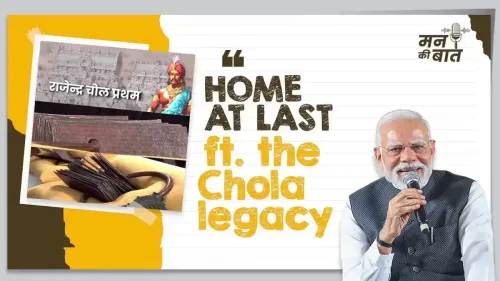
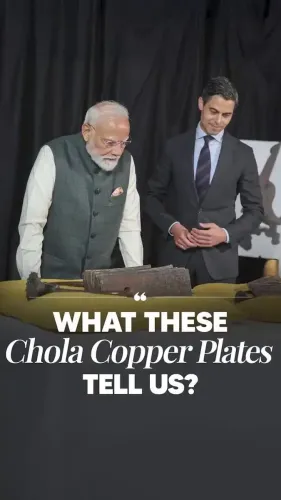
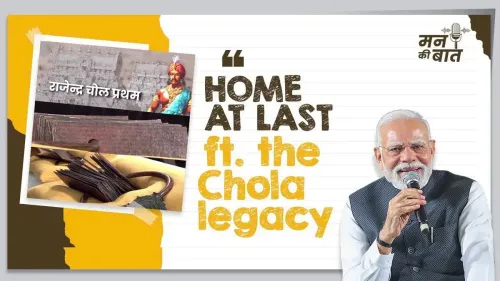
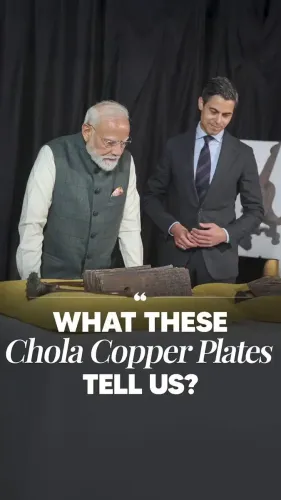
Rajasthan Chief Minister Bhajan Lal Sharma on 24 May 2026 hailed the return of 11th-century Chola copper plates to India, calling it a symbol of civilisational pride and crediting Prime Minister Modi's sustained cultural diplomacy for securing the repatriation.
Key Takeaways
Rajasthan CM Bhajan Lal Sharma publicly welcomed the repatriation of 11th-century Chola copper plates on 24 May 2026 .
He credited Prime Minister Narendra Modi 's leadership for India's progress in cultural heritage restoration and repatriation.
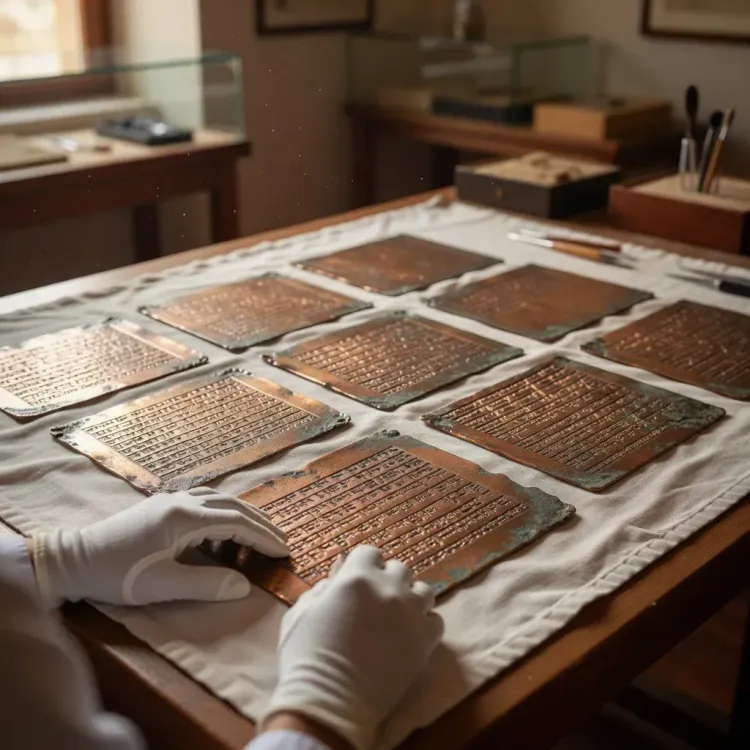
The Chola copper plates are significant primary sources for medieval South Indian history, carrying royal records in Tamil and Grantha scripts.
Since 2014 , India has secured multiple documented repatriations of antiquities from the United States , United Kingdom , and other countries.
Sharma described the return as a symbol of re-honouring India's civilisation and a commitment to connecting future generations with their heritage.
Further repatriation announcements are expected through ongoing bilateral agreements and cultural ministry briefings.
Rajasthan Chief Minister Bhajan Lal Sharma on Sunday, 24 May 2026 welcomed the repatriation of 11th-century Chola copper plates to India, calling it a moment of pride for every Indian and crediting the achievement to the cultural diplomacy pursued under Prime Minister Narendra Modi.
Context
Posting on X, Sharma wrote that under the leadership of Prime Minister Modi, India is continuously achieving important milestones in the preservation and restoration of its glorious cultural heritage. He described the homecoming of the ancient Chola copper plates as 'प्रत्येक भारतीय के लिए गर्व एवं हर्ष का विषय' ('a matter of pride and joy for every Indian').
The Chief Minister framed the development as more than a physical return of artefacts: 'This is not merely the return of ancient heritage, but a symbol of the re-honouring of India's rich civilisation, cultural consciousness, and historical glory,' he stated.
Policy Backdrop
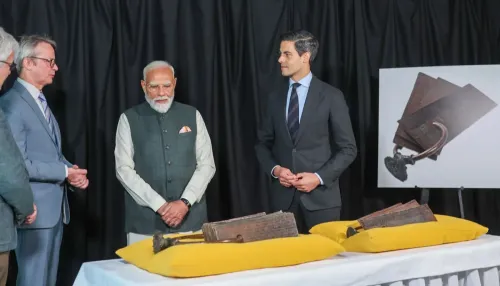
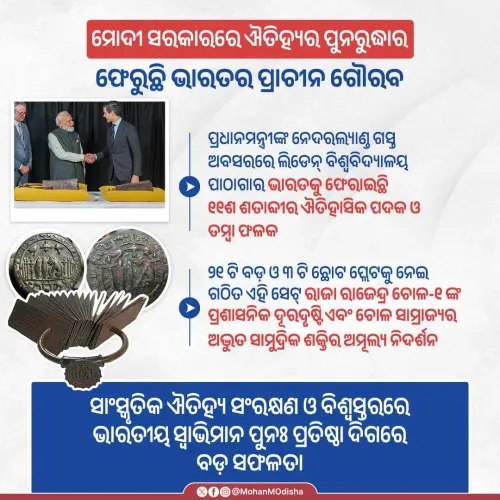
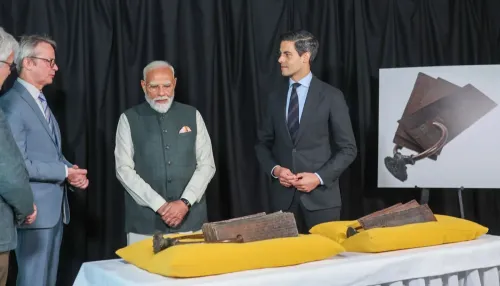
Since 2014, the Government of India has intensified diplomatic efforts to secure the return of antiquities taken abroad, resulting in multiple documented repatriations from the United States, the United Kingdom, and several other countries. The Chola copper plates — inscribed records from the 11th century associated with one of South India's most powerful dynasties — represent a particularly significant category of heritage object, given the Chola empire's reach across maritime Asia.
These repatriation drives have been presented by the central government as evidence of effective cultural diplomacy and have complemented domestic programmes for temple restoration and museum modernisation. Bilateral agreements and Interpol channels have both been used to trace and recover dispersed cultural property.
Stakeholders and Impact
Heritage institutions, archaeologists, and Tamil cultural organisations stand to benefit most directly from the return of Chola-era copper plates, which typically carry royal land grants, genealogies, and administrative records in Tamil and Grantha scripts. Such inscriptions are primary sources for medieval South Indian history and are of scholarly value well beyond their symbolic weight.
For the broader Indian public, successive repatriations have been positioned by the BJP-led government as tangible proof of India's rising global stature and its ability to assert civilisational claims through diplomacy rather than confrontation. Sharma's statement reinforces that messaging from the state level, aligning Rajasthan's political voice with the Centre's cultural agenda.
What's Next
Further repatriation announcements are expected through ongoing bilateral agreements, and the subject is likely to feature in upcoming cultural ministry briefings and parliamentary discussions. Sharma underlined that the achievement 'further strengthens the resolve to protect our cultural identity and connect future generations with their heritage' — signalling that the political emphasis on cultural repatriation will remain a live theme in the run-up to future electoral cycles. How the returned copper plates are displayed, conserved, and made accessible to researchers and the public will be closely watched by heritage advocates.
Point of View
Reinforcing the BJP's consistent messaging that Modi-era diplomacy has restored India's civilisational dignity. The repatriation of Chola copper plates carries particular resonance because it touches Tamil heritage, potentially broadening the political appeal of this agenda beyond the party's traditional strongholds. By framing the return not merely as an archaeological event but as a 'symbol of re-honouring', Sharma elevates the discourse from policy to identity — a rhetorical move that has proven electorally durable for the BJP. The statement also positions state-level leaders as active amplifiers of central government achievements, a pattern that has become standard practice within the party's communication architecture.
NationPress
10 Oct 2026
Frequently Asked Questions
What are the Chola copper plates that have been returned to India?
The Chola copper plates are 11th-century inscribed records associated with the Chola dynasty of South India, typically documenting royal land grants, genealogies, and administrative orders in Tamil and Grantha scripts. Their repatriation has been welcomed as a major cultural heritage milestone.
Why did Rajasthan CM Bhajan Lal Sharma comment on Chola copper plates?
Bhajan Lal Sharma posted on X on 24 May 2026 to welcome the repatriation as a national achievement, crediting Prime Minister Modi's cultural diplomacy and framing the return as a symbol of India's civilisational pride.
How many antiquities has India repatriated under PM Modi?
Since 2014, the Government of India has secured multiple documented repatriations of antiquities from countries including the United States and the United Kingdom through bilateral agreements and diplomatic channels, though a single comprehensive official count has not been publicly fixed.
What is the significance of Chola-era copper plates for Indian history?
Chola copper plates are primary historical sources for medieval South Indian political and social history, recording royal decrees, land grants, and dynastic genealogies. They are of considerable value to historians, epigraphers, and Tamil cultural institutions.
What is India's policy on repatriation of cultural artefacts?
India has pursued an active repatriation policy since 2014, using bilateral diplomatic agreements, Interpol channels, and legal frameworks to secure the return of antiquities that left the country, often through illegal export. The effort is framed as both a heritage-protection and a cultural-diplomacy initiative.