Rajasthan CM Bhajan Lal Sharma hails PM-KUSUM feeder first rank
Synopsis
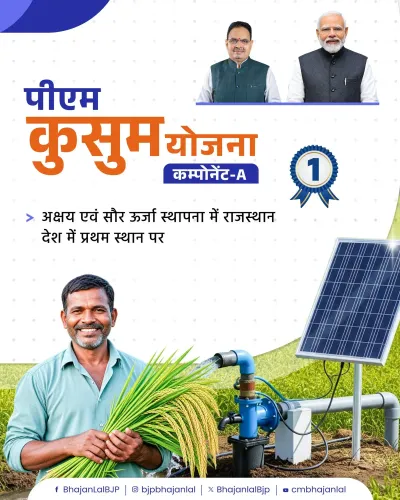
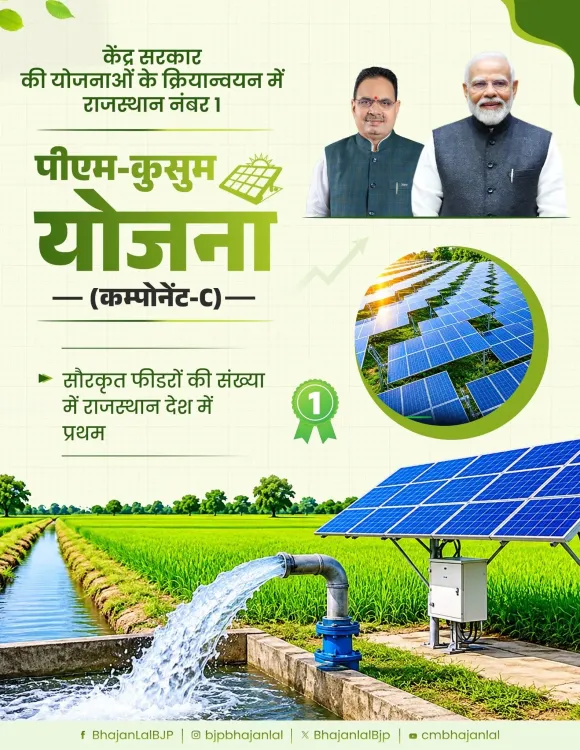
Rajasthan Chief Minister Bhajan Lal Sharma said the state ranks first in India for solarised feeders under PM-KUSUM Component-C. He tied the 2019 scheme to farmer energy self-reliance and a clean-power push.
Key Takeaways
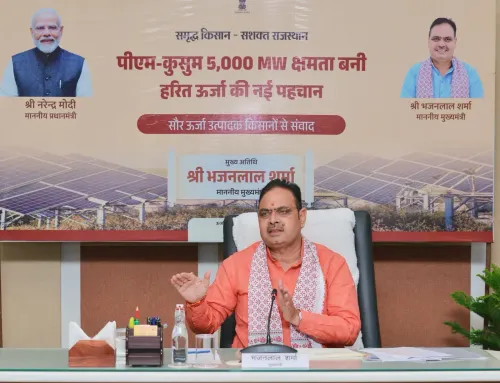
Rajasthan Chief Minister Bhajan Lal Sharma on 28 November 2026 said the state is first in India in solarised feeders under PM-KUSUM Component-C.
He framed the ranking as progress toward making farmers energy self-reliant through solar expansion.
PM-KUSUM , launched in 2019 , solarises farm pumps and feeders; Component-C targets 33 kV agricultural feeders for daytime power.
Sharma, who became CM in December 2023 , said the government is committed to delivering clean-energy benefits to farmers.
The post gave no feeder totals; a post-2023 national ranking is not independently confirmed in public records.
Rajasthan Chief Minister Bhajan Lal Sharma on 28 November 2026 said solar expansion is putting farmers on the path to energy self-reliance, and he cited a claimed nationwide first place in solarised feeders under PM-KUSUM Component-C as the proof point. The X post tied clean power directly to irrigation and to a bet that sunshine can replace subsidy-heavy night supply on the farm grid.
Sharma wrote that Rajasthan is continuously moving forward in making farmers self-reliant in the energy sector through the expansion of solar energy. Securing first position in the country in the number of solarised feeders under Component-C of the PM-KUSUM scheme, he said, is an important achievement in that direction. The government, he added, is firmly committed to promoting clean energy and delivering its benefits to farmers — a line that in the original Hindi stressed being आत्मनिर्भर (self-reliant) in energy.
What PM-KUSUM Component-C is built to do
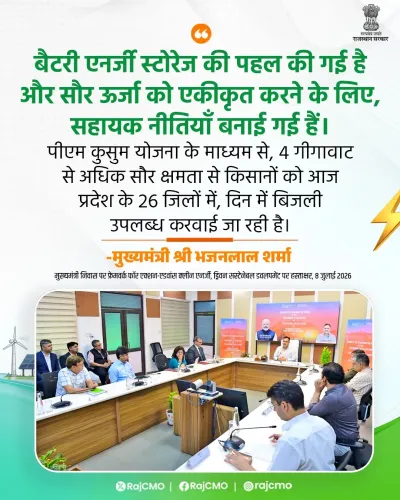
The Pradhan Mantri Kisan Urja Suraksha evam Utthaan Mahabhiyan was launched by the Government of India in 2019 to solarise agricultural pumps and feeders. It runs on three components. Component-C is the feeder track: solarisation of 33 kV agricultural feeders so farmers get daytime power and state distribution companies can shrink the subsidy bill that night-time farm supply has long imposed.
That is the mechanism Sharma is pointing to, not a rooftop photo-op but wires, transformers and pumps timed to the sun. For farmers, the promise is irrigation when the crop actually needs water. For discoms, it is less cheap power sold at a loss after dark.
Rajasthan's solar geography and the farm grid
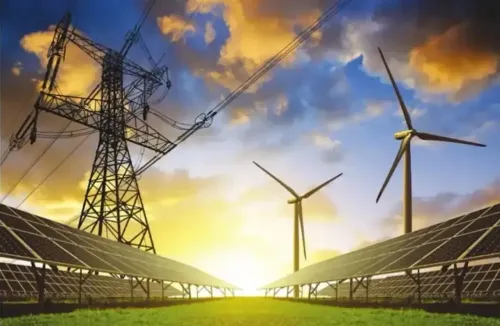
Rajasthan sits on some of India's highest solar irradiance and already hosts large solar parks. That geography has made the state a natural candidate for feeder-level solarisation under the national scheme. Sharma, a BJP leader who took office as Chief Minister in December 2023, presented the Component-C ranking as part of a wider push to expand solar and route its gains to farmers.
India's broader pattern is rapid solar capacity growth under the National Solar Mission, with states delivering through central schemes to meet non-fossil targets. Component-C sits inside that stack: daytime feeder power, lower diesel use, lower subsidy stress on the farm side of the grid.
The first-place claim and the next feeder test
Sharma's post did not attach feeder counts or a dated ranking table. Public records do not independently confirm a post-2023 national first place or exact numbers of solarised feeders, so the ranking stands as the Chief Minister's public assertion. The live policy test is additional solarised feeders on the ground and any central review of Component-C implementation targets.
For a desert state that already treats sunlight as infrastructure, the next marker is whether those 33 kV feeders keep the pumps running in daylight, and whether farmers feel it at the field.
Point of View
But a 33 kV feeder timed to daylight. Bhajan Lal Sharma is folding that technical track into a promise of farmer self-reliance, which is how clean energy gets sold in an agrarian state. The 2019 scheme was always meant to cut diesel use and discom subsidies at once. Rajasthan's high-irradiance grid makes the delivery path shorter than in cloudier states, so the ranking claim fits a longer National Solar Mission pattern of geography meeting central money.
NationPress
28 Nov 2026
Frequently Asked Questions
What is PM-KUSUM Component-C in India?
It is the feeder-solarisation arm of the 2019 PM-KUSUM scheme. It aims to solarise 33 kV agricultural feeders so farmers get daytime electricity and state discoms can reduce subsidy costs.
What did Bhajan Lal Sharma say about solar feeders?
The Rajasthan Chief Minister said the state has secured first position in India in the number of solarised feeders under PM-KUSUM Component-C. He called it an important step toward farmer energy self-reliance.
When was the PM-KUSUM scheme launched?
The Government of India launched PM-KUSUM in 2019. The scheme promotes solarisation of agricultural pumps and feeders across three components.
Why is Rajasthan a focus state for solar agriculture?
Rajasthan has high solar irradiance and large-scale solar parks. That geography supports feeder-level solarisation meant to give farmers daytime power.
Who is Bhajan Lal Sharma?
Bhajan Lal Sharma is the Chief Minister of Rajasthan and a BJP leader. He assumed office in December 2023.