CM Bhajan Lal meets Amit Shah, thanks him for Yamuna water deal
Synopsis
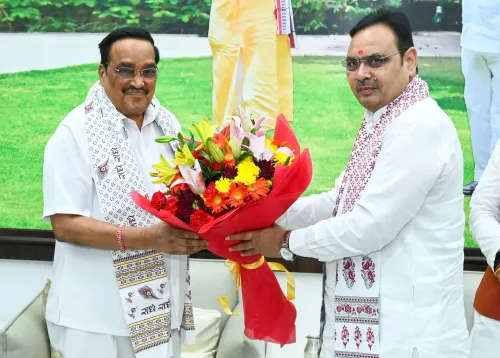
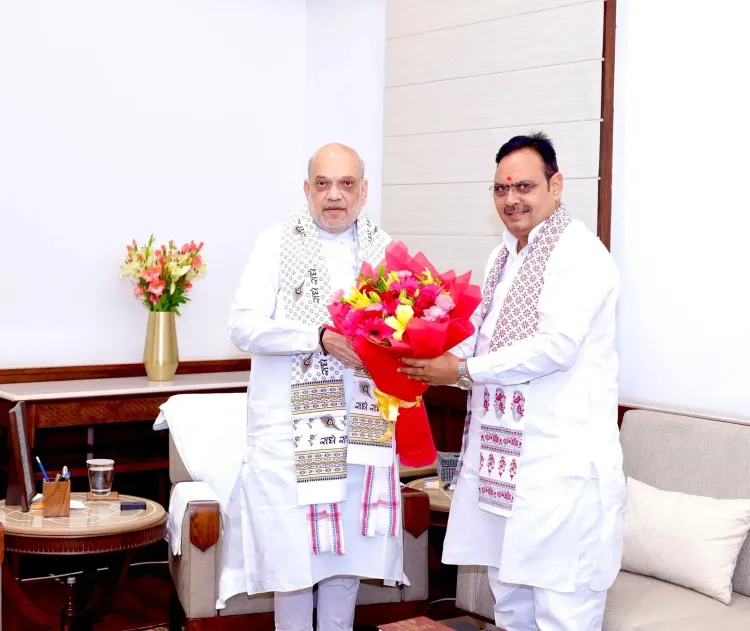
Rajasthan Chief Minister Bhajan Lal Sharma met Union Home Minister Amit Shah in New Delhi on August 6, 2026, thanking him for the Yamuna water agreement and discussing border security, cooperative sector development, and Rajasthan's overall growth under the BJP's double-engine governance model.
Key Takeaways
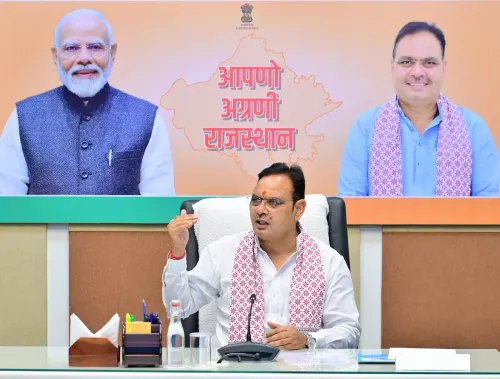
CM Bhajan Lal Sharma met Union Home Minister Amit Shah in New Delhi on August 6, 2026 .
Sharma formally thanked Shah for the Yamuna water agreement , which allocates river flows to Rajasthan among other northern states.
Discussions covered strengthening security and development in Rajasthan's Pakistan-border districts .
The meeting also addressed empowering the cooperative sector , Shah's second ministerial portfolio.
Sharma invoked PM Narendra Modi 's 'double-engine government' as the driving force behind Rajasthan's development agenda.
Rajasthan Chief Minister Bhajan Lal Sharma travelled to New Delhi on Thursday, August 6, 2026, to call on Union Home and Cooperation Minister Amit Shah — and the agenda stretched well beyond a courtesy visit. From a hard-won river water agreement to the security of India's most sensitive frontier, the meeting covered the full breadth of Rajasthan's relationship with the Centre.
Gratitude over the Yamuna and what the agreement means for Rajasthan
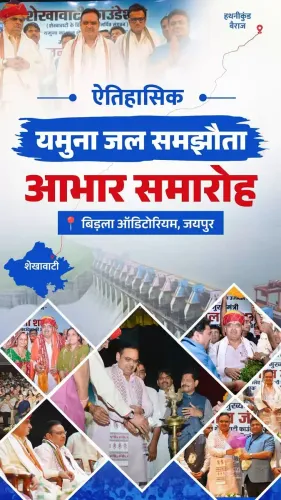
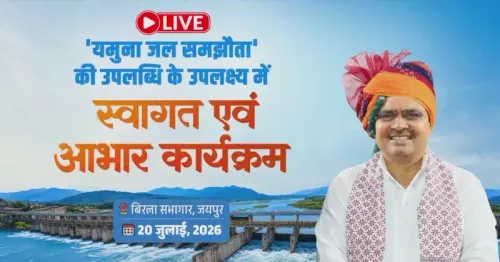
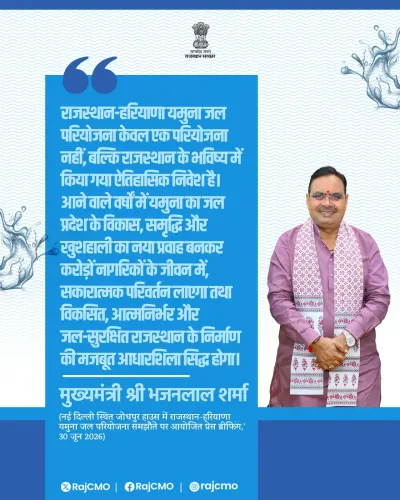
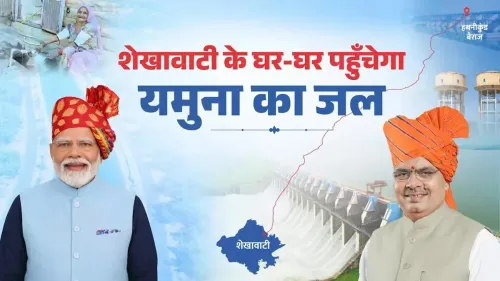
The first order of business was an expression of thanks. CM Sharma conveyed his gratitude to Shah for the Yamuna water agreement, a water-sharing arrangement among northern states that allocates flows from the river to Haryana, Delhi, Uttar Pradesh, and Rajasthan. The framework traces its lineage to a 1994 Memorandum of Understanding among Yamuna basin states that set volumetric allocations — a compact whose implementation has been contested and renegotiated over the decades. For an arid state like Rajasthan, any confirmed share of Yamuna water carries direct consequences for farmers and urban supply alike.
Sharma posted on X: 'Yamuna jal samjhaute ke liye aabhar prakat kiya' — 'expressed gratitude for the Yamuna water agreement' — signalling that the state government views the deal as a tangible deliverable of Centre-state coordination under the BJP's double-engine governance model.
Border districts, internal security, and the Pakistan frontier
The conversation then moved to terrain that is uniquely Rajasthan's burden: its long frontier with Pakistan. Sharma said he received 'valuable guidance' from Shah on strengthening border-area security infrastructure, the holistic development of border districts, and making internal security arrangements more effective. Rajasthan's Pakistan-facing districts have long been a recurring item on any state-Centre security agenda — a geography that demands both military vigilance and civilian investment to prevent marginalisation of frontier communities.
The cooperative sector — Shah's second ministerial portfolio — also featured in the discussions, with Sharma seeking direction on empowering Rajasthan's cooperative ecosystem, a network that touches rural credit, dairy, and agricultural marketing across the state.
The double-engine pitch and what comes next
Sharma closed his post by invoking Prime Minister Narendra Modi's 'visionary leadership,' framing the BJP's simultaneous hold on the state and central governments as an accelerant for 'comprehensive, inclusive, and rapid development' of Rajasthan. The double-engine framing is a standard BJP political formulation, but it also has a functional dimension: states aligned with the ruling party at the Centre have historically found it easier to unlock scheme funding and fast-track clearances.
The immediate watch-points are the rollout of projects under the referenced Yamuna agreement and whether new central allocations follow for Rajasthan's border districts — the two threads that will determine whether Thursday's meeting translates from agenda to action.
Point of View
Security funding, scheme clearances. For Bhajan Lal Sharma, publicly crediting Shah for the Yamuna agreement serves a dual purpose: it reinforces the double-engine narrative ahead of any local political scrutiny and locks in the Centre's reputational stake in delivering on the deal. The emphasis on border-district development is equally pointed — Rajasthan's Pakistan frontier is both a security imperative and an underdevelopment flashpoint, and framing it as a shared Centre-state priority positions Sharma to claim credit for future federal spending in those areas.
NationPress
6 Aug 2026
Frequently Asked Questions
Why did Rajasthan CM Bhajan Lal Sharma meet Amit Shah?
CM Bhajan Lal Sharma met Union Home Minister Amit Shah in New Delhi on August 6, 2026, to thank him for the Yamuna water agreement and to seek guidance on border security, cooperative sector development, and Rajasthan's overall governance.
What is the Yamuna water agreement for Rajasthan?
The Yamuna water agreement allocates flows from the Yamuna river among northern states including Rajasthan, Haryana, Delhi, and Uttar Pradesh. The arrangement is rooted in a 1994 Memorandum of Understanding among basin states.
What is the double-engine government model mentioned by Bhajan Lal Sharma?
The double-engine government is a BJP political formulation referring to the same party being in power at both the state and central levels, enabling closer coordination and faster delivery of development schemes.
What are Rajasthan's border district security concerns?
Rajasthan shares a long frontier with Pakistan, making its border districts a recurring focus of internal security and development discussions between the state and central governments.
What is Amit Shah's role in the cooperative sector?
Amit Shah holds the portfolio of Union Minister of Cooperation in addition to Home Affairs, making him the central government's point person for empowering India's cooperative sector, which Sharma also raised during the meeting.