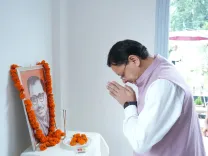
CM Bhajan Lal pays tribute to Deendayal Upadhyay on Jayanti
Synopsis
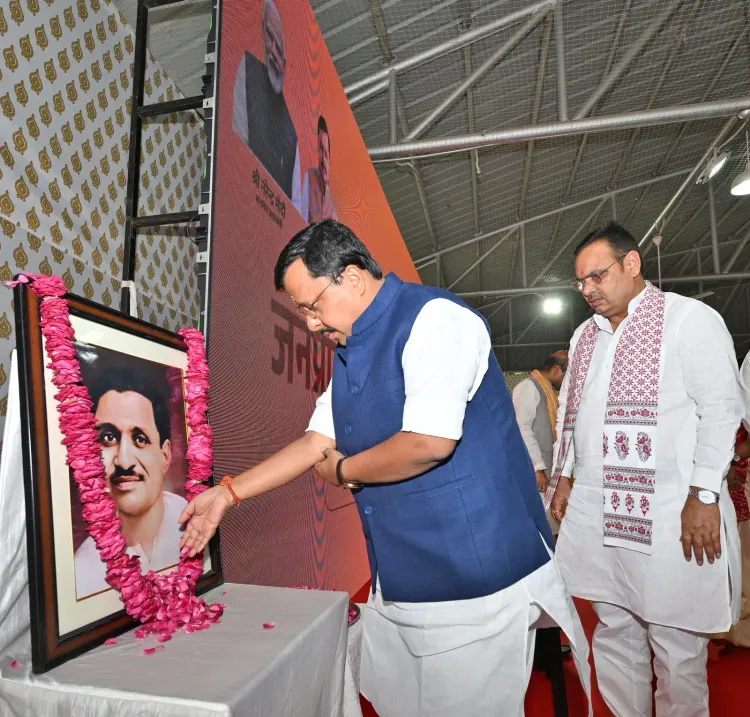
Rajasthan Chief Minister Bhajan Lal Sharma paid a solemn floral tribute to Pandit Deendayal Upadhyay at the CM residence on 25 September 2026, invoking the BJP ideologue's Antyodaya philosophy and the principle of serving the last person in society.
Key Takeaways
Rajasthan CM Bhajan Lal Sharma paid tribute to Pandit Deendayal Upadhyay at the Chief Minister's residence in Jaipur on 25 September 2026 .
Deendayal Upadhyay was a founding member of the Bharatiya Jana Sangh (est.
1951 ) and the originator of Ekatma Manav Darshan and Antyodaya philosophy.
The BJP has observed Upadhyay's Jayanti on 25 September annually since 1980 to reaffirm its ideological roots.
Sharma invoked the principle of 'sarvajan hitaay, sarvajan sukhaay' — governance for the benefit and happiness of all.
No new policy or scheme was announced; the event was a ceremonial ideological tribute.
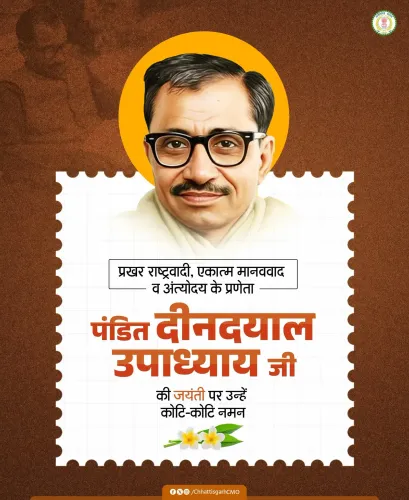
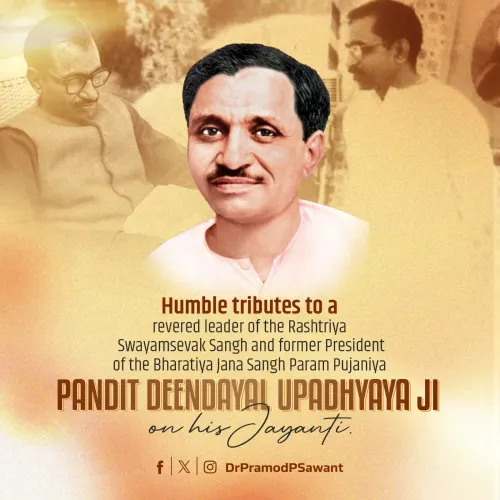
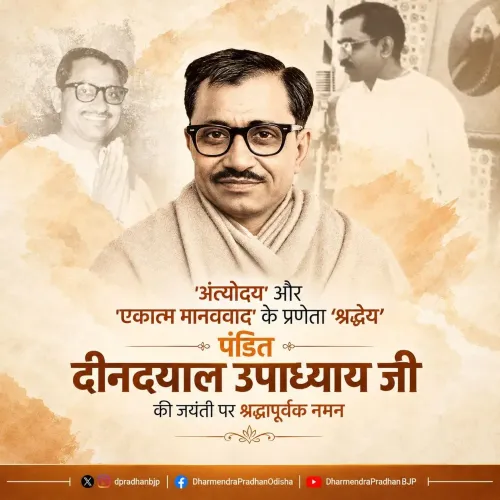
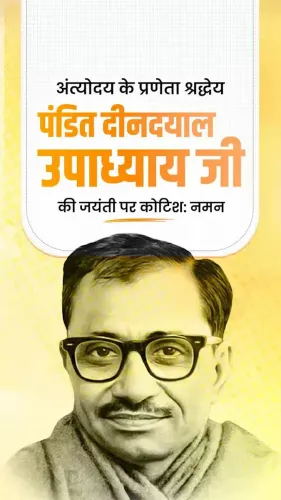
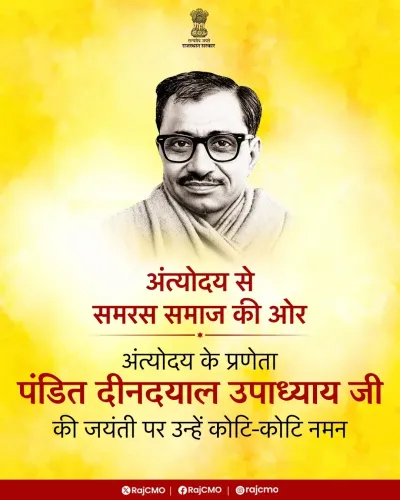
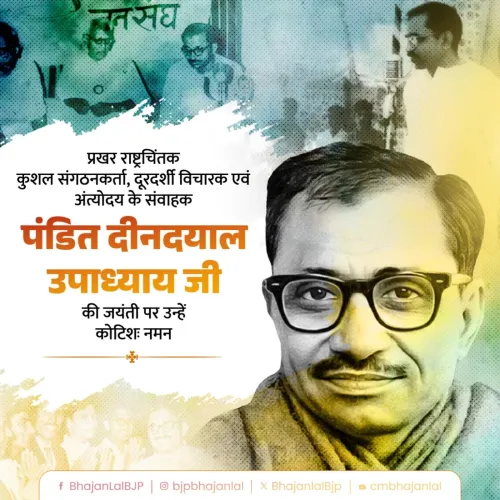
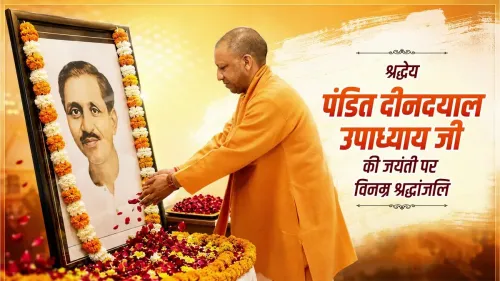
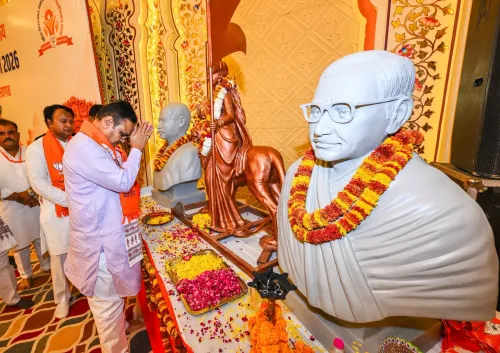
On the birth anniversary of one of Indian politics' most consequential ideological architects, Rajasthan Chief Minister Bhajan Lal Sharma paid floral tributes to Pandit Deendayal Upadhyay at the Chief Minister's residence in Jaipur on 25 September 2026, marking the occasion with a moment of solemn remembrance.
Sharma offered the tribute alongside the BJP's national president, describing Upadhyay as the 'Ekatma Manav Darshan evam Antyodaya ke praneta' — the pioneer of Integral Humanism and the doctrine of serving the last person in the social order. The Chief Minister's message centred on Upadhyay's lifelong dedication: 'His entire life was devoted to national service and the welfare of the person standing on the last rung of society.'
The man behind the ideology BJP calls its compass
Pandit Deendayal Upadhyay, born 25 September 1916, was a founding member of the Bharatiya Jana Sangh, established in 1951 — the direct predecessor to today's BJP. His philosophical framework, Ekatma Manav Darshan (Integral Humanism), rejected both Western capitalism and Soviet communism in favour of a civilisational model rooted in Indian thought, arguing that economic policy must be measured by its impact on the poorest citizen. The concept of Antyodaya — literally 'rise of the last' — became the moral spine of that philosophy.
The BJP, since its formation in 1980, has observed Upadhyay's Jayanti on 25 September every year as a moment to reaffirm its ideological roots. Senior leaders across BJP-ruled states hold tribute events, linking the party's current welfare programmes to Upadhyay's original vision of a service-oriented state.
A slogan that travels from 1960s philosophy to 2026 Rajasthan
Sharma closed his tribute with the phrase 'sarvajan hitaay, sarvajan sukhaay' — 'for the benefit of all, for the happiness of all' — invoking a formulation that distils Upadhyay's core argument: that governance must account for every citizen, not merely the organised or the vocal. In Rajasthan, this framing has been invoked to justify targeted welfare spending for tribal communities, small farmers, and urban poor — though no new scheme was announced on the occasion.
The Jayanti tribute is a fixture in the BJP's annual calendar, one that signals ideological continuity as much as it honours a historical figure. For a party navigating the pressures of electoral politics, returning annually to Upadhyay is a way of insisting that its founding instinct — the last person first — still governs its choices.
Whether Rajasthan's next budget session translates that instinct into fresh Antyodaya-linked outlays will be the real test of the sentiment expressed at the Chief Minister's residence today.
Point of View
Used by leaders at every level to anchor contemporary welfare politics in a pre-independence philosophical lineage. For Chief Minister Sharma, publicly invoking Antyodaya reinforces the Rajasthan government's positioning as a pro-poor administration — particularly important ahead of budget discussions. The gesture carries no immediate policy weight, but it signals to party workers and base voters that the government's compass still points toward the marginalised. In an era of competitive welfare politics across Indian states, claiming Upadhyay's legacy is also a way of distinguishing BJP's welfare framing from that of rival parties.
NationPress
25 Sept 2026
Frequently Asked Questions
Who was Pandit Deendayal Upadhyay?
Pandit Deendayal Upadhyay was a founding member of the Bharatiya Jana Sangh, born on 25 September 1916, and the originator of Ekatma Manav Darshan (Integral Humanism) and the Antyodaya principle of uplifting the last person in society.
Why is 25 September celebrated by the BJP?
25 September is the birth anniversary of Pandit Deendayal Upadhyay, one of the BJP's founding ideologues. The party has observed it annually since 1980 to reaffirm its commitment to Integral Humanism and Antyodaya.
What is Antyodaya philosophy?
Antyodaya, meaning 'rise of the last,' is a principle articulated by Deendayal Upadhyay that holds governance and economic policy must prioritise the welfare of the poorest and most marginalised section of society.
What did Rajasthan CM Bhajan Lal Sharma do on Deendayal Jayanti 2026?
CM Bhajan Lal Sharma paid floral tributes to Pandit Deendayal Upadhyay at the Chief Minister's residence in Jaipur on 25 September 2026, and invoked the Antyodaya and 'sarvajan hitaay' principles in his message.
What is Ekatma Manav Darshan?
Ekatma Manav Darshan, or Integral Humanism, is a political philosophy developed by Deendayal Upadhyay that advocates a distinctly Indian approach to governance, rejecting both Western capitalism and communism in favour of a model centred on human dignity and civilisational values.