CM Bhajan Lal Sharma Accuses Congress of Killing Constitution on Emergency Anniversary
Synopsis
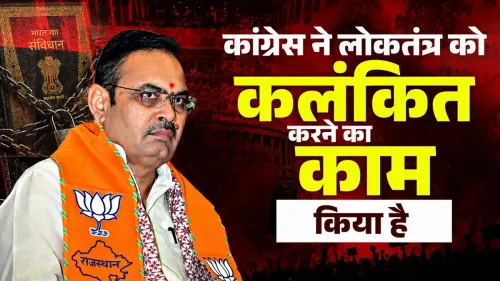
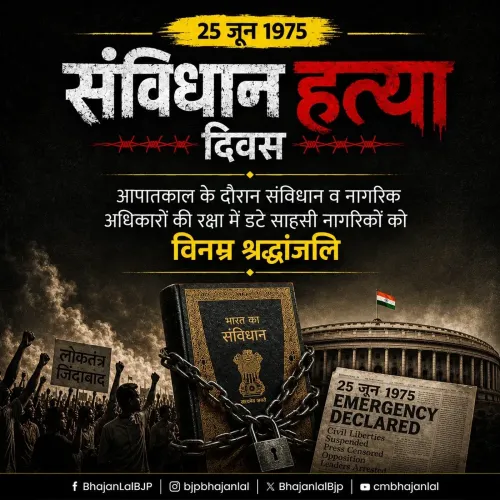
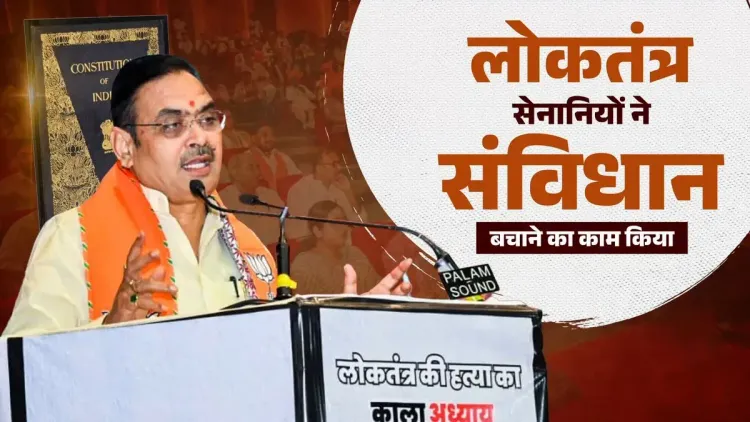
Rajasthan Chief Minister Bhajan Lal Sharma marked the 51st anniversary of the 1975 Emergency by accusing Congress of 'murdering the Constitution' and honouring those who resisted Emergency-era rule as democracy warriors who kept constitutional values alive.
Key Takeaways
CM Bhajan Lal Sharma posted on X on 25 June 2026 , the 51st anniversary of the Emergency proclamation.
He accused the Indian National Congress of 'murdering the Constitution' during the 1975–77 Emergency .
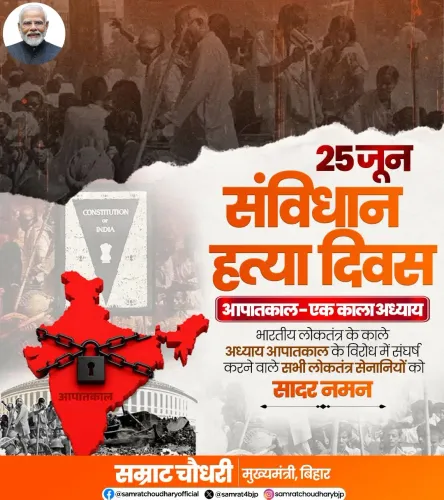
He paid tribute to 'democracy warriors' who resisted Emergency rule and fought to protect constitutional values.
The Emergency was declared by Prime Minister Indira Gandhi on 25 June 1975 and lasted until March 1977 , during which fundamental rights were suspended.
The statement continues the BJP's established political narrative framing the Emergency as Congress-led constitutional subversion.
Congress responses and broader commemorative political activity are expected around this anniversary date.
Rajasthan Chief Minister Bhajan Lal Sharma on Thursday, 25 June 2026 accused the Indian National Congress of 'murdering the Constitution,' while honouring those who resisted the 1975 Emergency as defenders of democratic values.
Posting in Hindi on X, CM Sharma wrote: 'Kांग्रेस ने संविधान की हत्या की, जबकि हमारे लोकतंत्र सेनानियों ने संविधान की रक्षा के लिए संघर्ष किया।' ('Congress murdered the Constitution, while our democracy warriors fought to protect it. Their sacrifice and courage kept democratic values alive.')
Context
The post was published on the 51st anniversary of the proclamation of the national Emergency, which was declared on 25 June 1975 by then Prime Minister Indira Gandhi. The Emergency lasted until March 1977 and is widely regarded as one of the most contested episodes in India's post-independence constitutional history.
During those 21 months, fundamental rights were suspended, the press was censored, and thousands of opposition leaders, activists, and ordinary citizens were detained without trial under preventive detention laws.
Policy Backdrop
The Bharatiya Janata Party and its ideological predecessors have consistently framed the Emergency as a defining moment of Congress-led constitutional subversion. Figures such as Jayaprakash Narayan — the socialist leader who spearheaded the anti-Emergency movement — are regularly invoked by the BJP as symbols of democratic resistance.
The 1977 general election, held after the Emergency was lifted, resulted in a decisive defeat for the Congress government, widely interpreted as a popular verdict against Emergency-era excesses. The BJP has drawn on this historical narrative in political messaging around the June anniversary every year.
Stakeholders and Impact
CM Sharma's statement is addressed implicitly to multiple audiences: BJP supporters who view the Emergency as a cautionary tale about single-party dominance, democracy activists and civil society groups who commemorate the period, and the Congress party, which has historically defended Indira Gandhi's decision as a response to political instability.
Opposition parties, particularly the Congress, are expected to push back against such characterisations, with spokespersons likely to contest the framing and highlight their own constitutional commitments. Commemorative events and debates in state assemblies and Parliament frequently accompany this anniversary.
What's Next
With the Emergency anniversary serving as an annual flashpoint in Indian political discourse, responses from Congress leaders and counter-messaging from other opposition parties are anticipated in the coming hours and days. The BJP is expected to amplify similar statements from other senior leaders across states, reinforcing the party's broader narrative on democratic credentials ahead of future electoral cycles.
Point of View
Using its anniversary to draw a sharp moral contrast between Congress governance and democratic resistance. The statement is calibrated to resonate with BJP's core base while keeping pressure on Congress over a historical episode the party has never fully neutralised in public memory. By invoking unnamed 'democracy warriors,' Sharma broadens the tribute beyond specific individuals, allowing the message to serve both as commemoration and as a pointed electoral critique. This kind of anniversary messaging has become a predictable but effective ritual in BJP's political calendar.
NationPress
25 Jun 2026
Frequently Asked Questions
Why did Bhajan Lal Sharma accuse Congress of murdering the Constitution?
CM Bhajan Lal Sharma made the accusation on the 51st anniversary of the 1975 Emergency, when the Congress government suspended fundamental rights and civil liberties. The BJP regularly uses this anniversary to highlight what it calls Congress's anti-democratic record.
What was the 1975 Emergency in India?
The national Emergency was proclaimed on 25 June 1975 by Prime Minister Indira Gandhi and lasted until March 1977 . During this period, fundamental rights were suspended, the press was censored, and thousands of opposition leaders and activists were detained without trial.
Who are the 'democracy warriors' Bhajan Lal Sharma referred to?
Sharma referred broadly to those who resisted Emergency-era rule. Prominent among such figures is Jayaprakash Narayan , the socialist leader who led the anti-Emergency movement, along with thousands of activists and opposition leaders who were imprisoned during the period.
What happened after the 1975 Emergency ended?
After the Emergency was lifted in 1977 , a general election was held in which the Congress government was decisively defeated. The result was widely seen as a public verdict against Emergency-era excesses and led to the formation of the first non-Congress government at the Centre.
Why does the BJP frequently raise the Emergency issue?
The Emergency represents a defining moment in BJP's political narrative, framing Congress as a party willing to subvert the Constitution for political survival. The BJP uses the June anniversary each year to reinforce this contrast and question Congress's democratic credentials.