CM Bhajan Lal Sharma bets on Kishau Project to end Shekhawati's water crisis
Synopsis
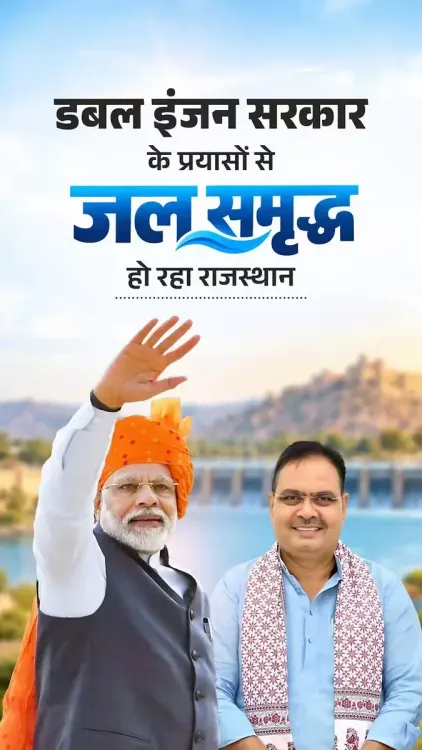
Rajasthan CM Bhajan Lal Sharma on 22 October 2026 invoked the Kishau Project to promise water security for Shekhawati, framing the multipurpose Tons River dam as central to his government's push for a water self-reliant Rajasthan under the BJP's 'double engine' model.
Key Takeaways
CM Bhajan Lal Sharma posted on 22 October 2026 that the Kishau Project will strengthen drinking water and irrigation in Shekhawati .
The Kishau Dam is proposed on the Tons River in Uttarakhand and involves multi-state water-sharing agreements dating to the 1990s .
Shekhawati — covering Sikar, Jhunjhunu and Churu districts — faces chronic water scarcity for both agriculture and household use.
Sharma's government, in office since December 2023 , frames aligned BJP rule at the Centre and state as key to fast-tracking inter-state water projects.
Key upcoming milestones include land acquisition progress, inter-state water-allocation agreements, and canal infrastructure budgets.
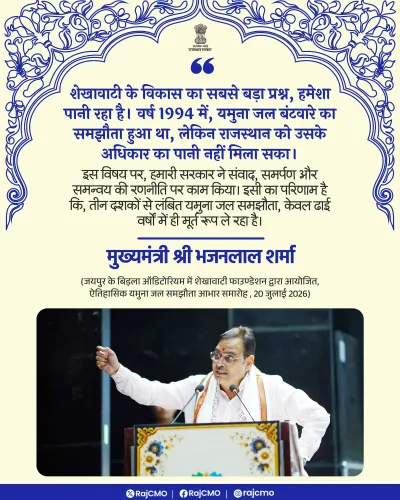
An arid stretch of northern Rajasthan has waited decades for a reliable water supply — and Rajasthan Chief Minister Bhajan Lal Sharma says the Kishau Project is the answer. On Thursday, 22 October 2026, Sharma took to X to assert that the multipurpose dam will secure drinking water and irrigation for the chronically water-scarce Shekhawati region, framing it as a cornerstone of the state's push toward water self-sufficiency.
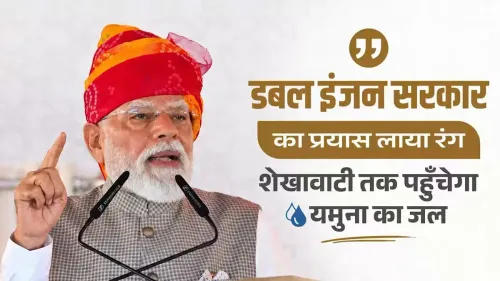
In his post, Sharma wrote: 'शेखावाटी में किशाऊ परियोजना के माध्यम से जल की उपलब्धता सुनिश्चित होने से पेयजल और सिंचाई सुविधाओं को मजबूती मिलेगी।' ('Through the Kishau Project, ensuring water availability in Shekhawati will strengthen drinking water and irrigation facilities.') He added that the 'double engine government' — BJP's term for aligned party rule at the Centre and in the state — is working continuously to make Rajasthan water self-reliant.
What is the Kishau Project and why does it matter for Rajasthan?
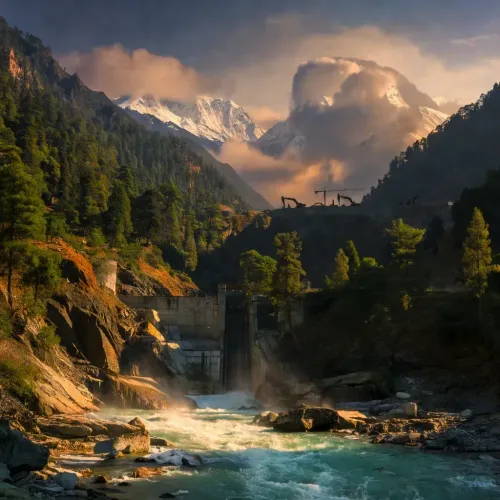
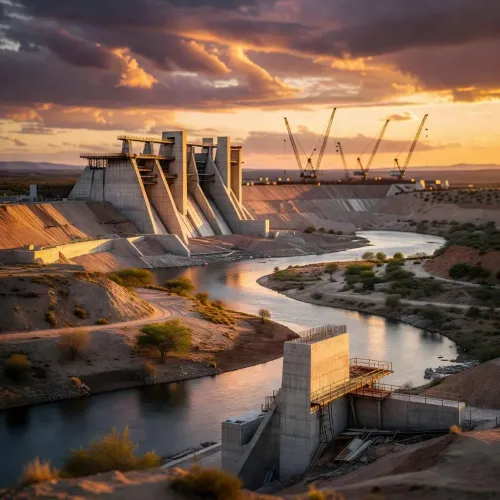
The Kishau Dam is a proposed multipurpose project on the Tons River in Uttarakhand, designed to generate hydropower and channel water to downstream states. Rajasthan has been a stakeholder in Yamuna basin water-sharing discussions tied to this dam since the 1990s and 2000s, making it one of the longer-running inter-state water negotiations in the region.
If realised, the project promises irrigation coverage and household water supply to Shekhawati — the belt of Sikar, Jhunjhunu and Churu districts that sits on the edge of the Thar Desert and faces structural, year-round water stress. For farmers here, the arithmetic is brutal: insufficient groundwater, erratic monsoons, and no major canal infrastructure to fall back on.
Shekhawati's decades-long wait for water
The region's water deficit is not new — it predates the current government by generations. Successive state administrations have pursued external sourcing through inter-state dam and canal projects as the primary fix, rather than relying on local conservation alone. Sharma's BJP government, which took office in December 2023, has continued that strategic line, with water infrastructure featuring prominently in its early policy messaging.
The 'double engine' framing is deliberate: it argues that having the same party in power in New Delhi and Jaipur smooths the inter-ministerial negotiations, funding releases, and multi-state coordination that a project like Kishau demands. Land acquisition timelines, water-allocation agreements between states, and central budget disbursements will be the real tests of whether that alignment translates into construction progress.
What farmers and households are watching
The immediate stakeholders are straightforward: farming communities in Shekhawati who depend on expensive tanker water or depleted borewells, and rural households for whom a piped drinking-water connection remains an aspiration. Both groups have been promised relief through large inter-state water projects before. The critical near-term signals will be concrete updates on land acquisition, inter-state water-sharing finalisation, and any allocation in the state's forthcoming budget toward canal infrastructure linked to the project.
Rajasthan's water ambitions have always run up against the same hard limits: distance, inter-state politics, and financing. Sharma's government has now publicly staked its water-security narrative on Kishau. The dam's progress — or lack of it — will be the measuring stick.
Point of View
Which means the political credibility of this push will hinge entirely on visible construction milestones rather than announcements. The emphasis on external water sourcing over local conservation also reflects a broader pattern in Rajasthan's water politics: large infrastructure as the preferred electoral signal. If Kishau stalls again, the gap between promise and delivery could become a liability for the BJP heading into future state election cycles.
NationPress
22 Oct 2026
Frequently Asked Questions
What is the Kishau Project in Rajasthan?
The Kishau Project is a proposed multipurpose dam on the Tons River in Uttarakhand designed to supply water for irrigation, drinking purposes, and hydropower to downstream states including Rajasthan. Rajasthan has been part of Yamuna basin water-sharing discussions linked to this project since the 1990s.
Which districts of Rajasthan will benefit from the Kishau Project?
The Shekhawati region — comprising Sikar, Jhunjhunu, and Churu districts in northern Rajasthan — is the primary beneficiary identified by CM Bhajan Lal Sharma. The area faces chronic water scarcity for both agriculture and domestic use.
What does 'double engine government' mean in the context of the Kishau Project?
'Double engine government' is a BJP term for simultaneous party rule at the Centre and in the state. The argument is that this alignment speeds up multi-state negotiations, funding releases, and central approvals needed for large infrastructure projects like Kishau.
When did Bhajan Lal Sharma become Chief Minister of Rajasthan?
Bhajan Lal Sharma became Chief Minister of Rajasthan in December 2023 after the BJP won the state assembly elections.
What are the next steps for the Kishau Project to become reality?
Key milestones include finalising inter-state water-allocation agreements, completing land acquisition, securing central funding releases, and allocating budget toward linked canal infrastructure in Rajasthan — all of which remain pending as of late 2026.