CM Bhajan Lal Sharma hails Yamuna water deal at Jaipur event
Synopsis
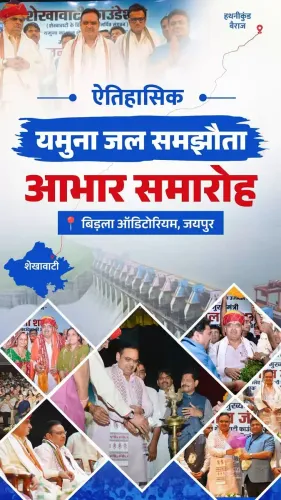
Rajasthan CM Bhajan Lal Sharma addressed a Shekhawati Foundation gratitude ceremony in Jaipur on 20 July 2026, crediting PM Narendra Modi for resolving a decades-old Yamuna water agreement that promises to transform water access across northern Rajasthan.
Key Takeaways
CM Bhajan Lal Sharma addressed the Yamuna Water Agreement Gratitude Ceremony at Birla Auditorium, Jaipur , on 20 July 2026 .
The event was organised by the Shekhawati Foundation to mark the resolution of a water-sharing dispute pending for decades.
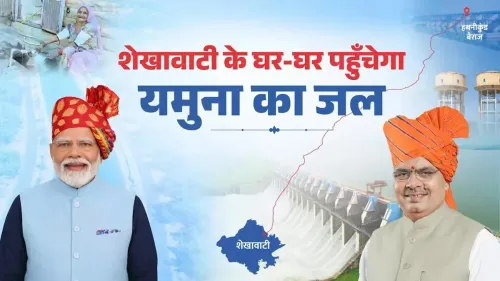
CM Sharma attributed the breakthrough entirely to PM Narendra Modi's leadership, calling it a 'Bhagirathi endeavour.' The agreement is expected to bring water access to the arid Shekhawati belt — covering Jhunjhunu, Sikar , and Churu districts — and a large part of Rajasthan.
Former Leader of Opposition Rajendra Rathore and Urban Development Minister of State were among senior leaders present at the ceremony.
Implementation through canal or pipeline projects and budgetary allocations will be the key next steps to watch.
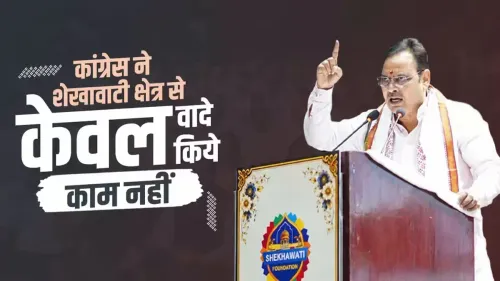
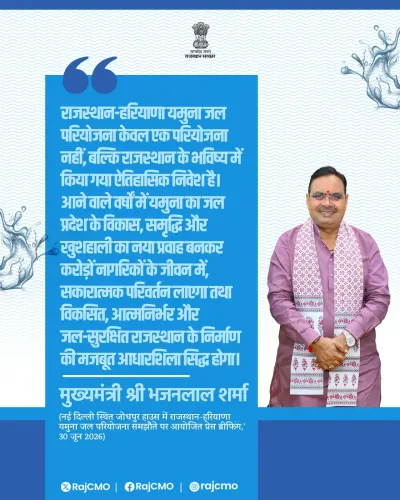
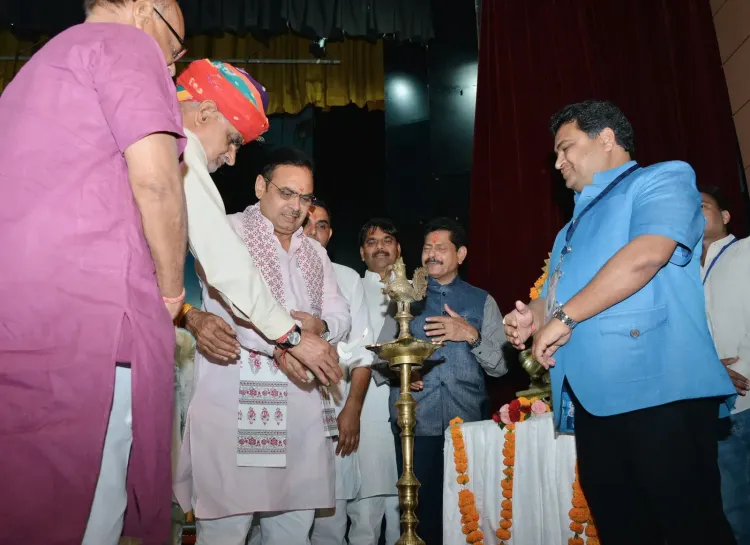
Rajasthan Chief Minister Bhajan Lal Sharma addressed the Shekhawati Foundation's historical Yamuna Water Agreement Gratitude Ceremony at Birla Auditorium, Jaipur, on Monday, 20 July 2026, crediting Prime Minister Narendra Modi's leadership for resolving a water-sharing dispute that had remained pending for decades. The Chief Minister described the agreement as the dawn of a new era of prosperity for the Shekhawati region and a large part of Rajasthan.
Context
Addressing the gathering, CM Sharma said in Hindi, 'यह आभार मेरा नहीं, बल्कि आदरणीय प्रधानमंत्री जी के कुशल नेतृत्व का है' ('This gratitude is not mine, but belongs to the capable leadership of the respected Prime Minister'), attributing the breakthrough to Modi's inspiration and calling the effort a 'Bhagirathi endeavour' — a reference to the mythological king who brought the Ganga to earth, signifying a monumental feat. The ceremony was organised by the Shekhawati Foundation, a regional body focused on development and cultural issues in the area.
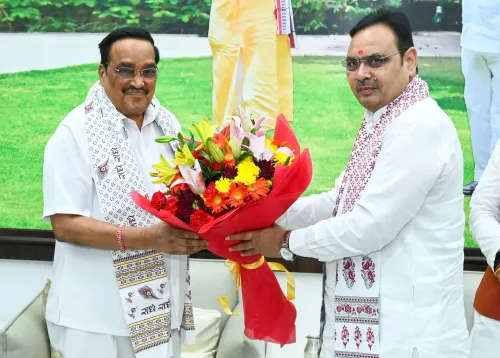
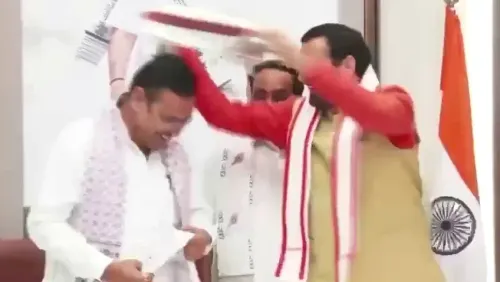
Also present at the event were former Leader of Opposition Rajendra Rathore, Urban Development and Autonomous Governance Minister of State (Independent Charge), along with other elected representatives, senior leaders, and prominent citizens.
Policy Backdrop
The Yamuna water dispute has its roots in a 1994 Memorandum of Understanding on river water allocation signed among Rajasthan, Haryana, Delhi, and Uttar Pradesh. Despite this early framework, Rajasthan's share — particularly for the arid Shekhawati belt covering Jhunjhunu, Sikar, and Churu districts — remained largely unrealised for decades due to unresolved inter-state coordination issues.
CM Sharma took office in December 2023 following the BJP's return to power in Rajasthan, creating what the party describes as a 'double-engine government' — aligned administrations at both the state and central levels. The Chief Minister reiterated this framing at the ceremony, saying the 'double-engine government is committed to making the life of every citizen easier.'
Stakeholders and Impact
The Shekhawati region is one of Rajasthan's most water-stressed zones, where agriculture is heavily dependent on erratic rainfall and depleting groundwater. Farmers across Jhunjhunu, Sikar, and Churu districts stand to be the most direct beneficiaries if the agreement translates into reliable water supply through canal or pipeline infrastructure.
Beyond agriculture, drinking water security for a large population in northern Rajasthan is tied to the agreement's implementation. The event's framing as a 'gratitude ceremony' rather than a policy announcement suggests the political leadership views the deal as already concluded and is now building public awareness and credit around it.
What's Next
The immediate focus will shift to the phased implementation of water allocation and the construction of related canal or pipeline projects in Shekhawati districts. Observers will watch whether the agreement and its funding provisions find explicit mention in the next Rajasthan state budget or the upcoming assembly session, which would signal a firm administrative timeline. The political messaging around the deal is also expected to feature prominently in BJP outreach in the water-scarce northern districts of the state.
Point of View
CM Sharma reinforces the 'double-engine government' narrative that has been central to the BJP's cooperative federalism pitch. The choice of a civil-society platform — the Shekhawati Foundation — rather than a government event signals an effort to build grassroots goodwill around the deal. Whether the agreement translates into on-ground water delivery will determine how durable that political dividend proves to be.
NationPress
21 Jul 2026
Frequently Asked Questions
What is the Yamuna water agreement for Rajasthan?
The Yamuna water agreement is an inter-state pact on river water allocation involving Rajasthan, Haryana, Delhi, and Uttar Pradesh, rooted in a 1994 MoU. It aims to give Rajasthan — particularly the arid Shekhawati region — a share of Yamuna waters for agriculture and drinking use, a matter that remained unresolved for decades before the recent breakthrough.
What is the Shekhawati region and why does it need Yamuna water?
Shekhawati is an arid belt in northern Rajasthan covering Jhunjhunu, Sikar, and Churu districts. It faces chronic water scarcity due to low rainfall and depleting groundwater, making farmers and residents heavily dependent on uncertain water sources. Access to Yamuna water through canals or pipelines could significantly improve agricultural output and drinking water availability.
Who attended the Yamuna water agreement ceremony in Jaipur?
The ceremony at Birla Auditorium, Jaipur, on 20 July 2026 was addressed by CM Bhajan Lal Sharma. Also present were former Leader of Opposition Rajendra Rathore, the Urban Development and Autonomous Governance Minister of State (Independent Charge), other elected representatives, senior BJP leaders, and prominent citizens.
What did CM Bhajan Lal Sharma say about PM Modi at the event?
CM Sharma credited PM Narendra Modi's leadership entirely for the resolution of the Yamuna water dispute, saying the gratitude belonged to Modi's guidance and calling the effort a 'Bhagirathi endeavour' — a phrase invoking the mythological feat of bringing a great river to the people.
What is the 'double-engine government' CM Sharma referred to?
The 'double-engine government' is a BJP phrase describing the political alignment between a BJP-led state government and the BJP-led central government. CM Sharma used it to argue that this alignment enabled the long-pending Yamuna water deal to finally move forward, and that the same synergy will continue to benefit Rajasthan's citizens.