CM Bhajan Lal Sharma Pays Tribute to Deshbandhu Chittaranjan Das
Synopsis
Rajasthan Chief Minister Bhajan Lal Sharma paid tribute to freedom fighter and jurist Chittaranjan Das, known as Deshbandhu, on his birth anniversary, calling his sacrifice for Swaraj an enduring inspiration for the nation.
Key Takeaways
Rajasthan CM Bhajan Lal Sharma posted a tribute to Chittaranjan Das on his birth anniversary on 5 November 2026 .
Chittaranjan Das , known as Deshbandhu , was a leading freedom fighter, lawyer, and President of the Indian National Congress in 1921 .
Das played a pivotal role in the Non-Cooperation Movement and later founded the Swaraj Party in 1923 .
Sharma hailed Das's total dedication to national service and Swaraj as a lasting source of inspiration.
Tributes to independence-era icons across party lines reflect a shared nationalist heritage in Indian political culture.
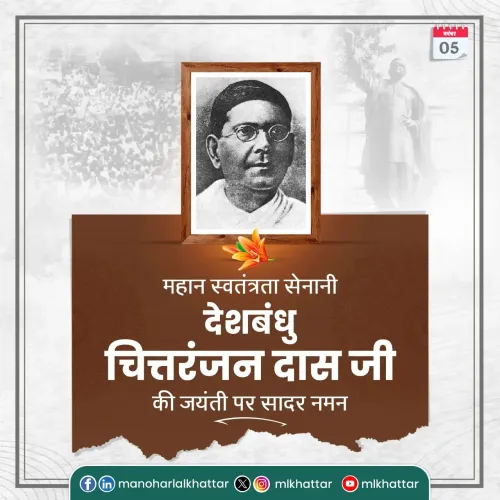
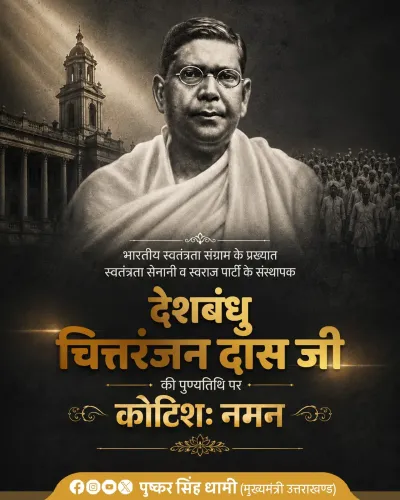
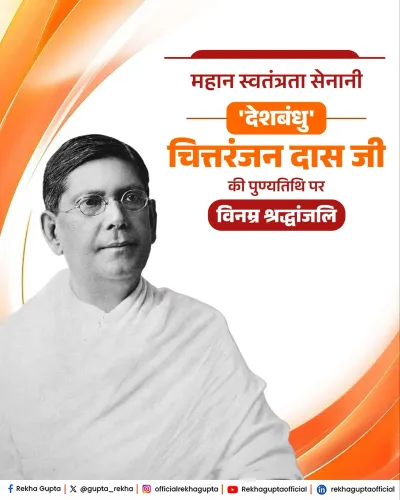
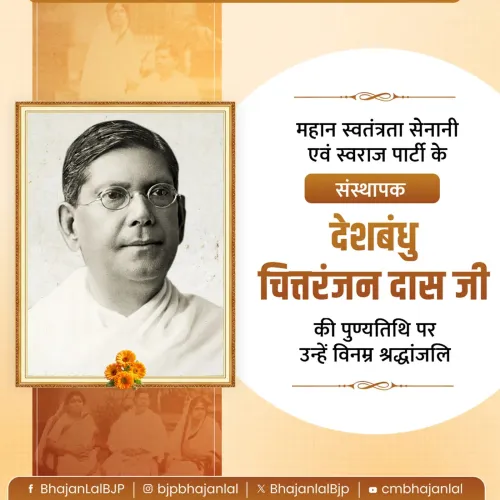
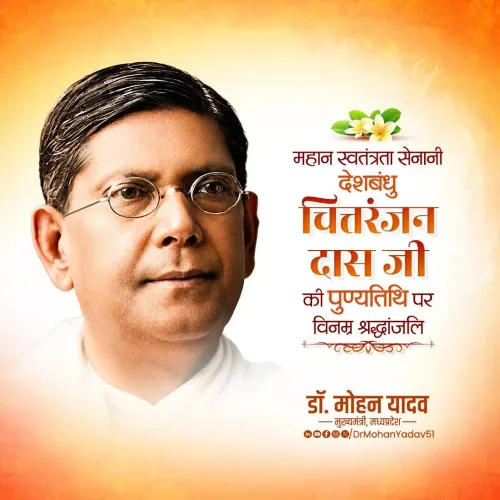
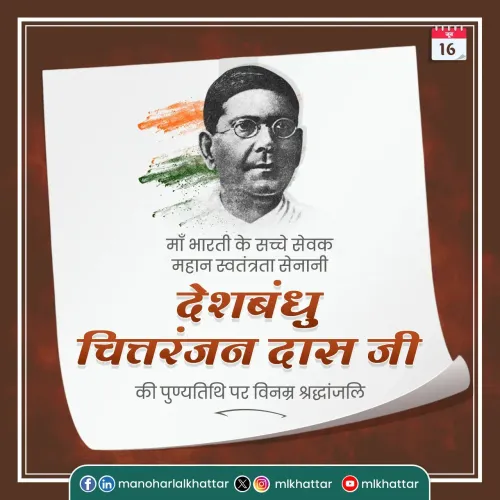
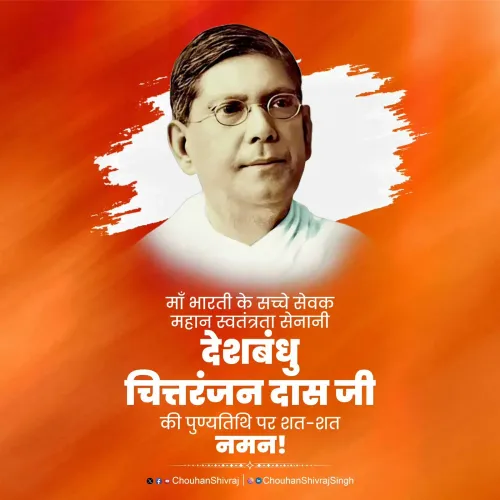
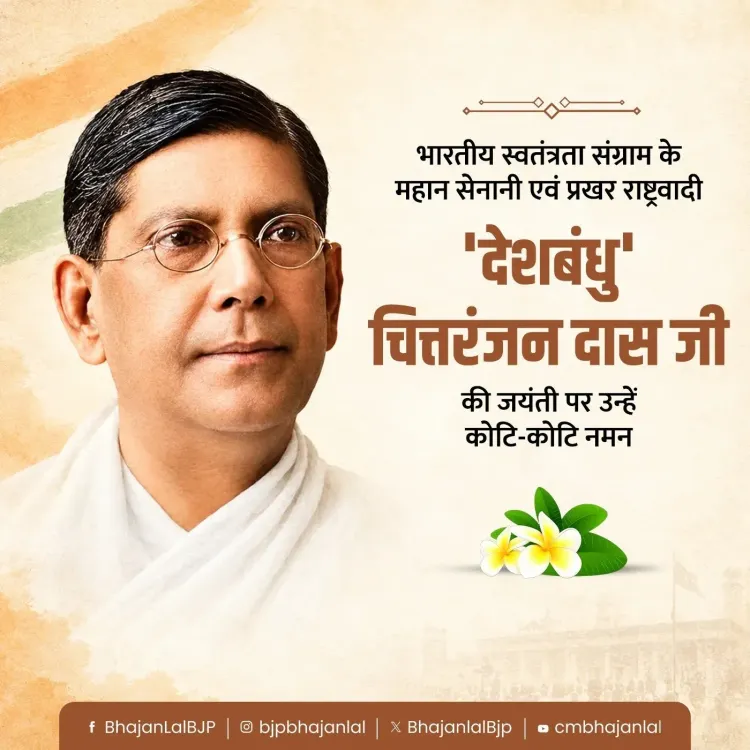
On the birth anniversary of Chittaranjan Das — the towering freedom fighter, jurist, and Congress president revered as Deshbandhu ('Friend of the Nation') — Rajasthan Chief Minister Bhajan Lal Sharma offered a heartfelt tribute on Thursday, 5 November 2026, saluting a man whose life was a masterclass in self-sacrifice for the idea of Swaraj.
Sharma wrote: 'Bharatiya Swadheenata Sangram ke mahan nayak, prakhar vidhivettha evam sadagi ke prateek — Deshbandhu Chittaranjan Das ji ki jayanti par unhe koti-koti naman!' — 'Countless salutations to Deshbandhu Chittaranjan Das, the great hero of India's freedom struggle, an eminent jurist and symbol of simplicity, on his birth anniversary.' The Chief Minister added that Das's total dedication to national service and Swaraj would remain a lasting source of inspiration for all.
Who Was Deshbandhu Chittaranjan Das?
Chittaranjan Das was one of the most consequential figures of early-twentieth-century Indian nationalism — a brilliant barrister who chose the dock of history over the bench of personal comfort. He rose to national prominence when he defended Bal Gangadhar Tilak in a sedition trial, and later threw his considerable legal practice into the fire of the Non-Cooperation Movement alongside Mahatma Gandhi.
Elected President of the Indian National Congress in 1921, Das gave institutional weight to the demand for self-rule at a critical juncture. His deep commitment to Hindu-Muslim unity and his founding of the Swaraj Party in 1923 — aimed at disrupting British-controlled legislatures from within — showed a politician willing to rethink tactics without compromising the goal. He died in 1925, still in harness, earning the grief and the gratitude of a nation not yet free.
A Ritual of Remembrance in Indian Public Life
Tributes to freedom-era icons on their birth anniversaries are a fixture of Indian political culture, observed across party lines. For BJP leaders like Sharma, invoking figures such as Das — who belonged to the Congress tradition — reflects a broader nationalist framing that claims the entire independence movement as a shared inheritance rather than any single party's property.
The gesture is modest in scale but pointed in meaning: it signals continuity with the freedom struggle's moral vocabulary — sacrifice, simplicity, service — values Sharma explicitly named in his post.
Point of View
Not just its own ideological lineage. Sharma's specific emphasis on Das's simplicity and self-sacrifice echoes the BJP's broader 'seva' (service) narrative. The ritual nature of such tributes, while sincere in many cases, also serves to neutralise opposition parties' historical ownership of independence-movement icons. Cross-party commemoration ultimately strengthens the idea that nationalist heroes belong to all Indians — a consensus that is both culturally healthy and politically useful.
NationPress
5 Nov 2026
Frequently Asked Questions
Who was Chittaranjan Das, also known as Deshbandhu?
Chittaranjan Das was a leading Indian independence activist, jurist, and politician. He served as President of the Indian National Congress in 1921, played a major role in the Non-Cooperation Movement, and later founded the Swaraj Party in 1923. He is remembered as 'Deshbandhu,' meaning 'Friend of the Nation.'
Why did Rajasthan CM Bhajan Lal Sharma post about Chittaranjan Das?
CM Bhajan Lal Sharma posted a tribute on the birth anniversary of Chittaranjan Das on 5 November 2026, honouring the freedom fighter's dedication to national service and Swaraj as an enduring inspiration.
What is the Swaraj Party founded by Chittaranjan Das?
The Swaraj Party was founded by Chittaranjan Das and Motilal Nehru in 1923. Its strategy was to contest elections to British-controlled legislative councils and obstruct colonial governance from within, as a tactical complement to the broader independence movement.
What does 'Deshbandhu' mean and why was Chittaranjan Das given this title?
'Deshbandhu' means 'Friend of the Nation' in Bengali and Hindi. Chittaranjan Das earned this honorary title for his selfless commitment to India's freedom struggle, his defence of nationalist leaders in British courts, and his renunciation of a highly lucrative legal career for public service.
Do BJP leaders often pay tribute to Congress-era freedom fighters?
Yes. Indian political leaders across parties, including those from the BJP, routinely issue public tributes on the birth and death anniversaries of prominent freedom-era figures. This practice reflects the broad cultural consensus that independence movement icons are part of the shared national heritage.