Abdul El-Sayed, America's first Muslim Senator-elect, carries a Karnataka legacy
Synopsis
Abdul El-Sayed's US Senate win in Michigan is historic on multiple fronts — he becomes America's first Muslim senator, and carries a quietly significant Indian tie: his wife Dr Sarah Jukaku's family traces back to Bhatkal, a small coastal town in Karnataka's Uttara Kannada district. From a Mysore State deputy finance minister grandfather to a nephrologist father who helped found major Muslim-American institutions, the Jukaku family's journey across continents is now woven into the story of a landmark moment in American political history.
Key Takeaways
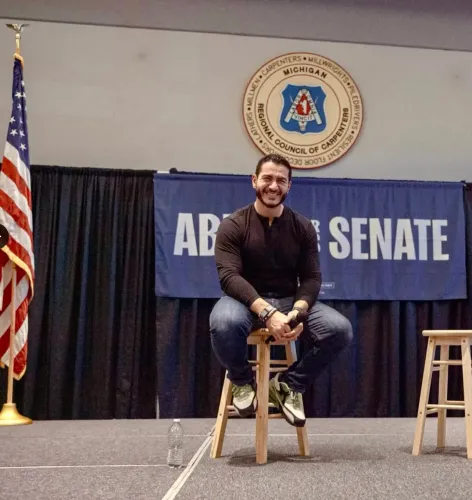
Abdul El-Sayed won Michigan's open US Senate seat on 5 November 2026 , defeating Republican Mike Rogers by roughly 52 to 46 per cent , becoming the first Muslim senator-elect in American history.
His wife, psychiatrist Dr Sarah Jukaku , has family roots in Bhatkal , Uttara Kannada district, Karnataka — belonging to the historic Nawayath Muslim merchant community.
Her grandfather, J.H.
Shamsuddin Jukaku , served as deputy finance minister in the former Mysore State government under Chief Minister B.D.
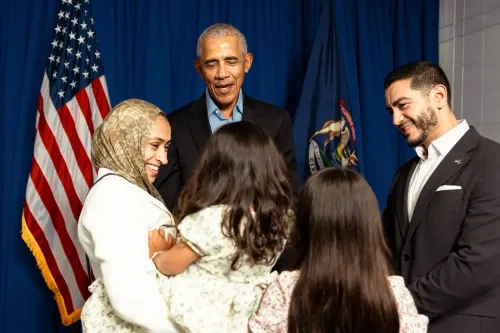
El-Sayed's campaign raised approximately $54 million against Rogers' $23 million ; former President Barack Obama endorsed and campaigned for him.
President Donald Trump labelled El-Sayed a 'jihadist' at an October rally; an AIPAC -affiliated group spent over $30 million against him during the Democratic primary.
El-Sayed has flagged interest in the Senate Health, Education, Labor and Pensions and Foreign Relations committees; his swearing-in by Vice President J.D.
Vance is expected to be a charged moment.
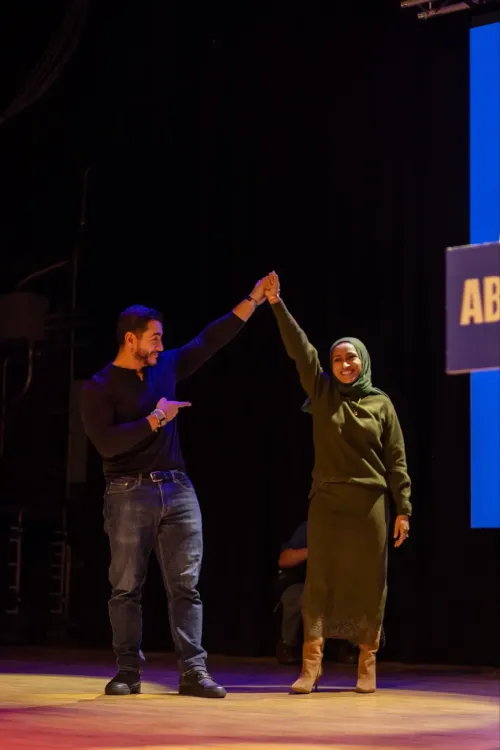
Abdul El-Sayed, the Michigan Democrat who has won an open US Senate seat, is set to become the first Muslim senator in American history — and he arrives in Washington with a family connection stretching back to the coastal town of Bhatkal in Uttara Kannada district, Karnataka. His wife, psychiatrist Dr Sarah Jukaku, was born and raised in Michigan to Indian immigrant parents whose roots lie in that small southwestern-coast town of roughly 46,000 people, located about 140 km north of Mangaluru.
The Election Result
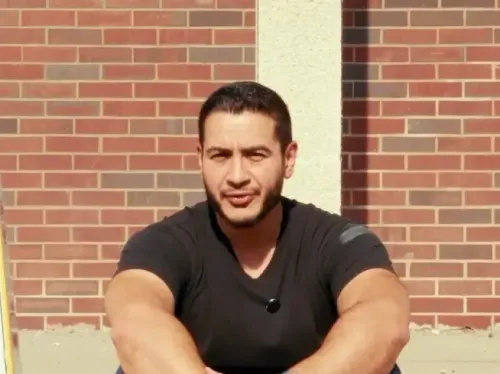
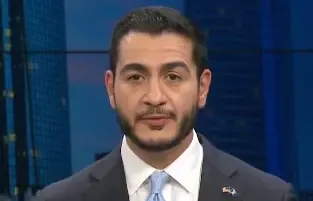
El-Sayed, 42, a physician and former public health official, defeated former Republican Congressman Mike Rogers by approximately 52 per cent to 46 per cent with most of the vote counted. He succeeds retiring Democratic Senator Gary Peters, whose announcement of retirement had prompted El-Sayed to step down as Wayne County's health, human and veterans services director in April 2025. His campaign raised approximately $54 million through mid-October, more than double Rogers' roughly $23 million, according to Federal Election Commission data.
The Karnataka Connection
Dr Sarah Jukaku's family traces its origins to Bhatkal, a historic port town associated with the Nawayath community — a Muslim merchant community on India's southwestern coast. Her father, Dr Tayeb Jukaku, is a nephrologist from Bhatkal who sits on the board of CAIR-Michigan and served on a founders' committee of the Islamic Society of North America. Her grandfather, lawyer J.H. Shamsuddin Jukaku, served as deputy finance minister in the former Mysore State government under Chief Minister B.D. Jatti.
Dr Jukaku herself studied sociology and Near Eastern studies at the University of Michigan, earned a master's degree at Oxford, and a medical degree from Columbia University. The couple met at the University of Michigan through the Muslim Students' Association and married in 2006. They have two daughters.
Who Is Abdul El-Sayed
Born and raised in southeast Michigan, El-Sayed is the son of an Egyptian immigrant father, Mohamed, and was raised also by his stepmother, Jackie, according to his campaign biography. He graduated from the University of Michigan, was a Rhodes Scholar at Oxford — where he earned a doctorate — and received a medical degree from Columbia University. He went on to teach epidemiology at Columbia's Mailman School of Public Health.
In 2015, Detroit Mayor Mike Duggan appointed him city health director, making him, according to Harvard's FXB Center, the youngest health official in a major US city at the time. His programmes included free glasses for schoolchildren, lead removal from elementary schools, and universal access to the overdose antidote Narcan. He resigned in 2017 to run for governor, losing the 2018 Democratic primary to Gretchen Whitmer by roughly 52 per cent to 30 per cent. He later became a CNN commentator, podcast host, and authored books including 'Healing Politics' and 'Medicare for All: A Citizen's Guide'.
A Bruising Campaign and the Vance Controversy
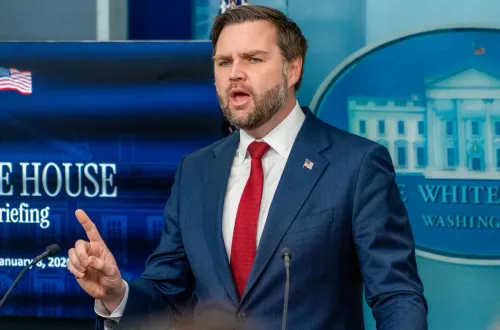
El-Sayed's family became a campaign flashpoint through a prolonged dispute with Vice President J.D. Vance, whose wife Usha Vance is Indian American. The feud reportedly grew out of El-Sayed's sarcastic questioning of whether Vance's late grandfather would have approved of his Indian American wife. In August, El-Sayed said: 'I love my brown children, and I think my brown kids are just as American as everyone else. J.D. Vance has brown kids who he thinks are less American than everyone else.' The remarks drew a sharp rebuke from Michigan Republican co-chair Sunny Reddy, who immigrated from India in 1990, who said at a press event in Troy: 'Usha Vance is not Abdul El-Sayed's political punching bag. Her Indian heritage is not a punchline.'
President Donald Trump, at an October 25 rally in Port Huron, called El-Sayed a 'jihadist' and alleged Muslim Brotherhood membership — accusations El-Sayed denied. He responded: 'That'll be Sen. Mohamed to you, bro.' An AIPAC-affiliated group reportedly spent more than $30 million supporting El-Sayed's primary rival, Congresswoman Haley Stevens, whom El-Sayed narrowly defeated in the 4 August Democratic primary — by approximately 49 per cent to 48 per cent according to the Detroit Free Press. Former President Barack Obama endorsed and campaigned for El-Sayed.
South Asian Outreach and What Comes Next
South Asian communities made a visible push for El-Sayed in the final stretch. On 30 October, Indian American Impact's Impact Fund and the SAATH Fund co-hosted a 'Light Up the Vote' Diwali rally in Westland, Michigan, with Secretary of State Jocelyn Benson, Michigan House Democratic Leader Ranjeev Puri, and Cincinnati Mayor Aftab Pureval on stage. At the event, El-Sayed said: 'Let us have the courage to lift up our voice and light our light at the ballot box ... this Diwali, wishing you a happy, blessed holiday ... I'm honoured to be welcomed into the community.'
In his victory speech, El-Sayed addressed Rogers directly: 'You chose hate, and Michigan chose hope.' He also remarked that he relished the prospect of Vice President Vance, as President of the Senate, swearing him in. His signature policy positions include Medicare for All, an immediate arms embargo on Israel, and ending open-ended military funding to Egypt, Israel, Saudi Arabia, and the UAE. He has indicated interest in seats on the Senate Health, Education, Labor and Pensions committee and the Foreign Relations committee. His swearing-in will mark a historic first for Muslim representation in the US Senate.
Point of View
But the Karnataka detail is more than a human-interest aside — it underscores how deeply South Asian and Muslim-American communities have become embedded in the architecture of US politics, as constituents, donors, and now candidates' families. The ferocity of the campaign against him — a sitting president calling him a 'jihadist', $30 million in outside spending during a Democratic primary — reveals how much resistance that embedding still provokes. The Bhatkal connection, stretching from a Mysore State deputy finance minister to a Michigan Senate seat, is a reminder that India's diaspora politics and American political history are increasingly written in the same sentence. Whether El-Sayed can convert his outsider energy into durable Senate influence will depend on committee assignments and coalition-building in a chamber that rewards institutional loyalty.
NationPress
5 Nov 2026
Frequently Asked Questions
Who is Abdul El-Sayed and why is his Senate win historic?
Abdul El-Sayed is a 42-year-old physician and former public health official from Michigan who defeated Republican Mike Rogers to win an open US Senate seat, becoming the first Muslim senator-elect in American history. He succeeds retiring Senator Gary Peters and is set to be sworn in by Vice President J.D. Vance.
What is Abdul El-Sayed's connection to Karnataka?
El-Sayed's wife, psychiatrist Dr Sarah Jukaku, has family roots in Bhatkal, a coastal town in Uttara Kannada district, Karnataka. Her father, Dr Tayeb Jukaku, is a nephrologist originally from Bhatkal, and her grandfather J.H. Shamsuddin Jukaku served as deputy finance minister in the former Mysore State government.
What controversies marked the Michigan Senate race?
President Donald Trump called El-Sayed a 'jihadist' and alleged Muslim Brotherhood ties at a rally in Port Huron on 25 October, which El-Sayed denied. An AIPAC-affiliated group spent more than $30 million to back his primary rival, and a public feud with Vice President J.D. Vance over comments about Indian American identity attracted national attention.
What are Abdul El-Sayed's key policy positions?
El-Sayed's signature issue is Medicare for All. He has described the war in Gaza as a genocide and supports an immediate arms embargo on Israel, as well as ending open-ended military funding to Egypt, Israel, Saudi Arabia, and the UAE. He has expressed interest in seats on the Senate Health, Education, Labor and Pensions committee and the Foreign Relations committee.
Who backed El-Sayed during the election?
Former President Barack Obama endorsed El-Sayed and campaigned for him. During the Democratic primary, Senator Bernie Sanders, Congresswoman Alexandria Ocasio-Cortez, and Congresswoman Rashida Tlaib supported him. South Asian organisations including Indian American Impact's Impact Fund and the SAATH Fund held a Diwali rally for him on 30 October in Westland, Michigan.