CM Bhajan Lal Welcomes 3% DA, DR Hike for Central Staff
Synopsis
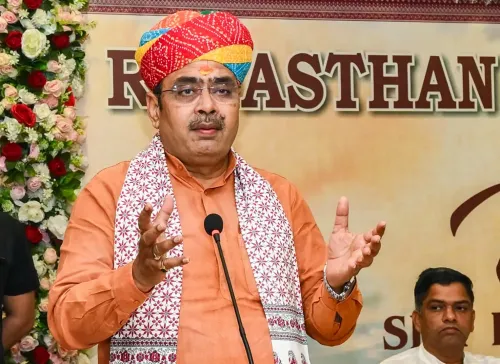
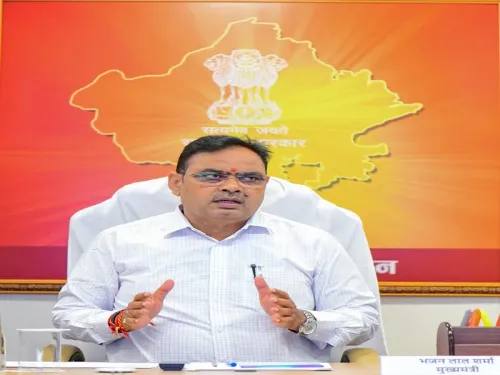
Rajasthan CM Bhajan Lal Sharma praised the Modi government's decision to raise DA and DR by 3% for central government employees and pensioners, calling it a commitment to economic protection for millions of families.
Key Takeaways
The Modi government approved a 3% hike in Dearness Allowance (DA) and Dearness Relief (DR) for central employees and pensioners.
Rajasthan CM Bhajan Lal Sharma publicly welcomed the decision on 28 October 2026 , calling it 'worthy of welcome.' DA and DR revisions are formula-driven, linked to the All India Consumer Price Index for Industrial Workers , and occur twice a year.
The current framework stems from the 7th Central Pay Commission , implemented from 2016 .
Official notification confirming the effective date is awaited; November 2026 salaries may reflect the revision.
The next DA revision cycle is expected around March–April 2027 .
Millions of central government employees and pensioners are set to receive a financial cushion as the Modi government approved a 3% hike in Dearness Allowance (DA) and Dearness Relief (DR) — and Rajasthan Chief Minister Bhajan Lal Sharma was among the first state leaders to publicly welcome the move on Wednesday, 28 October 2026.
Posting in Hindi on X, CM Sharma called the Cabinet decision 'swagataयोग्य' ('worthy of welcome'), saying it reflects the Centre's commitment to employee welfare and the protection of their economic interests. He added that the hike would provide 'atirikt aarthik sambal' — additional financial support — to lakhs of central employees and their families.
What a 3% DA hike means in practice
Dearness Allowance is a cost-of-living adjustment paid to central government employees, while Dearness Relief serves the same purpose for pensioners. Both are linked to the All India Consumer Price Index for Industrial Workers (AICPI-IW) and have been revised twice annually since the 7th Central Pay Commission framework took effect in 2016. A 3-percentage-point increase raises the DA/DR component on top of basic pay and pension, directly fattening the monthly take-home of every central staffer and retiree — a constituency that runs into the millions across India.
The revision is formulaic rather than discretionary: governments of all stripes have made such adjustments for decades. What changes election cycle to election cycle is the scale and timing — and how loudly political leaders choose to amplify the announcement.
Why state leaders flag a central pay decision
CM Sharma's endorsement is politically textbook for a BJP state government. When the Centre announces a benefit for a large, organised workforce, allied state leaders amplify it to reinforce the party's governance narrative — especially ahead of salary-cycle announcements that can ripple into state-government pay revisions. Rajasthan itself has a substantial state workforce whose expectations often track central pay trends closely.
The next milestone to watch: the official gazette notification confirming the effective date, and whether the revised rates reflect in November 2026 salary and pension credits. The subsequent DA revision cycle is expected around March–April 2027, based on fresh AICPI data.
Point of View
Formula-bound adjustment — but the political messaging around it is deliberate. BJP-governed states like Rajasthan amplify central pay decisions to reinforce a welfare-delivery narrative with a large, vote-relevant constituency of government employees and retirees. CM Sharma's prompt endorsement signals the party's intent to own the credit chain from Delhi to Jaipur. With Rajasthan's own state workforce watching central trends, the announcement also sets an implicit benchmark for future state-level pay discussions.
NationPress
28 Oct 2026
Frequently Asked Questions
What is the DA and DR hike announced in October 2026?
The central government approved a 3% increase in Dearness Allowance (DA) for serving central government employees and Dearness Relief (DR) for pensioners, raising the cost-of-living component added to their basic pay or pension.
Who benefits from the DA and DR hike?
All central government employees and pensioners benefit. The revision boosts monthly take-home pay for serving staff and increases pension payouts for retirees across India.
How often is DA revised for central government employees?
DA and DR are revised twice a year — typically around January and July — based on movements in the All India Consumer Price Index for Industrial Workers (AICPI-IW), as established under the 7th Central Pay Commission framework.
Why did Rajasthan CM Bhajan Lal Sharma comment on a central government decision?
As a BJP leader and Chief Minister of a state with a large government workforce, CM Sharma welcomed the Centre's decision to align with the party's governance narrative and signal support for employee welfare.
When will the 3% DA hike reflect in salaries?
The effective date depends on the official gazette notification. Based on standard timelines, the revised rates are expected to appear in November 2026 salary and pension credits, though this is subject to the formal order.