CM Bhajanlal expands Rajasthan rural jobs scheme to 125 days
Synopsis
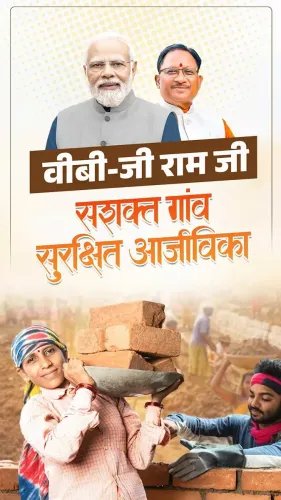
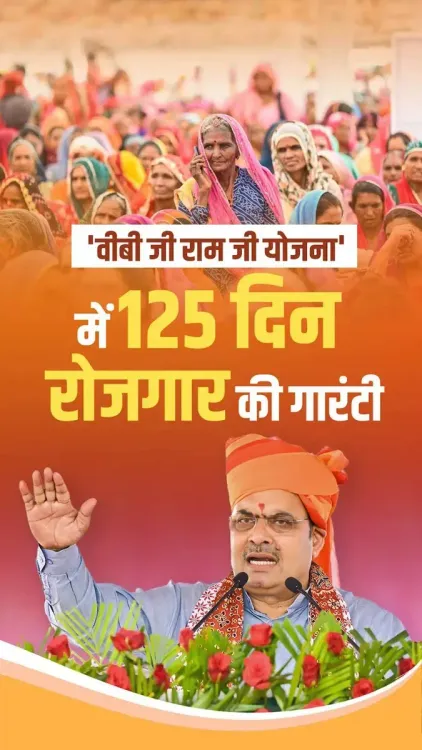
Chief Minister Bhajanlal Sharma announced at a state-level convention in Beawar that Rajasthan's VBG Ram Ji Yojana will now guarantee 125 days of annual rural employment — up from 100 — and allow a 60-day work break during sowing and harvesting seasons to keep farm labour available.
Key Takeaways
CM Bhajanlal Sharma addressed the state-level VBG Ram Ji Yojana convention at Masuda Agricultural Produce Market, Beawar on 3 July 2026 .
Annual employment guarantee under the scheme raised from 100 days to 125 days .
A 60-day work break can be declared to ensure farm labour availability during sowing and harvesting seasons .
The scheme supplements the central MGNREGA framework , which guarantees 100 days of rural employment per household.
Primary beneficiaries are agricultural labourers and rural households across Rajasthan.
State government notifications on operational guidelines and district-level rollout are awaited.
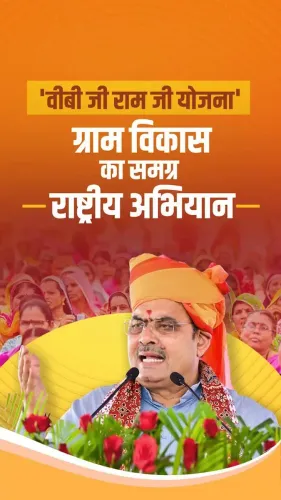
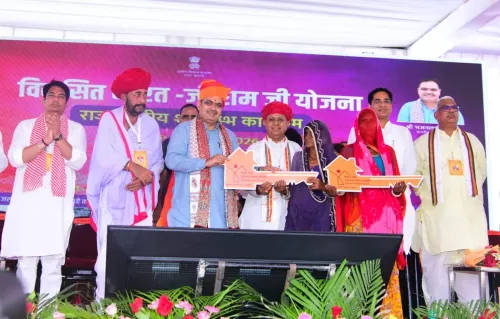
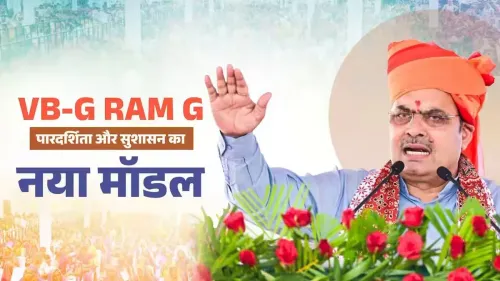
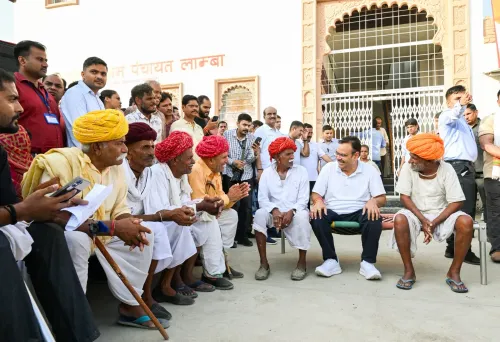
Chief Minister Bhajanlal Sharma on Friday, 3 July 2026, addressed a state-level public convention at the Masuda Agricultural Produce Market in Beawar district, Rajasthan, announcing that the annual employment guarantee under the VBG Ram Ji Yojana has been extended from 100 days to 125 days.
Context
Speaking at the co-launch event of the VBG Ram Ji Yojana ke rajya stariya jan sammelan (state-level public convention of the VBG Ram Ji Yojana), CM Sharma said the scheme now guarantees rural workers 25 additional days of wage employment annually. He also announced that a 60-day work break can be declared whenever needed to ensure the availability of agricultural labourers during critical sowing and harvesting seasons.
The Chief Minister's Office posted the announcement on X, quoting Sharma directly: the employment guarantee under this scheme has been raised from 100 to 125 days per year, and a work-pause window of up to 60 days will be available to synchronise labour deployment with the agrarian calendar.
Policy Backdrop
The Mahatma Gandhi National Rural Employment Guarantee Act (MGNREGA), enacted by Parliament in 2005, established the foundational guarantee of 100 days of wage employment per rural household annually. The VBG Ram Ji Yojana appears to function as a state-level supplement to this central framework, offering Rajasthan's rural workforce additional coverage beyond what the central law mandates.
Several Indian states have periodically layered their own employment schemes atop MGNREGA to address local agrarian cycles. Rajasthan's move targets the twin pressure points of peak sowing and harvesting periods, when labour shortages simultaneously hurt farmers who need workers and labourers who need wages. The 60-day work-break provision is specifically designed to prevent scheme-mandated work from pulling agricultural workers away from farms during these critical windows.
Stakeholders and Impact
Agricultural labourers and rural households across Rajasthan stand to benefit directly from the expanded guarantee. The additional 25 days of assured employment translates into measurably higher annual income security for workers who depend on public works programmes during lean agricultural periods.
Farmers, too, are a key stakeholder in the 60-day work-break clause. By allowing the state to pause scheme-mandated public works assignments during sowing and harvesting seasons, the provision aims to keep farm labour available when it is most needed, addressing a recurring tension between employment guarantee programmes and the seasonal labour demands of agriculture.
What's Next
The immediate focus will be on state government notifications laying out the operational guidelines for the 125-day guarantee and the conditions under which the 60-day work break can be invoked. District-level implementation reports in the coming agricultural season will be the first real test of whether the scheme's expanded provisions translate into on-ground impact for Rajasthan's rural workforce.
The #AapnoAgraniRajasthan hashtag attached to the announcement signals that the state government intends to position this expansion as part of a broader narrative of Rajasthan as a progressive, worker-friendly state — a framing that is likely to feature prominently in political communication ahead of future electoral cycles.
Point of View
The Rajasthan government is attempting to resolve a structural contradiction that has dogged rural employment schemes since MGNREGA's inception — the tension between scheduled public works and the unpredictable rhythms of agricultural labour demand. The move reflects a broader pattern of BJP-governed states seeking to differentiate themselves on welfare delivery without dismantling central-scheme architecture. Whether the 60-day work-break mechanism can be administered without becoming a loophole that reduces actual workdays will be the critical implementation question. Politically, the announcement, framed under the Aapno Agrani Rajasthan banner, signals that the Sharma government is building a welfare-delivery narrative ahead of future electoral tests.
NationPress
3 Jul 2026
Frequently Asked Questions
What is the VBG Ram Ji Yojana in Rajasthan?
The VBG Ram Ji Yojana is a Rajasthan state rural employment scheme that supplements the central MGNREGA framework by providing additional days of wage employment to agricultural labourers and rural households.
How many days of employment does the VBG Ram Ji Yojana now guarantee?
The scheme now guarantees 125 days of annual employment, increased from the earlier 100 days , as announced by CM Bhajanlal Sharma on 3 July 2026.
What is the 60-day work break announced under the Rajasthan scheme?
The 60-day work break is a provision that allows the state government to pause scheme-mandated public works assignments for up to 60 days so that agricultural labourers remain available to farmers during critical sowing and harvesting seasons.
Where was the VBG Ram Ji Yojana state-level convention held?
The state-level public convention was held at the Masuda Agricultural Produce Market in Beawar district, Rajasthan .
How does Rajasthan's scheme differ from MGNREGA?
MGNREGA, the central law enacted in 2005, guarantees 100 days of rural employment per household. The VBG Ram Ji Yojana is a state-level supplement that extends this to 125 days and adds a seasonal work-break clause specific to Rajasthan's agrarian calendar.