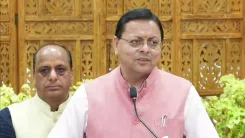
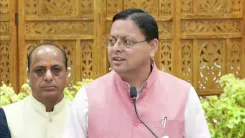
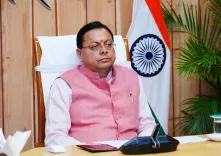
CM Bhajanlal Eyes Daytime Power for Rajasthan Farmers by 2027
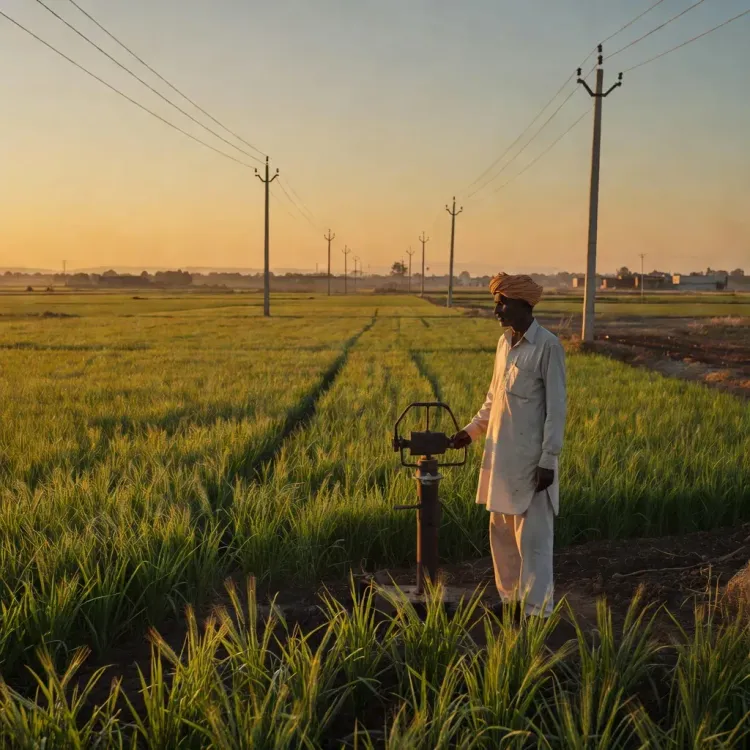
Synopsis
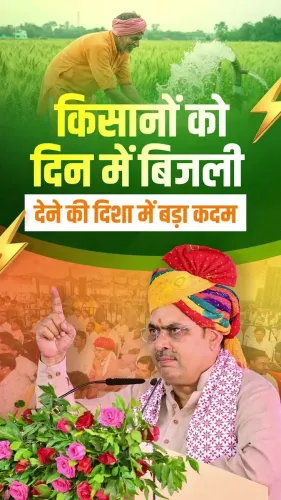
The Chief Minister's Office of Rajasthan says work is under way to supply daytime electricity to farmers across all districts by 2027, a major shift from decades of night-time agricultural power supply that hampers irrigation efficiency and farmer welfare.
Key Takeaways
The Rajasthan government has set a 2027 deadline to provide daytime electricity to farmers across all districts.
Chief Minister Bhajanlal Sharma , in office since December 2023 , anchored the announcement under the campaign tag 'Our Pioneering Rajasthan'.
Rajasthan has 33 districts , making uniform feeder separation a large-scale engineering challenge.
Agricultural feeder separation — the technical backbone of this plan — reduces distribution losses, curbs power theft, and allows day-time scheduling of farm power.
Multiple Indian states have pursued similar reforms; Rajasthan's 2027 target fits within a national pattern of agricultural power-sector modernisation.
State budget allocations and district-level progress reports are the key metrics to track before the deadline.
A state the size of France, Rajasthan runs its farms largely on groundwater — and groundwater runs on electricity. Now, the Chief Minister's Office of Rajasthan has announced that the state government is actively working to deliver daytime power supply to farmers across all districts by 2027, a shift that could fundamentally change how the state's agricultural economy breathes.
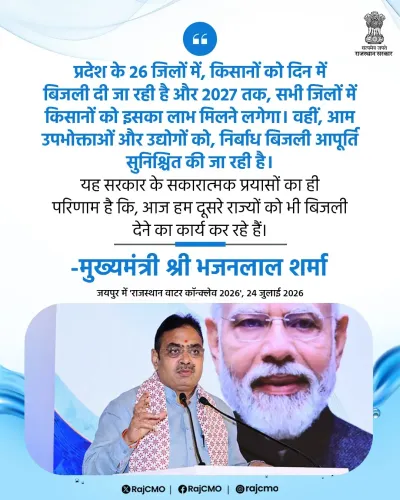
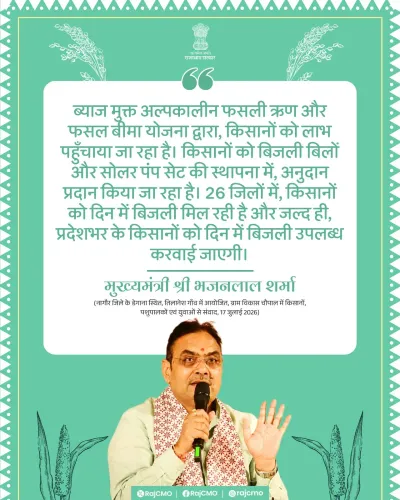
The post, attributed to Chief Minister Bhajanlal Sharma and shared under the hashtag #आपणो_अग्रणी_राजस्थान ('Our Pioneering Rajasthan'), states plainly: 'वर्ष 2027 तक प्रदेश के सभी जिलों में, किसानों को दिन में बिजली उपलब्ध कराने के दिशा में कार्य किया जा रहा है' — 'Work is being done towards providing electricity to farmers during the day in all districts of the state by the year 2027.' The framing is deliberate: progress already under way, a hard deadline locked in.
Why Night Power Is the Hidden Enemy of the Rajasthan Farmer
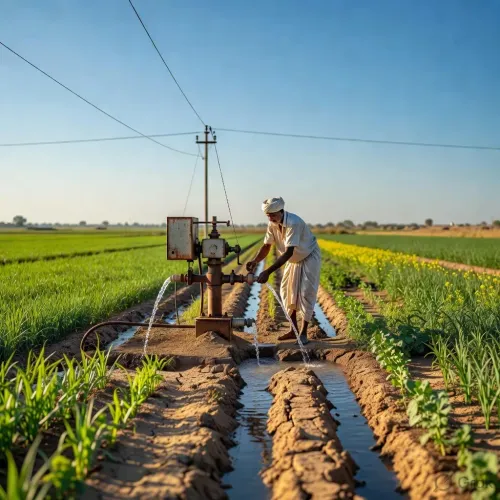
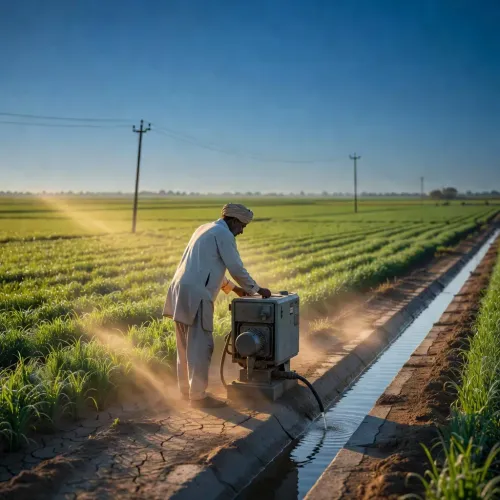
For decades, farmers across Rajasthan — and much of rural India — have drawn their irrigation power in the dead of night, when agricultural feeders are energised to limit demand on the grid and reduce theft. The practical cost is steep: a farmer operating pumps at 2 AM cannot supervise irrigation properly, risks equipment damage, and sacrifices sleep during sowing and harvest cycles. Efficiency suffers; so does safety.
The solution, pursued across multiple Indian states, is agricultural feeder separation — physically segregating the lines that carry power to farms from those serving homes and commercial establishments. Once separated, farm supply can be scheduled in daylight hours without destabilising the broader grid. The approach also reduces distribution losses and curbs power theft, two chronic problems in India's electricity sector.
Rajasthan's 2027 Target in the National Grid Reform Picture
Bhajanlal Sharma, who took office as Rajasthan's Chief Minister in December 2023, has positioned agricultural infrastructure as a pillar of his government's first term. Rajasthan has 33 districts, a sprawling terrain from the Thar Desert to the Hadoti plateau, and an agricultural sector that is the backbone of millions of livelihoods. Delivering daytime power uniformly across that geography by 2027 is an ambitious engineering and financial undertaking.
State budget allocations and district-level progress reports on feeder separation works will be the key signals to watch as this deadline draws closer. The political stakes are high: Rajasthan's farm vote is decisive, and a promise of reliable daytime electricity carries weight that few rural policy commitments can match.
If the state delivers, it will join a short list of Indian states that have successfully flipped the switch — quite literally — for their farming communities. The clock is set for 2027.
Point of View
A politically shrewd move in a state where farm distress has historically swung outcomes. Feeder separation is a proven but capital-intensive intervention — its real test will come in budget sessions and on-ground district rollouts, not in social-media timelines. If the 2027 target holds, Rajasthan could strengthen its position as a model for rural power reform in large, geographically diverse states. The absence of a specific scheme name or funding figure in this announcement, however, means independent scrutiny of implementation progress will be essential.
NationPress
27 Sept 2026
Frequently Asked Questions
What is the Rajasthan government's plan for daytime electricity for farmers?
The Rajasthan government, under Chief Minister Bhajanlal Sharma, is working to provide daytime electricity supply to farmers in all districts of the state by the year 2027, ending the long-standing practice of supplying farm power only at night.
Why do farmers in Rajasthan currently get electricity at night?
Agricultural power in Rajasthan, as in much of India, has historically been scheduled at night to reduce peak-hour demand on the grid and limit electricity theft. This forces farmers to operate irrigation pumps in unsafe, inefficient overnight hours.
What is feeder separation and how does it help farmers?
Agricultural feeder separation involves building dedicated power lines for farms, physically separate from domestic and commercial supply lines. This allows authorities to energise farm feeders during daylight hours without disrupting other consumers, improving irrigation efficiency and farmer safety.
When did Bhajanlal Sharma become Chief Minister of Rajasthan?
Bhajanlal Sharma took oath as Chief Minister of Rajasthan in December 2023 after the BJP won the state assembly elections.
How many districts does Rajasthan have?
Rajasthan has 33 districts spanning a large and geographically diverse territory, from the Thar Desert in the west to the Hadoti plateau in the east, making any state-wide infrastructure rollout a significant logistical undertaking.