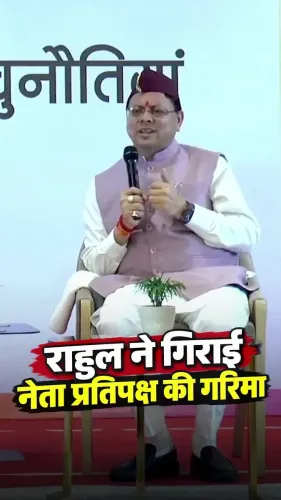
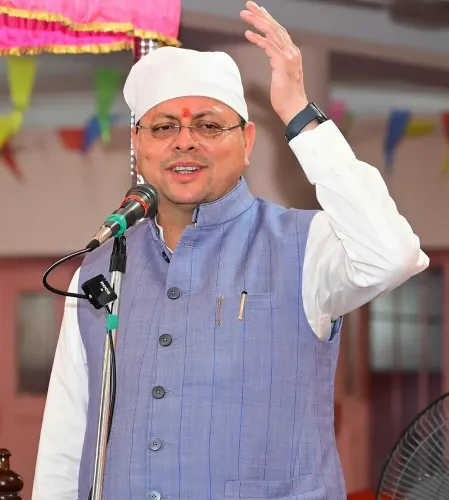
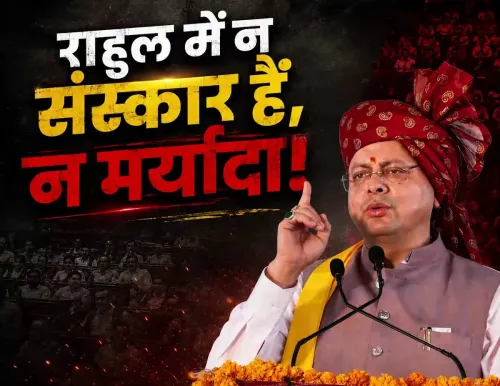
CM Dhami Questions Rahul Gandhi's Seriousness as LoP
Synopsis
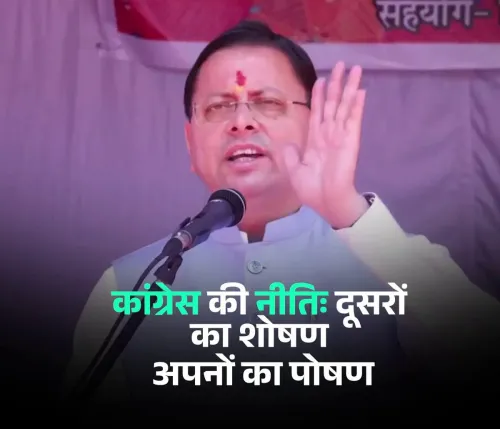
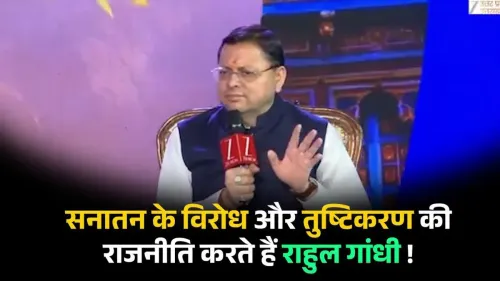
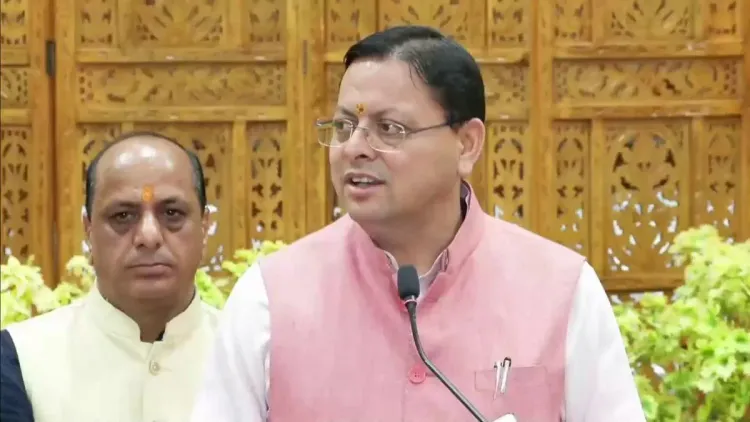
Uttarakhand CM Pushkar Singh Dhami publicly challenged Rahul Gandhi's seriousness as Leader of the Opposition on September 27, 2026, predicting continued electoral defeats for Congress in a pointed post on X.
Key Takeaways
CM Pushkar Singh Dhami posted on X on September 27, 2026 , directly targeting Rahul Gandhi and the Congress party.
Dhami declared that Congress and Gandhi 'will continue to feel the sting of defeat in the days ahead.' He specifically questioned Gandhi's seriousness despite holding the constitutionally significant post of Leader of the Opposition in the Lok Sabha .
The remarks align with a broader, long-standing BJP pattern of challenging Congress leadership on parliamentary conduct and electoral performance.
Congress responses from party spokespersons or Gandhi's own parliamentary statements will indicate how the party handles the critique.
Uttarakhand Chief Minister Pushkar Singh Dhami turned up the heat on the Congress leadership on Sunday, September 27, 2026, publicly questioning whether Rahul Gandhi carries the weight his constitutional role demands — and predicting more electoral losses ahead for the grand old party.
Posting on X in Hindi, CM Dhami wrote: 'Kaangres aur Raahul Gandhi ko aage bhi haar ka ehsaas hota rahega.' ('Congress and Rahul Gandhi will continue to feel the sting of defeat in the days ahead.') He added a pointed barb at the Leader of the Opposition directly: 'Despite occupying such an important position as Leader of the Opposition, he does not display the expected seriousness.'
The LoP role at the centre of the attack
The office of Leader of the Opposition in the Lok Sabha is one of India's most consequential constitutional positions — a formal check on executive power, a platform for national policy debate, and a role that grants its holder a cabinet-equivalent rank. Dhami's critique lands squarely on that expectation: that the gravity of the post demands a certain rigour, and that Gandhi has fallen short of it.
For the BJP, the argument is not new. The party has questioned Congress's seriousness in opposition for years, citing what it describes as a lack of consistent parliamentary engagement. What shifts the register here is a sitting Chief Minister framing it not just as a political jab but as a structural observation about Gandhi's fitness for the role itself.
A pattern built on partisan tradition
BJP Chief Ministers routinely weigh in on national opposition figures — it is standard currency in India's inter-party discourse. But the timing and the directness of Dhami's remarks signal that the ruling party is keeping the pressure on Congress through every tier of leadership, from national spokespeople to state executives.
The Indian National Congress remains the BJP's principal opposition at the national level, and the dynamic between the two parties has defined Indian political conversation for decades. Every public exchange in this rivalry carries a dual audience: the parliamentary gallery and the voter base being primed for the next electoral cycle.
Whether Congress responds — through its spokespersons or through Gandhi himself in Parliament — will determine how far this particular volley travels. In India's political arena, silence can be as loud as a rebuttal.
Point of View
Dhami attempts to shift the critique from political score-settling to a governance-accountability argument. For Congress, the challenge is familiar: any response risks amplifying the charge, while silence risks conceding the frame. The exchange is a micro-signal of how aggressively the BJP intends to contest Congress's claim to a credible national opposition identity ahead of the next electoral cycle.
NationPress
27 Sept 2026
Frequently Asked Questions
What did CM Dhami say about Rahul Gandhi on September 27 2026?
Uttarakhand CM Pushkar Singh Dhami posted on X saying Congress and Rahul Gandhi will continue to face electoral defeats, and that Gandhi lacks the expected seriousness for the important position of Leader of the Opposition.
What is the role of the Leader of the Opposition in India?
The Leader of the Opposition in the Lok Sabha holds a cabinet-equivalent rank, serves as the principal check on executive power, and leads the largest opposition group in Parliament in formal parliamentary debate and scrutiny.
Why do BJP leaders frequently criticise Rahul Gandhi's role as LoP?
BJP leaders argue that Gandhi has not displayed consistent parliamentary engagement or the gravitas expected of the Leader of the Opposition, a line of attack the party has maintained since Congress returned to the role.
Who is Pushkar Singh Dhami?
Pushkar Singh Dhami is the Chief Minister of Uttarakhand and a senior BJP leader who has held the office since 2021. He is known for being an active voice in national BJP political discourse beyond his state mandate.
Will Congress respond to Dhami's remarks?
Congress typically responds to such attacks through official party spokespersons or through statements in Parliament. Whether Gandhi or the party formally reacts will be closely watched in the coming days.