CM Bhajanlal flags irregularities in Rajasthan mobile vet units
Synopsis
The Chief Minister's Office of Rajasthan on 21 July 2026 flagged irregularities in Mobile Veterinary Unit operations, directing that accountability be enforced and effective service delivery to rural livestock farmers be ensured across the state.
Key Takeaways
The Chief Minister's Office of Rajasthan issued a public directive on 21 July 2026 flagging irregularities in Mobile Veterinary Unit (MVU) operations.
The directive calls for irregularities to be 'taken seriously' and for effective utilisation of the units to be 'ensured'.
The message was addressed directly to Chief Minister Bhajanlal Sharma via his official X handle.
Mobile Veterinary Units provide frontline animal healthcare to livestock farmers in remote and tribal districts of Rajasthan.
The move signals possible audits, performance reviews, or operational reforms within the Animal Husbandry Department .
The directive aligns with the Bhajanlal Sharma government's broader pattern of reviewing welfare delivery mechanisms since taking office in December 2023 .
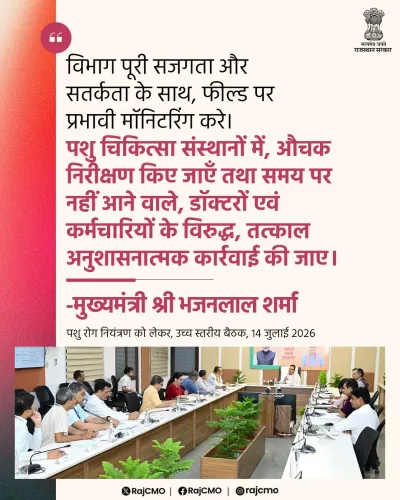
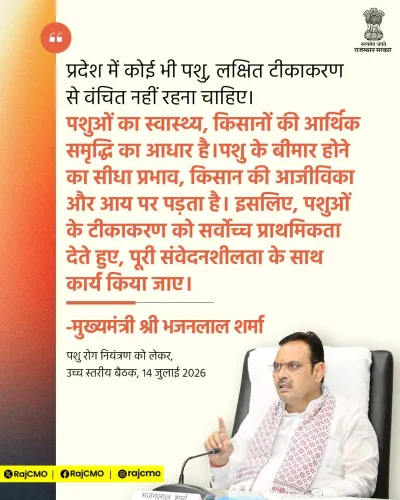
The Chief Minister's Office of Rajasthan issued a stern directive on Tuesday, 21 July 2026, calling for serious action against irregularities in the operation of Mobile Veterinary Units (MVUs) across the state, and emphasising that their effective utilisation must be ensured. The message, addressed to Chief Minister Bhajanlal Sharma, signals a formal push to tighten accountability in the state's animal husbandry outreach programme.
Context
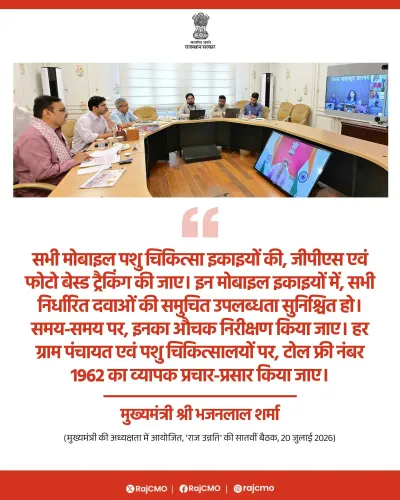
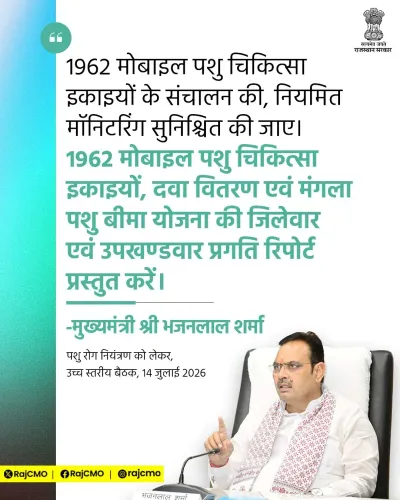
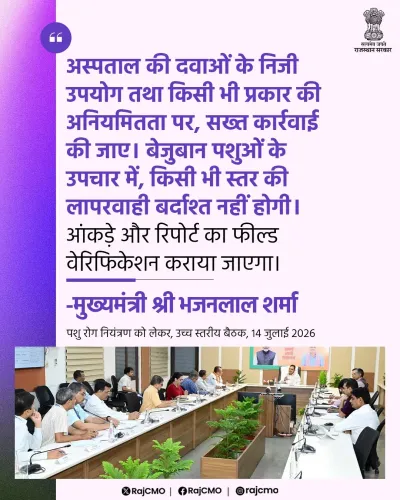
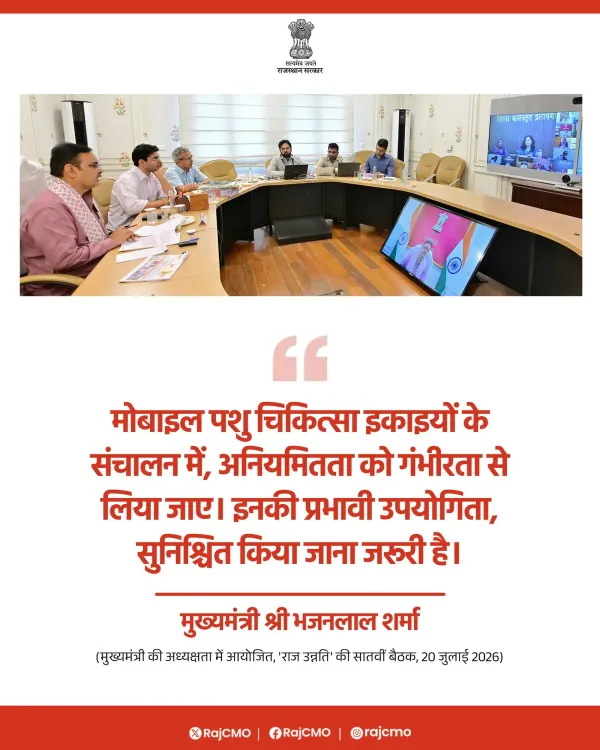
The post, shared under the hashtag #आपणो_अग्रणी_राजस्थान ('Our Leading Rajasthan'), states: 'मोबाइल पशु चिकित्सा इकाइयों के संचालन में, अनियमितता को गंभीरता से लिया जाए। इनकी प्रभावी उपयोगिता, सुनिश्चित किया जाना जरूरी है।' — translated: 'Irregularities in the operation of mobile veterinary units must be taken seriously. Ensuring their effective utilisation is essential.' The directive is tagged directly at @BhajanlalBjp, indicating it is addressed to or acknowledged by the Chief Minister himself.
Mobile Veterinary Units are state-deployed teams that carry veterinary services — diagnostics, treatment, and vaccination — directly to livestock farmers in remote, arid, and tribal districts of Rajasthan, where fixed veterinary infrastructure is sparse.
Policy Backdrop
Rajasthan's Animal Husbandry Department has operated mobile veterinary clinics since the 2010s, targeting dispersed rural populations across the state's vast geography. These units gained additional momentum under the central government's Livestock Health and Disease Control Programme, which funds mobile outreach to reduce livestock mortality and improve farmer incomes.
Rajasthan has periodically issued directives stressing operational discipline and utilisation audits of these units. The 21 July 2026 communiqué fits into a broader pattern of the Bhajanlal Sharma government — in office since December 2023 — reviewing inherited welfare delivery mechanisms and flagging performance gaps in field-level implementation.
Stakeholders and Impact
Livestock farmers across Rajasthan's rural and semi-arid belts are the primary stakeholders. For many, MVUs represent the only accessible veterinary care for cattle, goats, and camels — animals that form the backbone of household livelihoods. Operational irregularities — whether absenteeism, route deviations, or under-reporting of service calls — directly erode the programme's reach.
Animal husbandry field staff are also implicated: the directive signals that departmental accountability mechanisms may be tightened, potentially triggering internal audits or performance reviews of unit operators and supervisors.
What's Next
The CMO's public communication suggests that a formal review or audit of MVU operations is either already under way or imminent. Observers will watch for state-level review meetings, departmental circulars, or budget and staffing adjustments that follow this directive.
If the government moves to enforce stricter monitoring — through GPS tracking of units, digital service-call logging, or third-party audits — it could set a precedent for accountability in rural welfare delivery across other departments as well.
Point of View
The office places accountability squarely in the executive spotlight ahead of any formal audit. For the Bhajanlal Sharma government, which inherited these units from a previous administration, flagging operational gaps publicly serves a dual purpose: demonstrating governance vigour while distancing itself from legacy inefficiencies. This fits a wider pattern seen across BJP-governed states of using social media directives to pre-empt criticism on rural welfare delivery. The real test will be whether the directive translates into measurable field-level reform or remains a visible but low-consequence communication.
NationPress
21 Jul 2026
Frequently Asked Questions
What are Mobile Veterinary Units in Rajasthan?
Mobile Veterinary Units are state-deployed teams that bring veterinary services — including treatment, diagnostics, and vaccination — directly to livestock farmers in remote and rural areas of Rajasthan where fixed veterinary centres are not easily accessible.
What irregularities did the Rajasthan CMO flag in July 2026?
The specific nature of the irregularities was not detailed in the post, but the Chief Minister's Office directed on 21 July 2026 that any irregularities in MVU operations be taken seriously and that effective utilisation of these units be ensured. The exact lapses are unverified.
Who is Bhajanlal Sharma and what is his role?
Bhajanlal Sharma is the Chief Minister of Rajasthan, a BJP leader who assumed office in December 2023. The CMO's directive was addressed to him via his official X handle.
Which central scheme funds mobile veterinary services in Rajasthan?
Mobile veterinary outreach in Rajasthan receives support under the central government's Livestock Health and Disease Control Programme, which funds mobile units to reduce livestock mortality and improve rural farmer incomes.
What action is expected after the Rajasthan CMO's directive on veterinary units?
The directive is expected to trigger departmental audits or performance reviews of Mobile Veterinary Unit operators. Possible follow-up steps include GPS-based tracking, digital service-call logging, or budget and staffing adjustments within the Animal Husbandry Department.