CM Nitish Vows to Link Every Poor Family to Jeevika
Synopsis
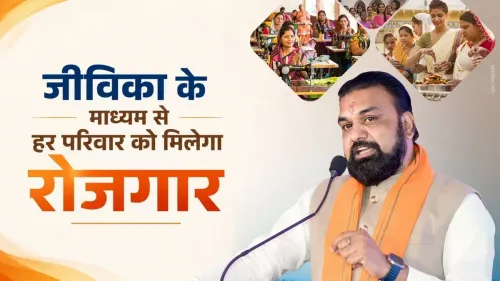
Bihar Chief Minister Nitish Kumar has reaffirmed the state government's priority of connecting every poor family with the Jeevika programme to provide employment, self-employment, and dignified livelihoods — advancing his vision of a prosperous, self-reliant, and developed Bihar.
Key Takeaways
CM Nitish Kumar on 21 July 2026 stated that connecting every poor family to Jeevika is the Bihar government's top priority.
The government aims to provide employment, self-employment, and dignified livelihood opportunities through the programme.
Jeevika (Bihar Rural Livelihoods Project) was launched in 2007 and focuses on women's self-help groups in rural areas.
The initiative is framed as central to building a prosperous, self-reliant, and developed Bihar .
The policy builds on the Saat Nishchay programme announced in 2015 , which expanded commitments to youth employment and women's livelihoods.
Rollout details and budgetary allocations are expected to be clarified in the next state budget session .
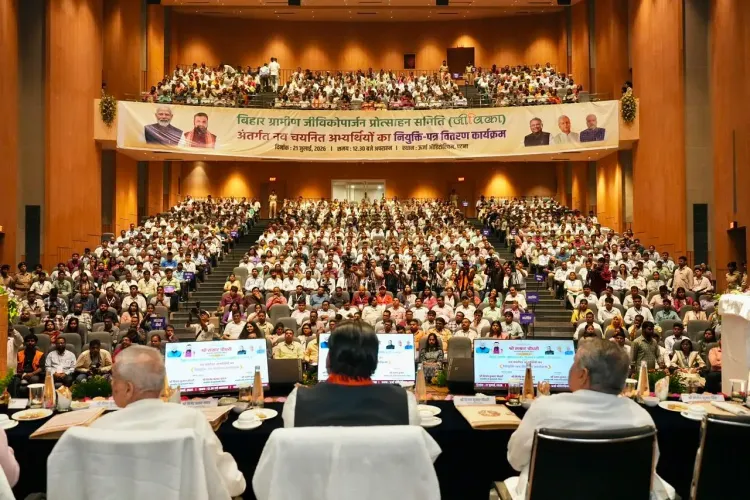
The Chief Minister's Office of Bihar on Tuesday, 21 July 2026 shared a statement from Chief Minister Nitish Kumar reaffirming the state government's commitment to connecting every poor family with the Jeevika programme and ensuring access to employment, self-employment, and dignified livelihood opportunities.
In the statement, the Chief Minister said: 'Rajya sarkar ki prathamikta hai ki pratyek garib parivar ko Jeevika se jodkar rozgar, swarozgar evam sammanjaniya aajivika ke avsar uplabdh karaaye jaayein' — 'It is the state government's priority to connect every poor family with Jeevika and provide opportunities for employment, self-employment, and dignified livelihoods, so that the resolve to build a prosperous, self-reliant, and developed Bihar grows stronger.'
Context
The statement positions Jeevika — formally the Bihar Rural Livelihoods Project — as the central instrument for achieving inclusive growth in the state. The Chief Minister's remarks frame the programme not merely as a welfare measure but as foundational to the broader vision of a viksit Bihar (developed Bihar). The declaration comes amid the state government's ongoing push to reduce poverty and curb out-migration, two of Bihar's most persistent structural challenges.
Policy Backdrop
Jeevika was launched in 2007 under the Bihar Government to promote rural self-help groups, particularly among women, and provide sustainable income pathways for households below the poverty line. The programme has since expanded in scope, layering atop national schemes such as MGNREGA to offer a more comprehensive livelihood net. In 2015, Chief Minister Nitish Kumar announced the Saat Nishchay programme, which broadened state-level commitments to youth employment, skill development, and women's economic participation — all of which feed into the current policy direction.
Bihar has historically maintained some of the highest poverty rates among Indian states, driving significant labour out-migration to states such as Delhi, Punjab, and Maharashtra. State policy has consistently sought to create viable local alternatives through targeted livelihood interventions.
Stakeholders and Impact
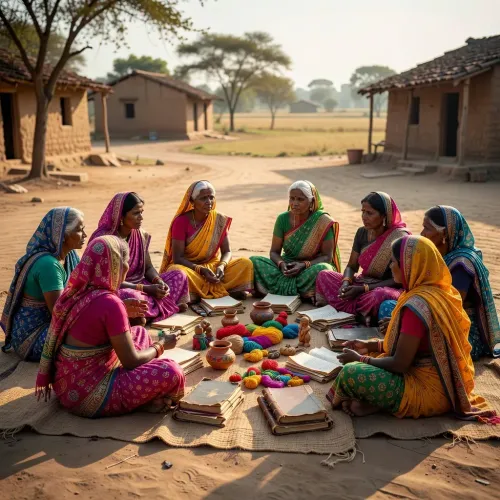
The primary beneficiaries of the Jeevika-centred approach are rural poor households, particularly women organised into self-help groups (SHGs), who gain access to microfinance, skill training, and market linkages. For these families, inclusion in the programme can mean the difference between subsistence and a stable income stream. The emphasis on swarozgar (self-employment) signals a push to build household-level enterprise capacity rather than relying solely on wage labour.
Broader stakeholders include panchayati raj institutions, which serve as implementation partners, and the rural banking ecosystem that provides credit access to SHG members. The stated goal of a 'prosperous, self-reliant, and developed Bihar' directly echoes national language around Aatmanirbhar Bharat, suggesting alignment between state and central government development narratives.
What's Next
Observers will watch the next Bihar state budget session for specific allocations toward Jeevika expansion and any new sub-schemes targeting employment generation. Published impact assessments on household income gains among existing Jeevika members will be critical to evaluating whether the stated priority translates into measurable outcomes. The government's ability to scale dignified livelihood access to every poor family — as the Chief Minister's statement promises — will be tested by both administrative capacity and available fiscal space.
Point of View
Timed to reinforce the Jeevika programme's centrality to the state's development identity. By invoking the language of a 'prosperous, self-reliant, and developed Bihar,' the administration is consciously mirroring the Centre's Aatmanirbhar Bharat framing — a move that signals both ideological alignment and a bid for continued federal support. The emphasis on SHG-led self-employment over direct wage creation also reflects a fiscal preference: community-driven models are less budget-intensive than large public employment schemes. Whether this rhetorical commitment translates into expanded coverage and measurable income gains will define the programme's political legacy ahead of the next electoral cycle.
NationPress
21 Jul 2026
Frequently Asked Questions
What is the Jeevika scheme in Bihar?
Jeevika, formally the Bihar Rural Livelihoods Project, is a state government programme launched in 2007 that connects rural poor households — especially women — with self-help groups, microfinance, skill training, and market linkages to generate sustainable livelihoods.
What did Bihar CM Nitish Kumar say about poor families on 21 July 2026?
CM Nitish Kumar stated that the Bihar government's top priority is to connect every poor family with the Jeevika programme and provide opportunities for employment, self-employment, and dignified livelihoods, strengthening the resolve to build a prosperous and self-reliant Bihar.
How does Jeevika help rural women in Bihar?
Jeevika organises rural women into self-help groups that access microfinance and skill development support, enabling them to start small enterprises and earn stable incomes, reducing dependence on seasonal wage labour or out-migration.
What is Bihar's Saat Nishchay programme?
Saat Nishchay, announced by CM Nitish Kumar in 2015, is a seven-point programme covering youth employment, skill development, women's economic participation, and infrastructure — it forms part of the broader policy architecture within which Jeevika operates.
Why is livelihood policy important for Bihar?
Bihar has historically had some of India's highest poverty rates and significant labour out-migration. State livelihood schemes like Jeevika aim to create viable local income sources, reduce migration pressure, and drive inclusive economic growth within the state.